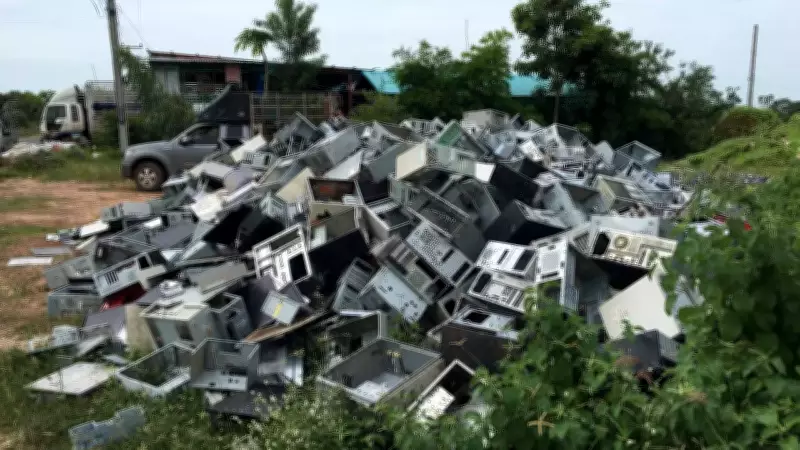
Thailand to Return Massive Illegal E-Waste Shipment to United States
Thai authorities are preparing to send back a substantial shipment of illegally imported electronic waste to the United States after a major seizure at Laem Chabang Port. The confiscated consignment, weighing approximately 284 tonnes, was discovered following a coordinated inspection involving multiple government agencies.
Major Seizure at Laem Chabang Port
Officials from the Department of Special Investigation (DSI), customs authorities, and the Pollution Control Department conducted the operation that led to the discovery of 12 shipping containers carrying nearly 285,000 kilograms of hazardous electronic waste. Deputy Prime Minister Suchart Chomklin confirmed that all seized containers will be returned to their country of origin, the United States.
Phanthong Loysakunanon, director-general of the Customs Department, revealed that the seizure resulted from an intensive DSI investigation that uncovered sophisticated smuggling patterns. The illegal shipment was falsely declared as scrap metal from Haiti in an attempt to bypass customs regulations and environmental protections.

Sophisticated Smuggling Operation Uncovered
The inspection was triggered by advanced risk profiling that identified discrepancies between the cargo's declaration and its actual hazardous contents. Investigators working under the DSI Case File discovered a systematic pattern where smugglers deliberately mislabeled 284 tonnes of toxic electronic waste as ordinary scrap metal.
Intelligence from the Basel Action Network (BAN) confirmed that the shipment contained processed printed circuit board scrap, constituting a direct violation of the Basel Convention on hazardous waste shipments. This international treaty regulates the transboundary movements of hazardous wastes and their disposal.
Three-Group Smuggling Pattern Identified
Authorities identified that the illegal electronic waste shipments were organized into three distinct groups totaling eighteen containers. The first and most significant group consisted of twelve containers labeled as scrap iron from Haiti, which actually concealed the 284 tonnes of hazardous printed circuit board scrap.
The second group comprised four containers from the United States declared as mixed metal scraps destined for Japan and Hong Kong. The third group included two containers originating from both the United States and the Netherlands.
Thailand's Ongoing Battle Against E-Waste Smuggling
Thailand has long been a target for illegal electronic waste smuggling operations seeking to circumvent international environmental regulations. According to reports from the United Nations Office on Drugs and Crime (UNODC), illegal e-waste trade has increased significantly since 2018, with Thailand often serving as a secondary dumping ground for Western digital waste.
In a proactive move to prevent further environmental dumping, Thai officials are now tracking 714 additional containers currently in transit. This demonstrates Thailand's intensified commitment to combating illegal waste imports and upholding international environmental protocols.
Recent History of E-Waste Seizures in Thailand
This latest seizure follows several previous major operations against illegal e-waste imports:
- May 2025: Authorities confiscated 238 metric tonnes of U.S.-origin electronic waste at the Port of Bangkok during "Operation Can Opener," discovering 10 containers of processed circuit board scrap falsely labeled as mixed metal.
- January 2025: A massive seizure of 256 tonnes of electronic waste from Japan and Hong Kong was intercepted at Laem Chabang Port, with shipments disguised as scrap metal to circumvent Thailand's 2020 import ban.
- July 2018: Following China's restrictions on waste imports (known as the "China effect"), Thailand experienced an 80% increase in plastic and e-waste imports, leading to emergency raids on unlicensed recycling factories in Chachoengsao and Chonburi provinces.
The current operation represents Thailand's continued determination to enforce environmental regulations and protect against becoming a dumping ground for hazardous electronic waste from developed nations.