Delhi Police Grapple with Digital Anonymity in School Bomb Hoax Epidemic
In a concerning trend, schools across Delhi have been targeted by a wave of bomb hoaxes, leaving law enforcement agencies struggling to trace the perpetrators behind a veil of digital anonymity. The investigation has led police to virtual private network (VPN) services based in multiple countries, yet the culprits remain elusive.
Global VPN Trail Leads to Dead Ends
Earlier this month, after south Delhi schools received bomb threats, a technical probe by police pointed to a VPN service operating from Bangladesh. Shortly thereafter, a series of similar threats in northwest Delhi were traced to a US-based VPN, while hoaxes reported in west Delhi schools several months ago involved a Singapore-based VPN. Despite police efforts to request user details from these networks, they were inundated with more hoaxes, highlighting the persistent challenge.
Why are law enforcement agencies seemingly powerless to stop this menace? The answer lies in the sophisticated technical barriers erected by the hoaxers.
Forensic Nightmares and Technical Hurdles
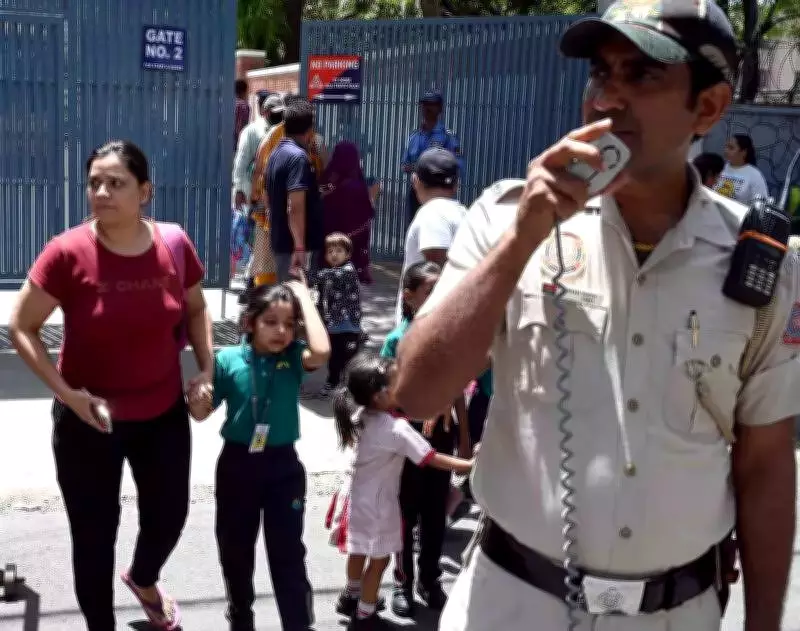
When a threatening email arrives at a school, the immediate response is swift and visible: sirens blare, students are evacuated, and sniffer dogs and police officers swarm the campus. However, in the cyber cells of Delhi Police, the battle is quiet, uphill, and often demoralizing. Each hoax represents a forensic dead end, with perpetrators acting as digital ghosts.
The inability to solve these cases is not due to a shortage of manpower but stems from insurmountable technical obstacles:
- Ironclad Privacy of Swiss Servers: Many hoaxes use services like ProtonMail, based in Switzerland, which employs end-to-end encryption and strict privacy laws.
- Geopolitical Opacity of Foreign Domains: Jurisdictions in countries like Panama or the Seychelles complicate legal requests.
- Multi-Layered VPN Shields: Perpetrators use VPN chains, routing connections through multiple encrypted tunnels to mask their real IP addresses.
A cyber cell investigator explained, "The hoaxers hide their actual location in Delhi or elsewhere behind a series of encrypted tunnels. The IP address that police see may belong to a server in Austria, Singapore, or the Netherlands. To us, it is like chasing a shadow in a room full of mirrors; every time we think we have a lead, the trail bounces to another country."
No-Log Policies and Legal Labyrinths
To uncover a real IP address, police must request logs from VPN providers. However, most premium services used by these actors adhere to a strict no-log policy, meaning they do not store records of user activity. Consequently, there is no data to hand over to authorities, and the investigative trail vanishes entirely.
This anonymity is further reinforced by the choice of platforms. In high-profile cases, including a surge in May 2024 and recent incidents, senders utilized Switzerland-based ProtonMail. Known for its militant commitment to privacy, ProtonMail does not require personal details for account creation and is protected by Swiss privacy laws. Delhi Police cannot issue a standard search warrant; instead, they must navigate the Mutual Legal Assistance Treaty, a diplomatic process that requires proving double criminality—that the act is illegal in both India and Switzerland. Even if successful, police may only receive basic metadata, such as account creation time, which is insufficient to identify sophisticated users with masked identities.
Russian Smokescreens and Bureaucratic Delays
Adding to the complexity, many hoax emails feature an '.ru' suffix, often from services like mail.ru. Investigators suspect these domains serve as tactical smokescreens. By the time information requests move through Interpol's bureaucratic channels, the accounts are typically deleted, and logs are overwritten, leaving no trace.
Rare Breaks and Professional Operators
Occasionally, police catch a break, usually when a copycat or student makes a critical error. For instance, in late 2024, a Delhi student was apprehended after sending a threat to his school to avoid an exam; he forgot to activate his VPN, exposing his home IP address.
However, for professional operators targeting dozens of schools simultaneously—sometimes over 100 in a single morning—the global digital infrastructure provides perfect cover. This level of planning suggests the use of dark web databases or automated crawlers to scrape school information.
As long as this infrastructure enables complete anonymity, Delhi Police remain trapped in a reactive loop: evacuating students, conducting searches, and declaring hoaxes, while those responsible continue to operate as digital phantoms.