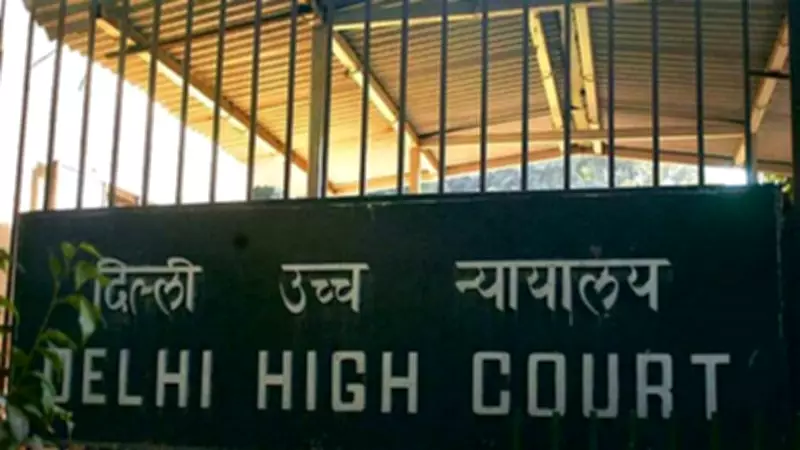
Delhi High Court Recognizes Stateless Tibetan Woman as Indian Citizen, Directs Passport Issuance
The Delhi High Court has delivered a landmark judgment, declaring that a stateless Tibetan woman born in India qualifies as a citizen of India by birth under the Citizenship Act and is entitled to receive an Indian passport. This significant ruling, issued on February 2, 2026, directly challenges the stance of the Ministry of External Affairs (MEA), which had opposed the petition.
Case Background: A Life in Legal Limbo
Yangchen Drakmargyapon, born in Dharamshala in 1966, has been living in Switzerland since 2014 under a stateless designation. Her eldest son was born in Darjeeling in 1995. Without any valid travel documents or a passport recognizing her citizenship, she found herself effectively stranded and unable to travel internationally.
The legal urgency for her petition intensified following the demise of her husband, whose final wish was for his ashes to be put to rest in India. This personal tragedy underscored her need for official documentation to fulfill this wish and regain her mobility.
Court's Legal Reasoning and MEA's Opposition
Justice Sachin Datta, in an order made public, meticulously examined the case. The court found that Yangchen squarely satisfies the requirement of Section 3(1)(a) of the Citizenship Act. This provision grants citizenship by birth to anyone born in India on or after January 26, 1950, and before July 1, 1987—a criterion Yangchen meets.
The MEA had vehemently opposed her petition, arguing that Tibetan nationals and their children born in India, once registered as refugees and issued an Identity Certificate (IC), have effectively undertaken a voluntary renunciation of Indian citizenship. The ministry contended that such individuals could only acquire Indian citizenship through naturalization or registration processes.
Furthermore, the MEA revealed it is under process to challenge a series of Delhi High Court orders dating back to 2010, where the court had previously ruled in favor of Tibetan refugees, recognizing them as Indian nationals.
Judicial Precedent and Rejection of MEA's Claim
Justice Datta's ruling relied on established judicial precedents where Tibetan refugees born in India within the specified cut-off dates have been consistently recognized as Indian citizens. The court firmly rejected the MEA's argument regarding voluntary renunciation, labeling it as misconceived.
The judgment clarified that a formal renunciation of Indian citizenship requires a prescribed legal process, including a declaration registered by a designated authority—a process Yangchen never undertook. The court also noted that her citizenship cannot be considered terminated, as she has clearly not acquired the citizenship of another country.
Addressing her status in Switzerland, the court held that the mere issuance of a passport for aliens or a temporary Swiss travel document cannot be equated with the voluntary acquisition of foreign citizenship. Therefore, the petitioner continues to retain her Indian citizenship, unaffected by these temporary documents.
Implications and Ongoing Legal Battle
This ruling represents a crucial affirmation of birthright citizenship for a vulnerable community. It underscores the judiciary's role in interpreting citizenship laws to protect individuals from statelessness. However, the legal battle is far from over, as the MEA has signaled its intent to appeal this and related judgments, setting the stage for potential further litigation in higher courts.
The case of Yangchen Drakmargyapon highlights the complex intersection of refugee status, citizenship law, and human rights, bringing into sharp focus the challenges faced by long-term residents born in India but caught in administrative and political crosscurrents.