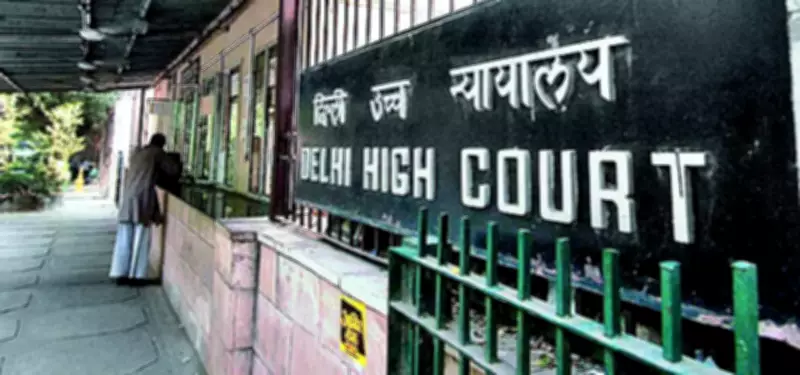
Delhi High Court Schedules March 9 Hearing for ED's National Herald Case Plea
The Delhi High Court has officially fixed March 9 as the date for hearing a significant plea filed by the Enforcement Directorate (ED). This plea challenges a trial court order that refused to take cognisance of the agency's chargesheet against prominent Congress leaders Sonia Gandhi, Rahul Gandhi, and several other individuals involved in the National Herald-linked money laundering case.
Court Proceedings and Respondent's Time Extension
During Thursday's proceedings, Justice Swarana Kanta Sharma presided over the case and granted additional time to the Gandhis and other respondents to file their detailed replies. This decision came despite strong opposition from the ED, which argued that notices had been served nearly two months prior, making further delays unwarranted.
Solicitor General Tushar Mehta, representing the ED, emphasized the urgency of the matter, stating that it raises a "neat question of law". He further contended that the trial court's findings are "coming in the way" of proceedings in other related cases, labeling the reasons for rejecting cognisance as "patently perverse".
Background of the Case and Previous Court Orders
This legal battle traces back to last year when the Delhi High Court issued notices to Sonia Gandhi, Rahul Gandhi, and other respondents on the ED's main petition. The agency had also filed an application seeking a stay on the trial court's December 16 order, which held that taking cognisance of the prosecution complaint was "impermissible in law" due to the absence of a foundational FIR.
In addition to the Gandhis, notices were issued to other key figures and entities involved in the case, including Suman Dubey, Sam Pitroda, Young Indian, Dotex Merchandise, and Sunil Bhandari, based on the ED's comprehensive plea.
Implications and Legal Significance
The upcoming hearing on March 9 is poised to be a critical juncture in this high-profile money laundering investigation. The ED's challenge underscores the agency's determination to proceed with the case, while the respondents' extended timeline for replies highlights the complex legal arguments at play.
As the proceedings unfold, this case continues to draw significant attention due to its political ramifications and the intricate legal questions surrounding the admissibility of chargesheets without an FIR. The outcome could set important precedents for future money laundering cases in India.