Delhi High Court Upholds Press Freedom, Rejects Media Gag in Dwarka Accident Case
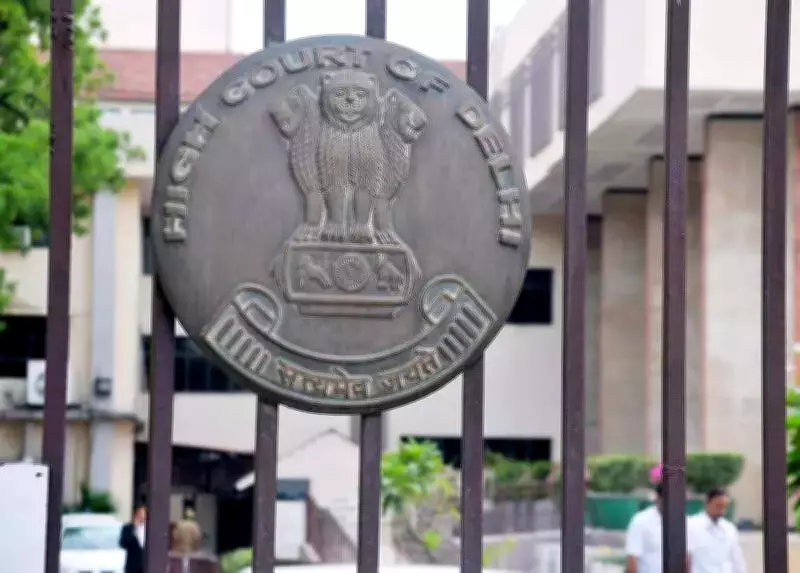
In a significant ruling that reinforces the importance of a free press in a democratic society, the Delhi High Court on Friday refused to impose a blanket gag order on media reporting related to the Dwarka road accident case. The court's decision came while hearing a plea filed by the father of the juvenile accused in the tragic accident that resulted in the death of a 23-year-old motorcyclist.
Court Questions Basis for Complete Media Restrictions
Justice Saurabh Bannerji of the Delhi High Court made pointed observations during the hearing, questioning the legal foundation for such sweeping restrictions. "On what basis are you asking for a complete gag order? There is no rule which says journalism and right to press has to be barred," Justice Bannerji stated orally. The court emphasized that freedom of expression and press freedom constitute fundamental pillars of democratic governance and cannot be curtailed without proper legal justification.
Father's Concerns and Court's Balanced Approach
The father of the juvenile accused had argued that extensive media coverage was subjecting his family to harassment and creating an atmosphere of fear. He contended that the relentless media pursuit had resulted in him receiving hateful messages and raised concerns about the family's safety. While acknowledging these concerns, the court adopted a balanced approach by issuing notices to the Centre and the Press Council of India on the plea.
Importantly, the court ordered that no information capable of revealing the minor's identity or portraying his character should be disclosed or published in any manner. This directive aims to protect the juvenile's privacy while maintaining the media's right to report on matters of public interest.
Background of the Dwarka Accident Case
The case stems from a tragic road accident in Dwarka where a 23-year-old motorcyclist lost his life. According to allegations raised by the victim's mother, the minor accused was filming social media reels while speeding moments before the collision. The juvenile, who allegedly did not possess a valid driving license, was apprehended and produced before the juvenile justice board, which initially sent him to an observation home.
Key developments in the case include:
- The minor was granted interim bail on February 10 to enable him to appear for his Class X board examinations
- Delhi Police registered a case under multiple sections of the Bharatiya Nyaya Sanhita (BNS), including rash driving, causing death by negligence, and acts endangering life or personal safety of others
- The minor's father was detained during the investigation and later released, with police indicating he would be named in the chargesheet under relevant provisions of the Motor Vehicles Act
Age Controversy and Legal Proceedings
An interesting aspect of this case involved the age of the accused. Initially, investigators sought to try him as an adult after his age was recorded as 19 years in the First Information Report (FIR). However, identification documents later submitted by the family's lawyer established that he was indeed a minor, shifting the legal proceedings to the juvenile justice system.
The Delhi High Court's ruling represents a careful balancing act between protecting individual rights and preserving the media's crucial role in a functioning democracy. By rejecting a complete gag order while establishing clear guidelines to protect the juvenile's identity, the court has demonstrated how legal systems can navigate complex issues involving press freedom, privacy concerns, and the administration of justice.