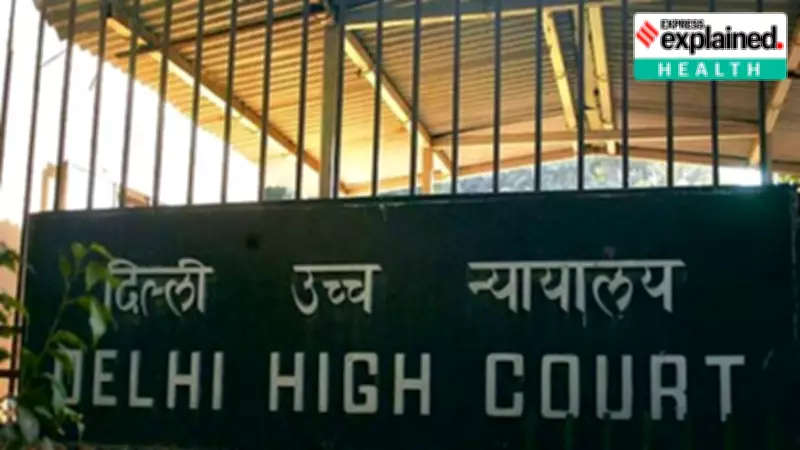
Delhi High Court Grills DGCA Over Controversial Pilot Rest Rule Changes
The Delhi High Court has taken a firm stance against the Directorate General of Civil Aviation (DGCA), demanding a clear explanation for its recent decision to prohibit pilots from clubbing their weekly rest periods with their leaves. This development comes in response to a Public Interest Litigation (PIL) that has raised significant concerns about aviation safety and pilot fatigue.
Court Issues Notice to DGCA and IndiGo
A division bench comprising Chief Justice D K Upadhyaya and Justice Tejas Karia has formally issued notices to both the DGCA and IndiGo airlines. The court has granted them a two-week period to file their detailed replies to the PIL, which challenges a specific instruction issued by the aviation regulator on December 5, 2025.
The contentious instruction effectively declared an indefinite withdrawal of the clause that stated 'no leave shall be substituted for weekly rest'. This move has sparked considerable debate within the aviation industry and among safety advocates.
Safety Concerns Raised in PIL
The PIL was filed by three individuals: Sabari Roy Lenka, a former aircraft engineer; Aman Monga, a crew resource management trainer; and Kiran Singh, a social worker. All residents of Delhi and Gurgaon, the petitioners have argued that the DGCA's instruction has "increased accident risk and pilot fatigue exposure".
They are seeking judicial intervention to have the instruction quashed and set aside, emphasizing the potential dangers to passenger safety. The petition highlights how the new rule could compromise the mandatory weekly rest period of 48 hours for pilots, which is crucial for maintaining alertness and preventing fatigue-related incidents.
DGCA's Defense and Contradictory Communications
During the court proceedings, DGCA's counsel, Anjana Gosain, clarified that the weekly rest requirement under the Flight Duty Time Limitations (FDTL) norms "has never been withdrawn, is non‑negotiable, and no exemption has been granted to any of the airlines". However, this statement appears to contradict the December 5 instruction that withdrew the prohibition on substituting leave for weekly rest.
Gosain explained that during an audit conducted in November last year, it was discovered that airlines were allowing pilots to combine their leaves with weekly rest periods. "It was found that if weekly rest is falling on the 1st and 2nd day of a month, the pilots were clubbing two leaves to this, so that they get four days together (of not working)," she stated.
She further emphasized that while leave arrangements are contractual obligations between airlines and pilots, the DGCA's role is to ensure that weekly rest periods remain separate and uninterrupted. The regulator plans to issue a clarification on this matter.
Judicial Scrutiny of DGCA's Rationale
The bench expressed particular concern over the indefinite nature of the withdrawal. Justice Karia pointed out the inconsistency in DGCA's communications: "If you are issuing two letters on the same day, one is till February 10, another is indefinite. This letter is forever. If you have limited the time up to February 10 in the second letter, why not for the first one?"
Chief Justice Upadhyaya directly questioned the rationale behind applying this withdrawal to all airlines, asking: "What is the rationale for this? And it applies to all airlines...Why have you withdrawn it (the instruction that no leave shall be substituted for weekly rest)?"
IndiGo's Temporary Exemption
In a related development, the DGCA had granted IndiGo a temporary one-time exemption from certain night operations-related changes in the new FDTL norms for its Airbus A320 pilots. This exemption, also dated December 5, 2025, is valid until February 10 and pertains primarily to night duty-related provisions.
This temporary rollback has added another layer of complexity to the situation, as it creates a discrepancy between how different aspects of the FDTL norms are being implemented and enforced.
Industry Implications and Future Proceedings
The court's intervention comes at a critical time for India's aviation sector, which has been grappling with operational challenges and safety concerns. The outcome of this case could have far-reaching implications for how airlines manage pilot schedules and ensure compliance with fatigue management regulations.
As the DGCA and IndiGo prepare their responses, the aviation community will be closely watching how this legal challenge unfolds. The court's insistence on a clear rationale and time-bound implementation reflects growing judicial scrutiny of regulatory decisions that impact public safety.
The next hearing is expected to shed more light on whether the DGCA can justify its indefinite withdrawal of the crucial safety provision or if modifications will be required to balance operational needs with uncompromising safety standards.