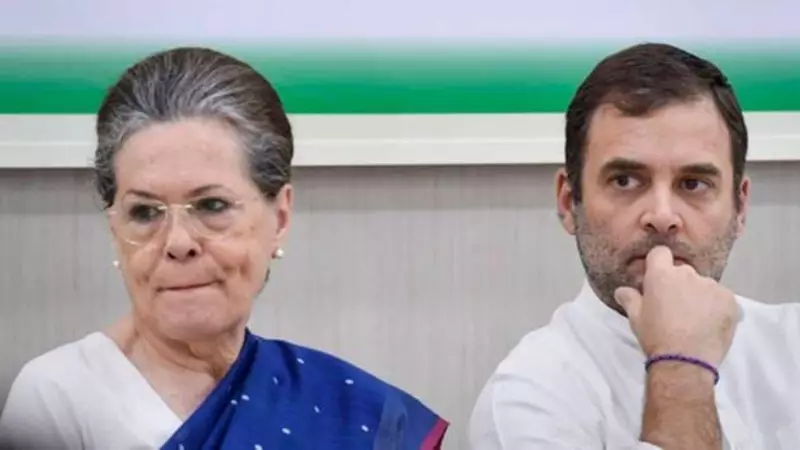
In a significant legal development, a Delhi court on Tuesday, December 16, 2025, dismissed the Enforcement Directorate's prosecution complaint against senior Congress leaders Sonia Gandhi and Rahul Gandhi in the high-profile National Herald case. The court's decision provides immediate relief to the Gandhis and other accused Congress functionaries.
Court's Ruling: A Matter of Legal Procedure
Special Judge Vishal Gogne of the Delhi court declared the ED's complaint "not maintainable" in law. The judge emphasized that it was "premature and imprudent" to decide the case based solely on the submissions made by the investigating agency and the proposed accused. The dismissal was grounded on specific procedural shortcomings rather than the merits of the allegations themselves.
The core of the court's reasoning hinged on the legal framework of the Prevention of Money Laundering Act (PMLA). Judge Gogne underlined that an investigation and prosecution for money laundering, as defined under Sections 3 and 4 of the PMLA, cannot proceed in the absence of a First Information Report (FIR) for a scheduled offence. The ED's case was built on a private complaint, not an FIR.

The Foundation of the Case and ED's Allegations
The case traces its origins to a 2012 criminal complaint filed by then-BJP Rajya Sabha MP Dr. Subramanian Swamy. He accused the Gandhis and other Congress leaders of fraud in acquiring the assets of Associated Journals Limited (AJL), the original publisher of the National Herald newspaper.
The Enforcement Directorate's money laundering case was based on these allegations. The agency claimed that 99% of AJL's shares were transferred to a not-for-profit company, Young Indian, for a mere Rs 50 lakh. This transaction was alleged despite the fact that the value of AJL's properties was estimated to exceed Rs 2,000 crore. Sonia and Rahul Gandhi each hold a 38% stake in Young Indian.
Other accused in the case include Congress functionaries Suman Dubey and Sam Pitroda, along with the firms Young Indian and Dotex Merchandise Private Limited.
Legal Hurdles and Future Implications
The court identified a critical flaw in the ED's approach. The prosecution complaint was deemed "impermissible in law" because it was founded on cognizance and summoning orders issued on Dr. Swamy's complaint under Section 200 of the Code of Criminal Procedure (now Section 223 BNSS). The law mandates a pre-cognizance hearing for the accused when such a complaint is filed by a public person, a safeguard the court found missing.
Since the order declined cognizance on this question of law, the judge stated the court was not required to address the merits of the allegations. Arguments pertaining to facts or mixed questions of law and fact were therefore left unadjudicated.
The legal battle was represented by senior advocates Abhishek Manu Singhvi and R.S. Cheema for the accused, while Additional Solicitor General S.V. Raju appeared for the Enforcement Directorate. The court's decision marks a procedural setback for the ED, which may now need to revisit the foundational basis of its case if it chooses to pursue the matter further.