
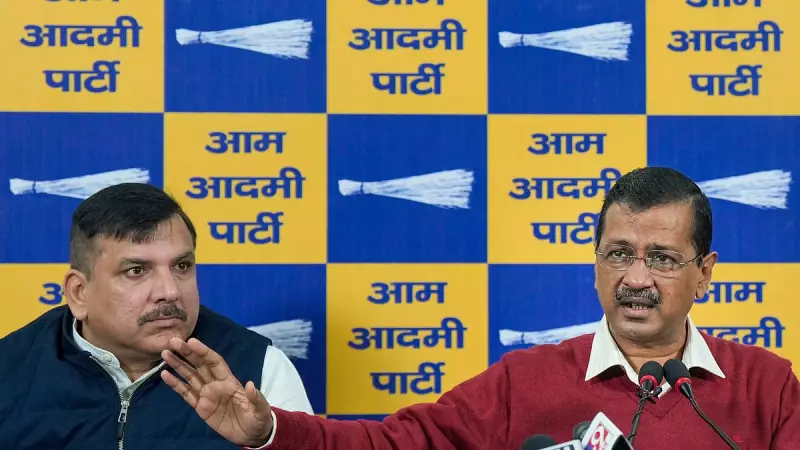
A court in Gujarat has delivered a significant ruling in a high-profile defamation case, dismissing the applications filed by Aam Aadmi Party (AAP) leaders Arvind Kejriwal and Sanjay Singh. The leaders had sought separate trials in the case, which stems from their alleged remarks concerning Prime Minister Narendra Modi's educational qualifications.
Court's Decision on Revision Applications
Additional Sessions Judge M P Purohit presided over the hearing and dismissed the revision applications filed by the two politicians. The applications challenged an earlier order from a trial court, which had also rejected their request for separate trials. Kejriwal, the former Chief Minister of Delhi, and Singh, a Rajya Sabha member, had petitioned the sessions court to quash and set aside the trial court's orders, a request that has now been denied.
The legal battle centers on a defamation complaint. The case was filed in response to comments made by the AAP leaders about Prime Minister Modi's academic degree. The complainants argue that the statements were defamatory in nature.
Background of the Defamation Case
The origins of this case lie in public statements and political discourse where questions were raised about the Prime Minister's university degree. This led to the filing of a criminal defamation suit against Kejriwal and Singh in Gujarat. The defendants had moved the trial court, requesting that their trials be conducted separately from each other.
When the lower court refused this request, they approached the sessions court with a revision plea. The order from Judge Purohit, dated December 15, 2025, upholds the trial court's decision, meaning the two leaders will face a joint trial in the matter.
Legal Implications and Next Steps
This ruling is a procedural setback for Kejriwal and Singh. A joint trial means the evidence and proceedings for both accused will be heard together, which can have strategic implications for their defense. The court's dismissal reinforces the lower court's view that the cases are interconnected and stem from the same alleged incident or series of remarks.
The case will now proceed in the trial court with both leaders as co-accused. Defamation cases in India can carry a penalty of imprisonment for up to two years, a fine, or both. This development adds another layer to the ongoing legal challenges faced by the top leadership of the AAP.
Legal experts suggest that the defense may now focus on contesting the substantive charges of defamation as the trial moves forward. The political ramifications are also significant, keeping the issue in public discourse as the legal process unfolds.