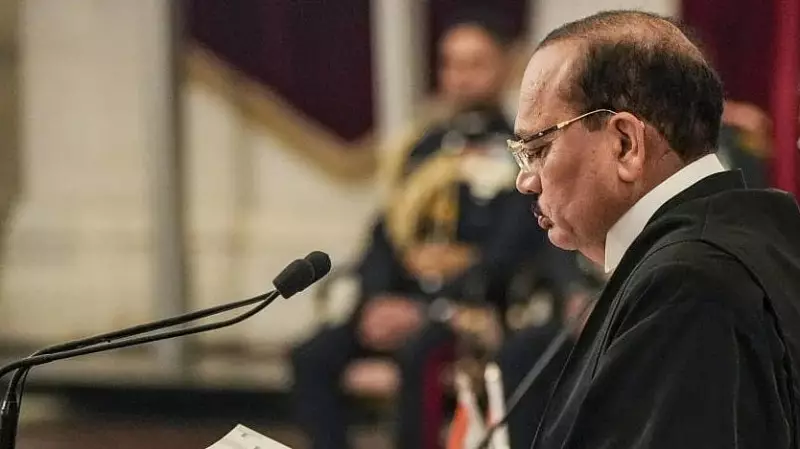
In a powerful declaration that underscores a profound commitment to judicial accessibility, Chief Justice of India (CJI) Surya Kant has announced his readiness to sit in court until midnight to ensure justice for the poorest and most marginalized litigants.
A Promise to the 'Smallest Litigant'
The CJI's emphatic statement came during a court proceeding, where he laid out his top priority for the nation's highest court. "Let me tell you this... I am here for the smallest... poorest litigant in the last row. If needed, I will sit here till midnight for them," Justice Surya Kant asserted. This pledge, made on November 28, 2025, signals a significant shift towards a more litigant-centric approach within the Indian judiciary, focusing on those who often find the legal system daunting and inaccessible.
Reorienting Judicial Priorities
The commitment goes beyond mere words, representing a potential operational change in how the Supreme Court functions. By explicitly stating his willingness to extend court hours, the CJI is addressing a critical pain point for countless Indians: the delay and cost associated with legal proceedings. His focus on the individual in the "last row" is a symbolic move to democratize justice, ensuring that the system serves its primary purpose—to be a beacon of hope for every citizen, regardless of their social or economic standing.
Implications for Access to Justice
This bold stance by the head of the Indian judiciary is likely to have far-reaching consequences. It sets a powerful precedent for other courts across the country, encouraging a culture of empathy and diligence. The announcement reinforces the principle that the doors of justice must remain open for all, and that the system will adapt to meet the needs of its most vulnerable users. For millions of poor litigants, this promise from the CJI himself could be the ray of hope they need to continue their fight for rights and justice.