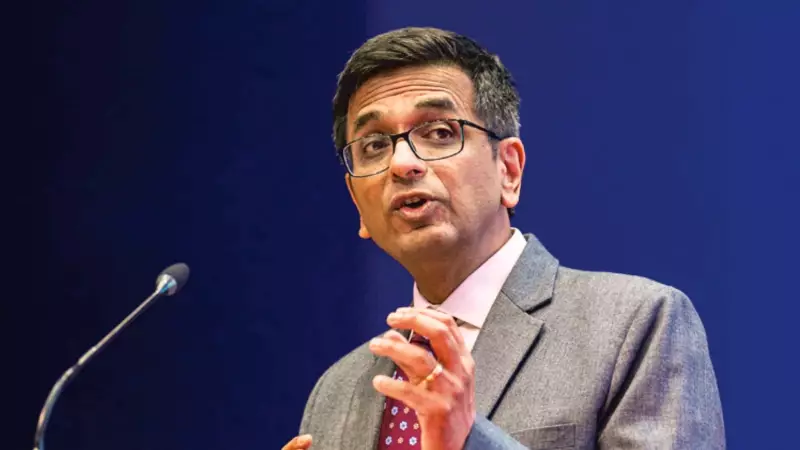
In a powerful address that challenges conventional wisdom, Chief Justice of India D Y Chandrachud has presented a compelling case for why judicial institutions should welcome, rather than fear, public scrutiny in today's hyper-connected world.
The Courtroom in the Public Eye
Justice Chandrachud argues that increased public attention on judicial proceedings is actually strengthening the foundations of Indian democracy. Rather than viewing media coverage and public discussion as interference, he sees it as an essential component of judicial accountability.
"When courts operate in the public sphere, they don't weaken—they become more robust," the CJI emphasized during his recent address.

Digital Transformation of Justice
The Supreme Court has been at the forefront of embracing technology to enhance transparency:
- Live-streaming of constitutional matters
- Digital access to court documents
- Real-time updates on case proceedings
- Virtual hearing capabilities
These technological advancements have democratized access to justice like never before, allowing citizens from remote corners of India to witness the judicial process firsthand.
Beyond the Courtroom Walls
Justice Chandrachud's vision extends beyond mere procedural transparency. He advocates for a judiciary that actively engages with contemporary social issues and understands the evolving nature of Indian society.
The changing role of judges in this new paradigm requires them to be not just interpreters of law, but also sensitive observers of social transformation. This approach ensures that judicial decisions remain relevant and responsive to citizens' needs.
Building Public Trust Through Openness
The CJI's perspective marks a significant departure from traditional judicial conservatism. By embracing transparency, the Indian judiciary is building greater public trust and demonstrating that justice isn't just being done—it's being seen to be done.
This progressive approach to judicial governance positions India's legal system as a model for democratic nations worldwide, showing how ancient institutions can adapt to modern democratic demands.