Bombay High Court Upholds Murder Charges Against Police in 2014 Custodial Death Case
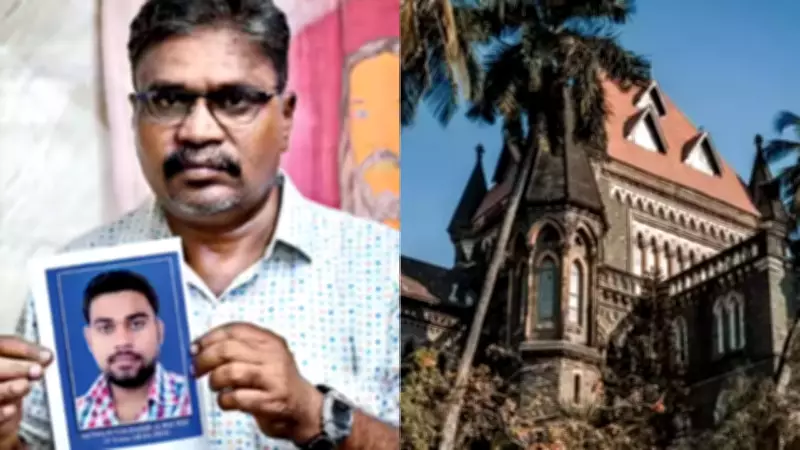
The Bombay High Court has affirmed a September 2022 order from a special trial court, directing the framing of murder charges against eight police officers. This decision pertains to the death of 25-year-old Agnello Valdaris, who allegedly suffered torture while in the custody of the Wadala railway police twelve years ago.
Court Observations on Custodial Torture
A division bench comprising Justices Ajay Gadkari and Shyam Chandak, in a judgment made available on Tuesday, noted that prima facie evidence indicates Agnello was severely beaten during illegal police custody. Justice Chandak, who authored the judgment, emphasized the challenges in such cases, stating, "Rarely in cases of police torture or custodial death is direct ocular evidence available of the complicity of the police personnel, who alone can explain the circumstances in which a person in their custody died."
Quoting author Lois Bujold, Justice Chandak added, "The dead cannot cry out for justice; it is a duty of the living to do so for them." The court concluded that Agnello Valdaris died under abnormal circumstances while in police custody, paving the way for the trial to commence against the eight Mumbai police officers. However, the officers are expected to appeal this decision before the Supreme Court.

Background and Legal Proceedings
The petition before the High Court, filed by the eight police officers, challenged the sessions court's order to try them for murder. This involved a serious controversy over whether Agnello's death was homicidal or accidental. According to his father, Leonard Valdaris, Agnello was 25 years old when he died in April 2014 after alleged police torture over three days at the Wadala railway police station.
Police contended that Agnello was picked up with three others in connection with an alleged robbery complaint. They claimed that while being taken for a medical examination, he suddenly forced an escape, fled, and was hit by a running train, leading to his death. Framing of charges marks the last pretrial step, and on December 19, 2020, the Supreme Court had directed the trial court to examine all aspects during this process.
Arguments from Both Sides
Agnello's father's counsel, Yug Chaudhry, argued that Agnello was illegally detained for 24 hours and subjected to torture, including alleged sexual abuse, to such an extent that he ran towards a moving train to save himself. In contrast, counsel for the accused police officers, Rizwan Merchant, asserted that there is "absolutely no evidence" to try them for murder, a point he claimed the trial court overlooked.
The High Court held that the sessions court was correct in invoking a murder charge for the trial of the policemen. The September 2022 trial court order was initially challenged, and in December 2022, a single judge, Justice Amit Borkar, agreed that the murder charge was applicable. However, in 2023, another single-judge bench, Justice Bharati Dangre, set aside the trial court order, stating that police officers cannot be tried for murder based on an "inference" and noting a lacuna in the investigation. Justice Dangre observed that Agnello's death could not be conclusively linked to injuries during custody based on medical evidence.
High Court's Final Ruling and Evidence
Following the Supreme Court's directive, the High Court has now ruled that there was no justifiable reason for the suspicious movement of Agnello by the police on April 18, 2014, after his medical complaint. The court also highlighted the post-mortem report, which documented several injuries on Agnello's body approximately 12 hours before his death, with some injuries being 24 to 96 hours old.

The High Court stated, "Since the post-mortem report was recorded by a team of expert medical officers, the police opinion in the inquest panchanama cannot prevail over that of the experts' opinion." It further held that strong suspicion against the accused is sufficient to frame charges, as at this stage, the court is not required to determine if there is strong evidence for conviction. However, the court clarified that such suspicion cannot replace proof during the actual trial.
This ruling underscores the judiciary's commitment to addressing custodial violence and ensuring accountability, even in cases where direct evidence may be scarce. The case continues to draw attention to issues of police brutality and legal rights in India.