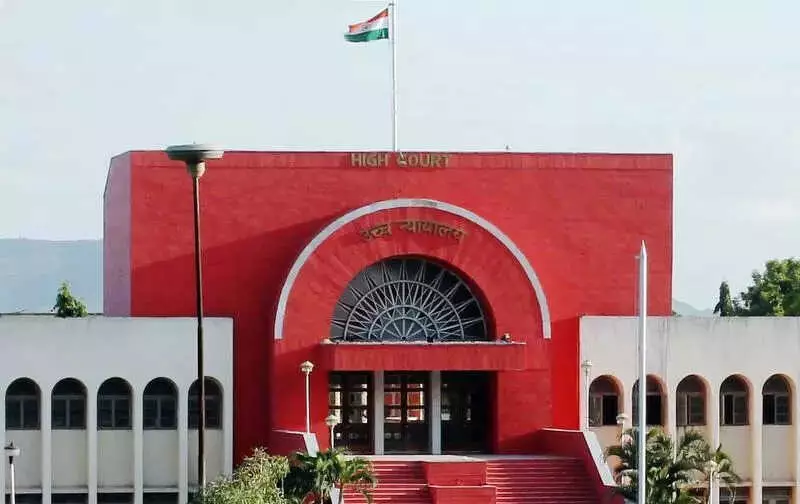
In a significant legal development, the Aurangabad bench of the Bombay High Court has overturned a two-decade-old conviction in a controversial wife suicide case, highlighting critical flaws in the original trial proceedings.
Two Decades of Legal Battle Ends in Justice
The High Court bench led by Justice Sushil Ghodeshwar delivered its judgment on November 21, 2023, quashing the December 18, 2003 ruling by the Jalgaon sessions court that had convicted a Bhusawal resident for cruelty and abetting his wife's suicide on June 14, 2001.
The appellant, who had been out on bail throughout these years, suffered severe consequences from the conviction. He lost his permanent position as a clerk with a cooperative bank and had been struggling to make ends meet by driving an autorickshaw, according to his lawyer Prasanna Kutti who spoke with TOI.

Critical Loopholes in Original Trial
The High Court identified multiple procedural and evidentiary shortcomings that rendered the original conviction unsustainable. The bench noted that the trial court had relied heavily on evidence from interested witnesses - specifically the deceased woman's brother and sister - while failing to examine crucial independent witnesses.
The court highlighted several critical omissions:
- Failure to examine the woman's father, who was the original complainant in the case
- Absence of testimony from the witness who first reported the death to the husband
- No examination of the medical officer who had examined the deceased
- Lack of independent witnesses to corroborate the suicide claim
In its detailed observation, the bench stated: "In such a scenario, it is very difficult to arrive at the conclusion that the deceased committed suicide. Admittedly, no suicide note was found in the house of the deceased."
Marital History and Case Background
The couple had married on April 19, 1998 and initially lived in the husband's joint family in Bhusawal before moving to a separate rented accommodation in the same town. The tragic incident occurred when the wife died by suicide some distance away from their rented home.
The case began with Bajapeth police in Bhusawal registering an accidental death report. Later, based on an oral complaint by the woman's father, a case was filed under sections 498-A (cruelty) and 306 (abetment to suicide) against the husband and eight family members.
The father had alleged that his daughter faced physical and mental torture from her husband, who allegedly demanded Rs 1 lakh for building a house. While the Jalgaon sessions court acquitted all eight relatives, it convicted the husband and sentenced him to three years of rigorous imprisonment on each count.
High Court's Scrutiny of Evidence
The High Court particularly questioned the suicide theory, noting that the well where the incident occurred was a public common well accessible to villagers. The incident happened at 8:15 AM when the area would typically be busy with people fetching water.
"It is very surprising to note here that nobody has come forward to depose or either to give statement to the police that the deceased has committed suicide or she has fallen down in the well accidentally," the bench observed.
The court found the prosecution witnesses' accounts about the suicide unconvincing and noted that the allegations of harassment were general in nature without specific instances of instigation that could constitute abetment to suicide under the law.
In its concluding remarks, the bench emphasized: "Mere bald statement of a general nature is not sufficient to base a conviction for the offence of cruelty, and mere general allegations of harassment or ordinary domestic discord, without specific acts of instigation, cannot amount to abetment."
The judgment brings closure to a legal battle that spanned over twenty years, during which the accused faced both professional ruin and social stigma while maintaining his innocence throughout the protracted legal proceedings.