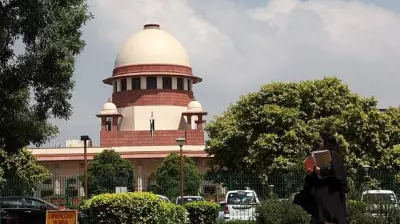
Bombay High Court Directs Rs 50 Lakh Compensation for Covid-19 Victim's Widow
The Bombay High Court has issued a landmark directive, ordering the Maharashtra state government to provide a compensation of Rs 50 lakh to the widow of a peon employed in the Goods and Services Tax Department who tragically succumbed to Covid-19 during the pandemic. This significant ruling was delivered by a bench comprising Justices Makarand Karnik and Shriram Modak on February 23, 2024.
Court's Rationale Against "Grave Injustice"
In their detailed judgment, the justices emphasized that adhering to a strict interpretation of the government resolution dated May 29, 2020, and denying its benefits to the deceased peon would constitute a "grave injustice" to his widow, Sushma Shinde, a resident of Panvel. The court recognized that Jagannath Shinde had answered the call of duty "despite the risk" to his life, a sacrifice that warranted acknowledgment and compensation.
Timeline of the Tragic Case
The sequence of events leading to this legal battle is poignant. Following the nationwide lockdown, Jagannath Shinde was required to report to his office at Vikrikar Bhavan in Mazgaon once per week. He fulfilled this obligation on June 5 and June 12, 2020. Shortly thereafter, on June 26, 2020, he was hospitalized after contracting Covid-19 and tragically passed away on July 3, 2020. His widow's claim for compensation under the government resolution was formally rejected on May 7, 2024, nearly four years after his death.

Government's Initial Stance and Court's Rebuttal
During the proceedings, the government's advocate, Bhupesh Samant, argued that the compensation scheme under the GR was specifically limited to employees directly engaged in Covid-related duties such as survey, tracking, testing, prevention, and relief activities. He contended that since Jagannath Shinde was not involved in these specific tasks, his widow was not eligible for the compensation.
The court, however, provided a more expansive and humane interpretation. While acknowledging that a literal reading of the GR might suggest it applies only to those in direct Covid-duty roles, the justices pointed to a crucial clause that broadens the scope to include "the staff of the district administration, including departments, involved in Covid-19 related duties." The bench firmly stated that the listed categories "cannot be regarded as exhaustive."
Judicial Recognition of Essential Service
Aligning with the arguments presented by the widow's advocate, Ramesh Ramamurthy, the court declared that by attending his workplace during the pandemic, Jagannath Shinde had "exposed himself" to the life-threatening virus. Consequently, he must be regarded as an employee involved in discharging Covid-19 related duties. The judgment poignantly noted that during the fear-driven chaos of the pandemic, frontline and essential service workers emerged as "the pillars of survival, keeping the society from collapsing."
The court warned that a rigid, literal interpretation of the government resolution "would deprive a genuine class of employees who had actually put their lives at grave risk during the pandemic." This ruling sets a precedent for recognizing the sacrifices of all essential workers who continued their duties amidst the health crisis.
Court's Final Directive
The Bombay High Court has mandated the Maharashtra state government to disburse the Rs 50 lakh compensation to widow Sushma Shinde within a strict timeframe of 16 weeks from the date of the order. This decision underscores the judiciary's role in ensuring social justice and providing relief to families who suffered irreparable loss during the Covid-19 pandemic.