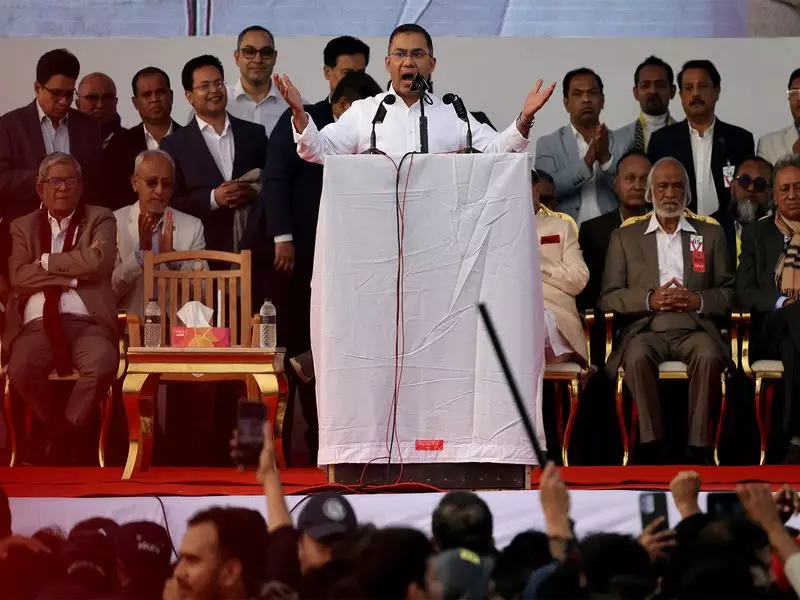
In a significant political address, Tarique Rahman, the acting chairman of the Bangladesh Nationalist Party (BNP), has laid out a comprehensive plan for the future of Bangladesh. Speaking from London, Rahman emphasized a collective vision to build the nation while urgently calling upon the people to uphold peace and shun violence.
A Vision from Exile: Building Bangladesh Together
Tarique Rahman, who has lived in exile in the United Kingdom since 2008, addressed the citizens of Bangladesh directly. He stated, "I have a plan for my country. We want to build Bangladesh together." This declaration underscores the BNP's strategy to position itself as a unifying force with a concrete agenda for national development, contrasting with the current administration led by Prime Minister Sheikh Hasina.
The BNP leader's message comes at a critical juncture, following periods of political unrest and ahead of future electoral processes. Rahman explicitly urged his supporters and the general public to maintain peace, highlighting that progress is impossible in an environment of chaos. His call for peaceful engagement is a central pillar of his recent communications.

Context of Political Struggle and Legal Challenges
Rahman's political journey has been marred by serious legal challenges. He was convicted in absentia in August 2018 for his alleged role in a grenade attack targeting a political rally in 2004, an event that remains a deeply contentious issue in Bangladeshi politics. The BNP has consistently dismissed these charges as politically motivated, designed to sideline the party's leadership.
Despite these convictions, Rahman continues to lead the BNP remotely. His ability to communicate and mobilize support from abroad remains a significant factor in Bangladesh's opposition politics. The party argues that the current government has stifled democratic space, making it difficult for a fair political contest.
The Path Forward: Democracy and Participation
In his address, Tarique Rahman did not merely call for peace but framed it as a prerequisite for genuine democratic participation. The implicit message is a challenge to the Awami League government, accusing it of creating conditions that lead to public frustration. By presenting a plan and advocating for peaceful coexistence, Rahman aims to galvanize public sentiment and international opinion.
The BNP's strategy appears to be two-fold: first, to project a responsible and forward-looking image through its acting chairman's stated vision; and second, to contrast this with what it portrays as an authoritarian and divisive ruling party. The success of this approach hinges on its resonance with the Bangladeshi populace, who have endured prolonged political polarization.
As Bangladesh navigates its complex political landscape, the statements from its exiled opposition leader add a crucial dimension to the national discourse. Whether this call for peaceful nation-building translates into a tangible political movement on the ground remains to be seen. For now, Tarique Rahman has clearly signaled his intent to remain a pivotal figure in shaping the country's future, urging all citizens to join in a collective effort to build a better Bangladesh.