Bihar State Archives Grapples with Severe Preservation Challenges
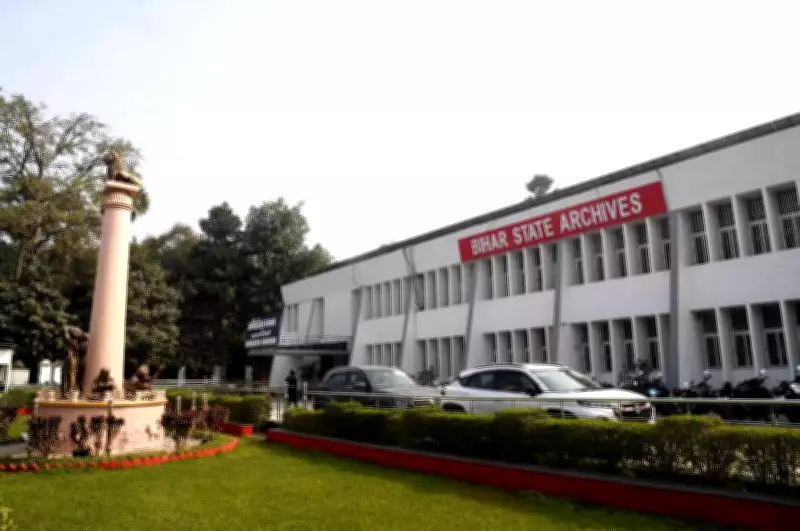
The Bihar State Archives (BSA), a crucial institution serving as a bridge between the past and present, is currently facing a multitude of administrative and logistical hurdles that directly threaten the historical records it is entrusted to protect. These challenges are multifaceted, involving critical shortages in physical space, a lack of specialized personnel, and the immense pressure of digitizing millions of fragile documents without adequate facilities or proper protocols.
Critical Space Shortage Halts Record Transfers
A primary and pressing issue is the severe lack of physical storage capacity. The existing BSA building is completely inadequate to house new records, despite regulations requiring government departments to transfer their permanent files to the archives after 25 years. Currently, the archives hold departmental records only up to 1960, creating a significant gap where newer files have largely not been transferred due to this space constraint. However, there is a glimmer of hope as the state government has recently inaugurated a dedicated plot of land for the expansion of the BSA. Archivist Rashmi Kiran confirms, "The process of bringing in those 'missing' years has finally started now that we have the room to grow."
Administrative Delays and the Appraisal Problem
The delay in record transfers points to a deeper systemic issue: the absence of timely and efficient appraisal processes. Appraisal is the critical procedure through which archivists identify records of permanent historical value, separating them from those that can be legitimately discarded. Archivist Bharti Sharma explains that this process can only function efficiently if government departments receive proper archival training and adhere to a clear retention schedule—a rulebook specifying file lifespans before destruction or transfer. "Appraisal shouldn't wait for 25 years; it should ideally happen every one or two years," Sharma emphasizes. The BSA categorizes files into three types:
- Category A: For permanent rules and regulations.
- Category B: For records that are mostly permanent.
- Category C: For temporary administrative matters.
To bridge this gap, the BSA conducts workshops for departmental staff. "The goal is to ensure that officials know how to safe-keep files from day one so that when they finally reach the archives after 25 years, they are organised and intact," Sharma adds.
Manpower Crisis and Outsourcing Risks
Compounding these issues is a severe shortage of trained manpower. With many permanent posts lying vacant and no active recruitment, the department has increasingly turned to outsourcing for conservation work. This reliance has raised serious concerns among heritage experts, as external agencies often lack the necessary trained personnel and technical expertise. Dr. Shiv Kumar Mishra, INTACH co-convenor, warns, "Haste and a lack of trained workers have led to significant negligence when it comes to conservation and digitisation."
Mishra cites alarming instances in Darbhanga where historical documents were damaged due to improper handling during such outsourced projects, with no subsequent action taken against the responsible agency. "Digitisation requires experienced hands and adequate machines, not just speed. Rushing this process with inadequate machines and technical workers can destroy the very history we are trying to save," he stresses. He further highlights the need for proper maintenance of donated collections, such as the books of renowned historians like R.S. Sharma and Upendra Thakur, which should be well-arranged and preserved in the library.
Bridging the Public Awareness Gap
Beyond physical and administrative hurdles, archivists also describe a significant "awareness gap"—the challenge of making citizens recognize that archives are a vital public resource, not merely a scholarly or governmental one. To combat this, the BSA has recently expanded its outreach activities, actively engaging students and the wider public. Archivist Rashmi Kiran notes, "We are using social media and holding exhibitions across the state to show people that these files belong to them."
In its efforts to make history accessible, the archives have published selected historical materials, including the Todar Mal diary, with a new book on Maulana Mazaharul Haque currently under publication. Additionally, the BSA regularly brings out an annual journal titled 'AbhilekhBihar', contributing to historical scholarship and public discourse.
The situation at the Bihar State Archives underscores a critical need for sustained investment, proper staffing, and meticulous planning to ensure that the state's rich historical heritage is not lost to neglect, administrative inertia, or well-intentioned but poorly executed preservation efforts.