

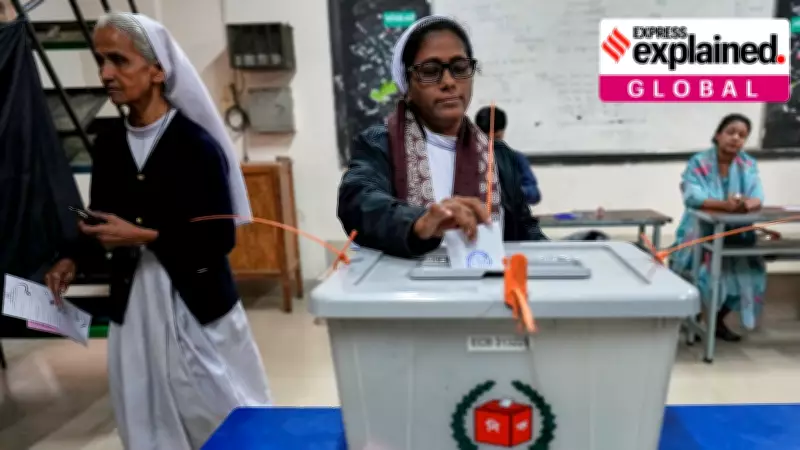
Bangladesh's Dual Vote: Elections and a National Referendum on Reforms
On February 12, 2026, Bangladesh embarked on a pivotal day in its political history, heading to the polls for the first national parliamentary election since the ouster of former Prime Minister Sheikh Hasina. Simultaneously, electors are participating in a national referendum that could reshape the country's institutional framework. This referendum centers on a yes-or-no vote regarding the July National Charter, unveiled by the Muhammad Yunus-led interim government in August 2025, marking the first anniversary of Hasina's removal from power.
The Context and Significance of the Referendum
The election itself is a direct contest between frontrunner Tarique Rahman's Bangladesh National Party (BNP) and a coalition led by the Islamist Jamaat-e-Islami. However, the referendum introduces an additional layer of democratic decision-making. The July National Charter proposes over 80 reforms, with approximately half being constitutional in nature. According to the interim government, this charter is essential to establish lasting democracy and prevent the recurrence of authoritarian and fascist rule, while also giving constitutional recognition to the August 2024 uprising that forced Hasina to flee to India.
By delegating the decision to the electorate through a secret ballot, the government has placed the power in the hands of the people. If a majority votes in favor, a Constitutional Reform Council will be formed to implement the changes within 180 working days from its first session. Conversely, a majority "no" vote means the incoming parliament will not be politically bound to enact the provisions, leaving the future of these reforms uncertain.

Key Proposed Reforms in the Charter
The charter outlines several transformative proposals aimed at overhauling Bangladesh's political and institutional landscape. Some of the most significant reforms include:
- Creation of a bicameral legislature, introducing an Upper House with 100 members proportional to party votes in the national election.
- Implementation of prime ministerial term limits to prevent prolonged leadership.
- Introduction of anti-defection provisions to enhance political stability.
- Formation of a new Judicial Appointments Commission to ensure judicial independence.
- Measures to increase women's political representation and expand fundamental rights.
- A provision that bars the ruling party from unilaterally making further constitutional changes, requiring approval from the Upper House.
However, the referendum has sparked controversy because electors must cast a single yes-or-no vote on the entire charter, without the ability to approve or reject individual reforms. This consolidated approach has raised concerns about democratic granularity and voter choice.
Structure of the Referendum Ballot
The referendum ballot features a single question followed by four consolidated reform proposals. The text reads: Do you agree with the 'July National Charter (Constitutional Reform) Implementation Order, 2025' and the following reform proposals contained in the July National Charter? The proposals are categorized as:

- Constitution of election-time caretaker government, Election Commission, and other institutions as per the charter procedures.
- Establishment of a bicameral parliament with an Upper House, where constitutional amendments require majority approval from this house.
- Obligation for winning parties to implement 30 consensus-based proposals on women's representation, opposition roles, term limits, presidential powers, rights expansion, judicial independence, and local government strengthening.
- Implementation of other reforms as pledged by political parties.
Political Party Positions and Historical Precedents
Two of Bangladesh's major parties, the BNP and Jamaat-e-Islami, have signed the July charter. The Jamaat views this as a unique opportunity to alter a system long dominated by the Awami League and BNP. In contrast, the BNP has expressed discomfort but acquiesced, believing it can modify changes if elected to power. Experts suggest that a BNP-led government might slow-pedal certain reforms, while a Jamaat-led administration could push for faster implementation, indicating that the political transition may extend beyond the election day.
This is not Bangladesh's first experience with referendums. Historically, the country held three referendums before the Hasina government abolished the provision in 2011, which was reinstated by a High Court in 2024 after her ouster. Past referendums in 1977 and 1985 gauged public confidence in presidents and their policies, while the 1991 referendum successfully transitioned Bangladesh from a presidential to a parliamentary system, with all three receiving overwhelming "yes" votes.
As Bangladesh navigates this dual voting process, the outcomes will significantly influence the nation's democratic trajectory and institutional reforms, marking a critical juncture in its political evolution.





