

ASI Report Concludes Bhojshala Mosque Built Using Ancient Temple Remains
The long-standing Bhojshala–Kamal Maula Mosque dispute has entered a critical legal phase following the submission of the Archaeological Survey of India's comprehensive survey report to the Indore bench of the Madhya Pradesh High Court. This development has triggered significant reactions both within the courtroom and among communities in Dhar, setting the stage for a pivotal judicial decision.
Scientific Findings and Historical Analysis
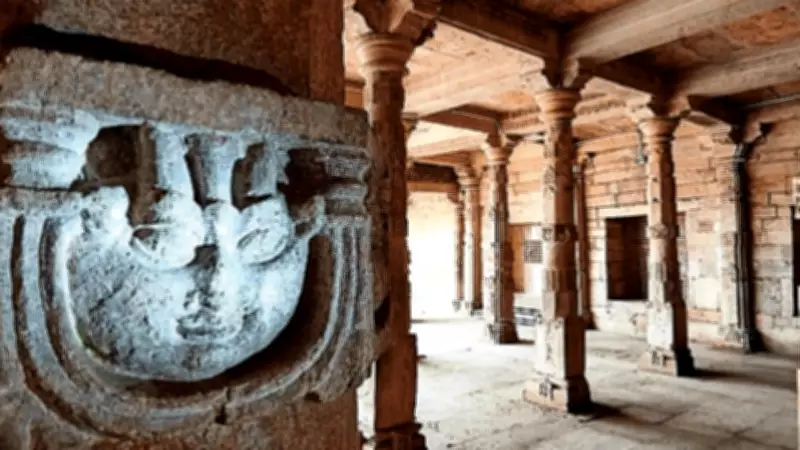
In its detailed 2,189-page report, the ASI concluded that the Kamal Maula Mosque structure within the Bhojshala complex was constructed using architectural elements from ancient temples. The agency emphasized that these findings resulted from extensive scientific investigations, surveys, excavations, and thorough analysis of retrieved artifacts, architectural remains, inscriptions, art, and sculptures.
The report specifically noted that the existing structure appears to have been built centuries later "without much attention to symmetry, design, or uniformity," indicating subsequent construction utilizing earlier architectural remnants. This conclusion has become central to the ongoing legal and religious debate surrounding the site's original character.

Historical Background and Legal Context
Bhojshala holds profound significance for Hindus as the seat of Goddess Vagdevi, while Muslims revere it as Kamal Maula Mosque, attributed to the 13th-century Sufi saint Kamal-ud-Din. Since 1903, the ASI has listed the structure as a protected monument and mosque, with a 2003 Central order establishing regulated worship: Hindu prayers every Tuesday and Muslim namaz every Friday.
Petitions filed in the High Court by Hindu Front for Justice vice-president Ashish Goyal and Bhoj Utsav Samiti convenor Ashok Jain sought a court-monitored scientific survey to determine the monument's original character and establish legal title. The High Court subsequently directed the ASI to conduct a comprehensive survey, excavation, and scientific testing, which was completed over 98 days by a multidisciplinary team led by Additional DG Alok Tripathi.
Key Historical Timeline
- 1010–55 – Rule of Raja Bhoj
- 1034 – Raja Bhoj builds Bhojshala (Saraswati Sadan) and installs Vagdevi idol
- 1305–1409 – Forces of Alauddin Khilji and Dilawar Khan Ghori defeat local rulers; Dhar taken over, monuments destroyed
- 1401–1531 – Independent Malwa Sultanate established; Bhojshala ruined. Maulana Kamaluddin tomb constructed (1459)
- 1875 – Statue of Vagdevi found during excavation near Bhojshala
- 1880 – British political agent takes statue to British Museum, London
- 1952 – ASI declares Bhojshala a protected monument
- 2003 – Communal violence at Bhojshala–Kamal Maula complex
Recent Legal Developments and Court Proceedings
The legal journey has seen several significant milestones:
- March 1, 2024 – Indore bench orders scientific ASI survey within six weeks
- March 22, 2024 – ASI begins 98-day survey
- April 1, 2024 – Supreme Court permits survey while prohibiting physical excavation that alters site character
- July 15, 2024 – ASI submits comprehensive survey report
- January 22, 2026 – Supreme Court directs MP High Court to open sealed ASI report
- February 23, 2026 – High Court directs parties to file objections within two weeks; next hearing scheduled for March 16, 2026
Hearing petitions related to the dispute, Justices Vijay Kumar Shukla and Alok Awasthi directed that the ASI report be made available to all parties and asked stakeholders to file objections, suggestions, opinions, and recommendations within two weeks.

Community Reactions and Emotional Responses
While legal proceedings advanced in court, Dhar witnessed intense emotional responses from devotees. The Bhojshala complex drew large crowds on Tuesday, the designated day for Hindu prayers under ASI arrangements. Inside the complex, women wept as men placed a photograph of Vagdevi amid marigold flowers before morning aarti. A newly printed Vagdevi Chalisa, modeled on the Hanuman Chalisa, was distributed among devotees.
"It is a proud day for Hindus," said Kalaji Pandar, participating in the rituals. "The four decade-long struggle to get our due is yielding fruit. Now, we must build a temple."
Gopal Sharma, convenor of Bhojshala Mukti Yagya, described the moment as deeply personal: "I feel the struggle we started around 1987 is now bearing fruit. My life's dream is coming true." He added that he had continued the legal fight initiated by his father.
Renewed Calls for Temple Construction
The ASI findings have energized demands from Hindu organizations for temple construction at the site. During Basant Panchami celebrations on January 23, Alok Kumar, international president of the Vishva Hindu Parishad, told a gathering in Dhar that a Vagdevi temple would be built at Bhojshala by 2034 through legal means. He stated that the proposed shrine would follow the model of the Ram temple in Ayodhya and would eventually house the consecrated idol currently displayed in the British Museum in London.
Devotees moved through the monument with animated curiosity, pointing out carvings to one another with excitement. "Look here, this is the idol of Lord Hanuman. Over there is a disfigured Lord Ganesha. There is a sea shell, here is a bell," voices called across the corridors as ASI guards monitored the flow of visitors throughout the day.
Muslim Community's Response and Counterarguments
Muslim representatives, also petitioners before the High Court, strongly rejected the ASI's conclusions. Abdul Samad, chairman of the Maulana Kamaluddin Welfare Society, termed the report "misdirection" and cited a British-era ASI survey from 1903 that recorded the structure as Kamal Maula Mosque and declared it a protected monument.
"It was a mosque, it is a mosque. Namaz will continue to be offered there," Samad asserted. He argued that stone fragments referenced by the ASI originated from rubble linked to the destruction of Raja Bhoj's palace rather than a temple demolished to build a mosque. Samad also alleged that several architectural elements were placed at the complex with an "ulterior motive." Muslim representatives have decided to challenge the ASI findings at the March 16 hearing.
Revived Demands for Idol Repatriation
The report's release has reignited demands for the return of the Vagdevi idol displayed at the British Museum in London, where it has been for nearly a century and a half. "My only desire now is that the idol should reach Bhojshala as soon as possible," said devotee Kamla Solanki. "My request to PM Modi is that he gets all our relics back to India."
Petitioner Ashish Goyal stated that the report had strengthened this demand: "Vagdevi is ours. Once the court clears the title, we would urge the MP government and the PM to initiate efforts to bring the goddess back."
Awaiting Judicial Resolution
While the ASI report has significantly reshaped the contours of the Bhojshala-Kamal Maula Mosque dispute, it has not settled the matter definitively. The conclusions now face rigorous scrutiny, interpretation, and legal challenge before the High Court. Until the court delivers its verdict, Bhojshala remains at the intersection of faith, history, and law—a protected monument, a regulated place of worship, and a dispute whose resonance extends far beyond Dhar, embodying complex questions of heritage, identity, and religious coexistence in contemporary India.





