In a significant move to bolster local security, the Indian Army has initiated an intensive training programme for Village Defence Guards (VDGs) in the remote reaches of Jammu and Kashmir. This initiative comes alongside ongoing counter-terrorism operations in the challenging terrain of the Chenab valley.
Intensive Training for First Responders
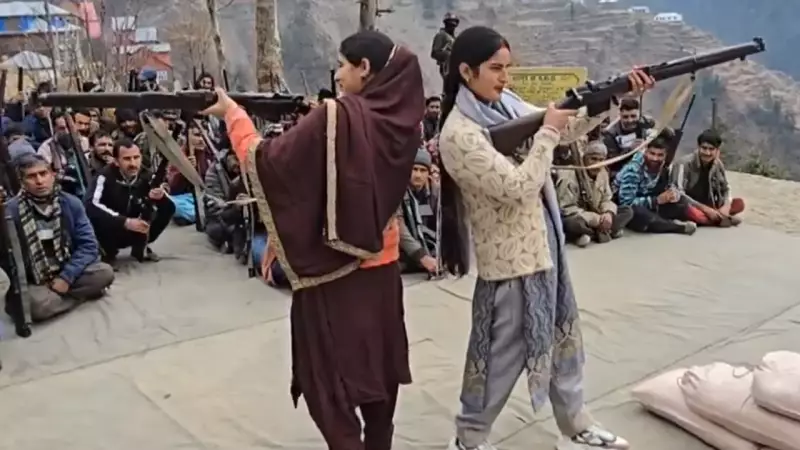
According to officials, the training is currently underway at the Shingini panchayat in Balassa, located approximately 90 kilometres from the Doda district headquarters. A group of around 15 VDGs, which includes women volunteers, is undergoing rigorous instruction. The curriculum is designed to be comprehensive, covering critical skills such as handling automatic rifles, minor tactical manoeuvres, self-defence techniques, and even the construction of bunkers to repel potential attacks.
The primary objective is to equip these local volunteers with the necessary capabilities to protect their own communities. They are envisioned as a vital first line of defence, particularly in areas deemed vulnerable to militant activity. This grassroots security effort complements the larger-scale operations being conducted by the Army, police, and paramilitary forces in the higher mountain reaches of Doda and Kishtwar districts.

New Weapons Boost Confidence Among Volunteers
The VDGs have expressed strong approval for the training initiative and a recent upgrade in their weaponry. They have specifically thanked Union Home Minister Amit Shah for facilitating the provision of modern Self-Loading Rifles (SLRs), which have replaced the older .303 rifles. Volunteers state that this upgrade has markedly enhanced their confidence and operational readiness.
"This is a major programme bringing together members from 17 Village Defence Groups," said Surinder Singh, a VDG member from Shingani. "We are being trained in weapon handling, bunker construction and self-defence. Receiving such training at our doorstep is highly appreciable." Singh also appealed to the government for more automatic weapons, citing the history of frequent terror attacks in the region during the early 1990s.
Echoing this sentiment, Rajesh Kumar Thakur, a VDG from Gauala village, highlighted the psychological impact. "Earlier, we only had .303 rifles. After receiving automatic weapons, our confidence has increased, and we now feel capable of defending our villages," he stated, acknowledging the role of the Army and Jammu and Kashmir Police in the training.
Winter Operations Against Hidden Terror Threats
This local capacity-building drive is set against the backdrop of heightened military activity during Chillai Kalan, the intense 40-day winter period in Kashmir. Security forces have intensified counter-terror operations across Kishtwar and Doda, even in the harsh, snow-bound conditions.
Intelligence assessments suggest that approximately 30 to 35 Pakistani terrorists are currently active in the Jammu region. Recent inputs indicate that these groups, pressured by successful security operations, have retreated deeper into the uninhabited middle and higher mountain reaches. They are believed to be seeking temporary winter hideouts to avoid detection and direct engagement with troops.
In response, the Army and security forces have adopted a proactive winter strategy. They have established temporary bases and surveillance posts deep within snow-covered areas to maintain constant pressure and deny terrorists any safe haven during the challenging winter months.