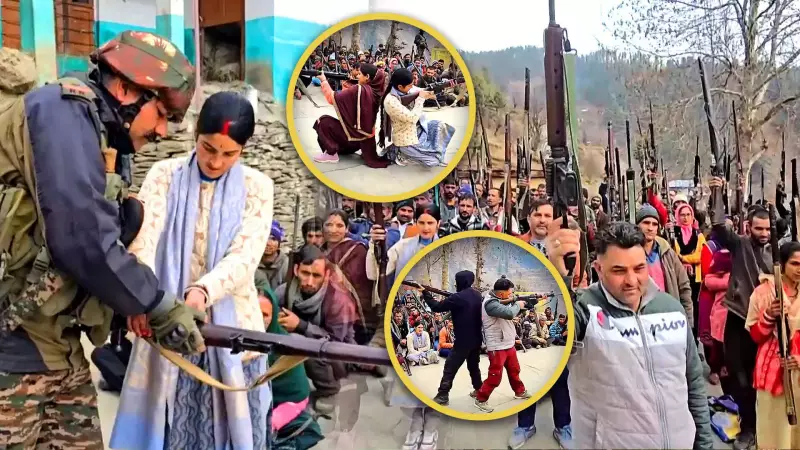
In a significant move to fortify local security, the Indian Army has launched a specialized training program for Village Defence Guards (VDGs) in the sensitive Chenab valley region of Jammu and Kashmir. This initiative comes amid intensified counter-terrorism operations across the Union Territory.
Empowering Local Volunteers with Advanced Training
The training, which commenced recently, is being conducted at the Shingini panchayat in the Balassa area of Doda district. A group of approximately 15 volunteers, including women, are undergoing rigorous instruction. The curriculum is comprehensive, designed to equip these local defenders with critical skills to protect their communities.
The volunteers are being trained in handling automatic weapons, learning basic combat tactics, and mastering self-defence techniques. Beyond direct combat skills, the program also includes practical training in bunker construction and formulating effective responses to potential enemy attacks. This holistic approach ensures the VDGs are prepared for various threat scenarios.

A Strategic First Line of Defence
Senior officials overseeing the program state that its core objective is to strengthen village-level security in vulnerable zones. By arming and training local residents, the forces aim to establish the VDGs as a robust first line of defence. This model enables a swift initial response to any hostile activity before specialized forces can be mobilized.
This community-based security enhancement is not operating in isolation. It directly supports the ongoing joint operations conducted by the Army, police, and paramilitary forces. These operations are focused on tracking down terrorists who have infiltrated the Jammu and Kashmir region in recent years. The trained VDGs act as force multipliers, enhancing the overall security grid and intelligence network.
Context and Broader Security Implications
The training initiative underscores a continued focus on community participation in counter-terrorism efforts in Jammu and Kashmir. The Chenab valley region has witnessed security challenges in the past, making such grassroots empowerment crucial. Integrating women into the program also marks a progressive step towards inclusive security preparedness.
This move is seen as a strategic effort to harden security at the very grassroots level, making remote villages less susceptible to threats and fostering a sense of collective responsibility for safety. The success of such programs relies on the synergy between local volunteers and the permanent security apparatus, creating a more resilient and layered defence mechanism for the region.