

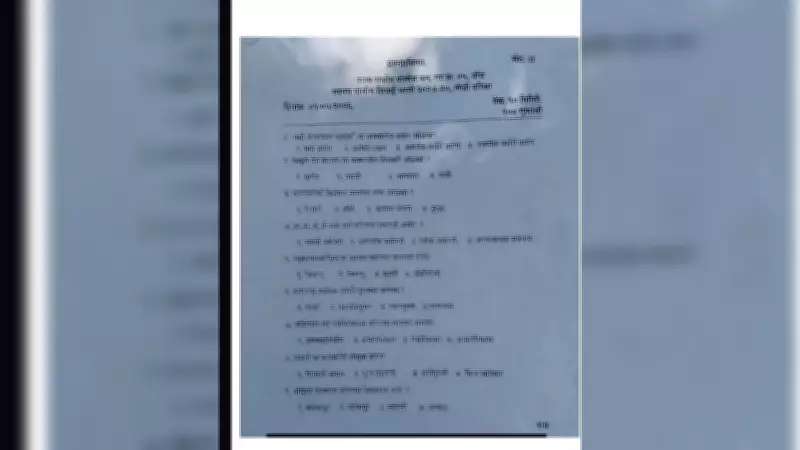
A video has surfaced alleging that a private coaching class shared a sample question paper on the social media platform Telegram, and as many as 85 out of 100 questions in the recently conducted State Reserve Police Force (SRPF) examination matched exactly. The video, if proven authentic, raises serious concerns about the integrity of the recruitment process.
Political Leaders React
Supriya Sule, a prominent political leader, shared the video on social media, calling the situation deeply worrying. She stated, 'If this video is true, it is extremely alarming. The government is literally playing with the lives of youth appearing for competitive examinations in the state. This has now become evident.'
Vijay Wadettiwar, another political figure, also criticized the Maharashtra Police recruitment process. He remarked, 'The SRPF Group 5 written examination held at Daund has turned into a farce of transparency. Instead of having expert officers prepare the question paper, 85 out of 100 questions were leaked. This is a joke on transparency.'

Details of the Alleged Leak
The video purportedly shows a coaching class claiming that their Telegram channel provided sample questions that were identical to those in the actual exam. The coaching class is said to have distributed the sample paper before the examination date. The matching of 85 questions suggests a significant breach of security and raises questions about the examination's credibility.
- The SRPF Group 5 exam is a crucial recruitment drive for the Maharashtra Police.
- Leaders demand a thorough investigation into the matter.
- Authorities have not yet issued an official statement.
Call for Action
Both Sule and Wadettiwar have demanded a high-level inquiry to identify those responsible for the leak and to ensure such incidents do not recur. They emphasized that the future of thousands of young aspirants is at stake and that the government must take immediate corrective measures.
The incident has sparked widespread outrage among candidates and the public, who are calling for stricter cybersecurity measures and transparent examination processes.






