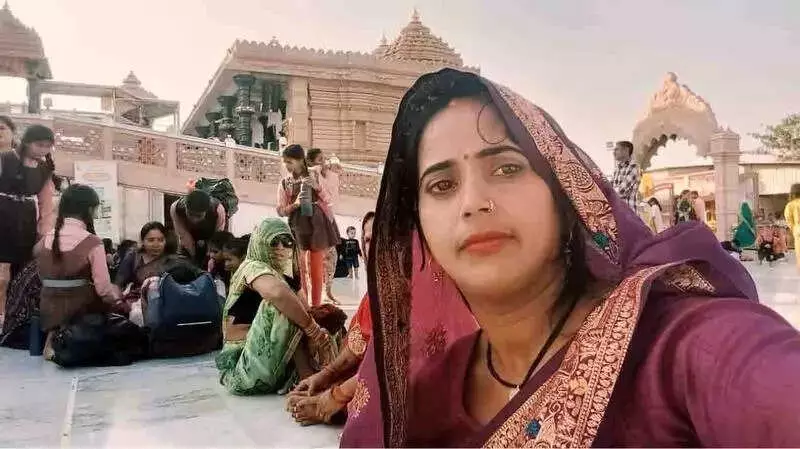
In the vibrant spiritual hub of Prayagraj, a remarkable story of resilience and female empowerment is unfolding, challenging traditional norms and inspiring a community. Sheela Devi, once a woman confined to household chores behind a veil, has transformed into a successful entrepreneur, lighting the path for countless other rural women.
From Domestic Confines to Business Leadership
Hailing from Tikri Kanjasa village in the trans-Yamuna region of Prayagraj district, Sheela Devi's early life was marked by unfulfilled dreams. Domestic circumstances forced her to abandon her education, including her aspiration to complete a B.Ed. degree. Compounding the challenge, her husband, Anuj Yadav, was struggling in his job. However, instead of succumbing to despair, Sheela channelled her determination into creating a new future.
Her turning point came in 2021 when she joined the State Rural Livelihoods Mission (SRLM). She formed the Ujala Women's Self-Help Group, a collective that would become the springboard for her ambitions. As explained by Viraj Singh, the District Mission Manager of Prayagraj, the government provides working capital loans to women in such groups to kickstart or grow their enterprises.

Sheela seized this opportunity. She received a loan of Rs 80,000 from the mission's fund. Demonstrating remarkable financial discipline, she repaid the entire amount to the bank within a single year. Combining this loan with her personal savings, she ventured into the tent house business, a venture that would redefine her life.
Diversification and Multiplying Impact
As her tent rental enterprise began to stabilize, Sheela handed over some operational responsibilities to her husband. This freed her to explore another avenue for income and community service: she began working as a Bijli Sakhi (electricity facilitator). The commissions she earned from this role were not spent, but strategically reinvested back into her tent business, fueling its growth.
This shrewd strategy paid off handsomely. Today, her tent house company generates an annual income of Rs 12 to 15 lakh, a figure that stands as a testament to her acumen. But Sheela's vision extended beyond personal success.
She started connecting educated women from nearby villages to her network, recruiting them as Bijli Sakhis. Furthermore, she provided employment to the family members of these women within her burgeoning tent business. Sheela has now employed more than two dozen local individuals, creating a ripple effect of economic opportunity in her community.
A Model for Mission Shakti and Rural Self-Reliance
Sheela Devi's journey is not an isolated case but a shining example of a larger transformative movement in Uttar Pradesh. Deputy commissioner of NRLM, Ashok Kumar Gupta, highlighted that approximately 2.85 lakh rural women in the Prayagraj district have achieved self-reliance with the support of self-help groups.
These groups, formed under the State Rural Livelihoods Mission, have provided financial assistance in the form of loans, enabling women to start or expand their own businesses. Officials assert that this grassroots economic mobilization is directly accelerating the progress of the government's flagship Mission Shakti initiative, which aims at the empowerment, safety, and self-reliance of women.
From the confines of a ghunghat to the helm of a thriving enterprise, Sheela Devi's story encapsulates a powerful shift. It demonstrates how targeted government support, when met with individual grit and a community-focused vision, can dismantle barriers and build sustainable pathways out of poverty, transforming not just one life, but an entire ecosystem.