In a strategic move to bolster India's ethanol production capacity, the central government is preparing to submit a Cabinet note that would significantly reduce the proportion of broken rice distributed through the public distribution system (PDS). Food Secretary Sanjeev Chopra announced this initiative on Tuesday, revealing plans to cut the share of broken rice in PDS from the current 25% down to just 10%.
Ensuring Stable Feedstock for Ethanol Industry
Addressing the All India Distillers' Association (AIDA) conference, Chopra explained that this proposed adjustment would make approximately 90 lakh tonnes of broken rice available annually for the ethanol sector. This substantial quantity is expected to provide year-round supply stability for distilleries across the country.
"Climate change is a reality. We need to make sure the supply chain is not disrupted. A steady supply of broken rice to the ethanol sector will help ensure that," Chopra emphasized during his address.

Impact on Public Distribution System
Currently, nearly 80 crore beneficiaries receive foodgrains under the PDS, where broken rice constitutes up to 25% of the total distribution. The proposed reduction to 10% would release surplus stocks from the approximately 360-370 lakh tonnes of rice distributed through the system each year.
The excess broken rice resulting from this change would be auctioned to various users including ethanol producers and animal feed manufacturers. A pilot initiative testing this approach has already been conducted in five states, providing valuable data for the broader implementation.
Transition Away from Whole-Grain Rice
Chopra further indicated that starting from the next ethanol supply year, whole-grain rice from the Food Corporation of India (FCI) would no longer be supplied to distilleries. Instead, broken rice from the revamped food distribution system is expected to become the primary grain-based feedstock for ethanol production.
"Looking further ahead, from the next ethanol supply year, whole FCI rice will no longer be available for the sector. In its place, we are moving toward the supply of broken rice," he stated.
This strategic shift promises multiple benefits including improved grain quality for PDS beneficiaries, reduced storage and logistics pressures, and a more predictable supply pipeline for the ethanol industry.
Context of Rising Global Energy Prices
The proposal comes at a crucial time when global crude oil prices remain elevated, and the Indian government continues its push to expand ethanol blending in petrol to reduce import dependence. Chopra highlighted significant progress in this area, noting that ethanol blending levels have reached 20%, a dramatic increase from just 1.5% in 2013.
This enhanced blending has yielded substantial economic benefits, saving more than Rs 1.63 lakh crore in foreign exchange and reducing crude oil imports by 277 lakh metric tonnes since 2014. The ethanol production capacity has also expanded remarkably from 420 crore litres in 2013-14 to nearly 2,000 crore litres currently, with approximately 650 crore litres added in just the past three years.
Addressing Supply Chain Vulnerabilities
Chopra pointed to supply disruptions in 2023, triggered by a weak sugar harvest and concerns over rice output, as evidence of the need for a more stable feedstock strategy. These challenges highlighted the vulnerability of the current system and underscored the importance of developing more resilient supply chains.
The Food Secretary also urged distilleries to accelerate lifting of existing FCI rice allocations. Of the 52 lakh tonnes earmarked for the current ethanol supply year, only 21 lakh tonnes have been lifted so far, while another 20 lakh tonnes remain available at discounted rates until June 30.
Diversifying Feedstock Sources
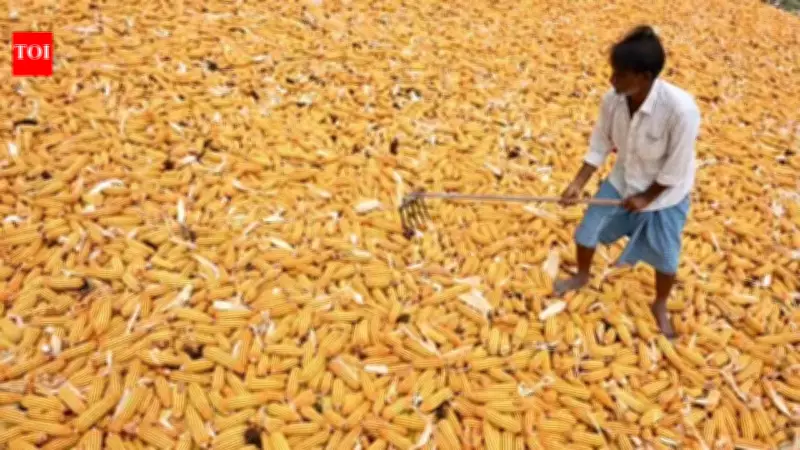
Beyond rice-based solutions, the government is actively promoting alternative feedstocks, particularly maize. Chopra emphasized the promotion of rain-fed maize varieties as part of efforts to encourage crop diversification away from paddy cultivation.

Currently, around 40% of ethanol supply comes from grain-based sources, with maize playing a significant role. Agricultural research efforts are underway to develop high-yield maize varieties capable of producing five to six tonnes per hectare, which would further strengthen the feedstock base.
Learning from Global Experience
Drawing parallels with Brazil's experience following the 1973 oil shock, which eventually led to ethanol blending levels of about 30%, Chopra suggested that the current global energy situation presents a unique opportunity for India to strengthen its biofuel strategy.
"Every challenge carries within it an opportunity. This is an important moment for us to revisit and strengthen our ethanol blending programme," he remarked, highlighting the strategic importance of the current energy landscape.
Industry Perspectives and Future Directions
AIDA president Vijendra Singh expressed the industry's readiness to move beyond the E20 milestone and called for a gradual increase in blending mandates. He advocated for the introduction of flex-fuel vehicles capable of running on 100% ethanol, promotion of ethanol-based cooking stoves, and exploration of ethanol blending in diesel.
P S Ravi, Director (Downstream) at the Federation of Indian Petroleum Industry, urged the ethanol sector to support expansion of the biofuel programme beyond petrol blending. This includes developing biodiesel use in diesel, establishing ethanol as a cooking fuel, creating sustainable aviation fuel pathways, and expanding feedstock sources.
The conference also featured participation from Deputy Agriculture Commissioner Mehraj A S and Robert Papa, agriculture attaché at the Embassy of Brazil in New Delhi, reflecting the international dimensions of biofuel development.
The government is now focusing on demand-side measures, including deliberations on raising blending limits beyond 20%, exploring ethanol blending in diesel, and promoting flex-fuel vehicles. These initiatives represent a comprehensive approach to building a sustainable biofuel ecosystem that supports both energy security and agricultural development.