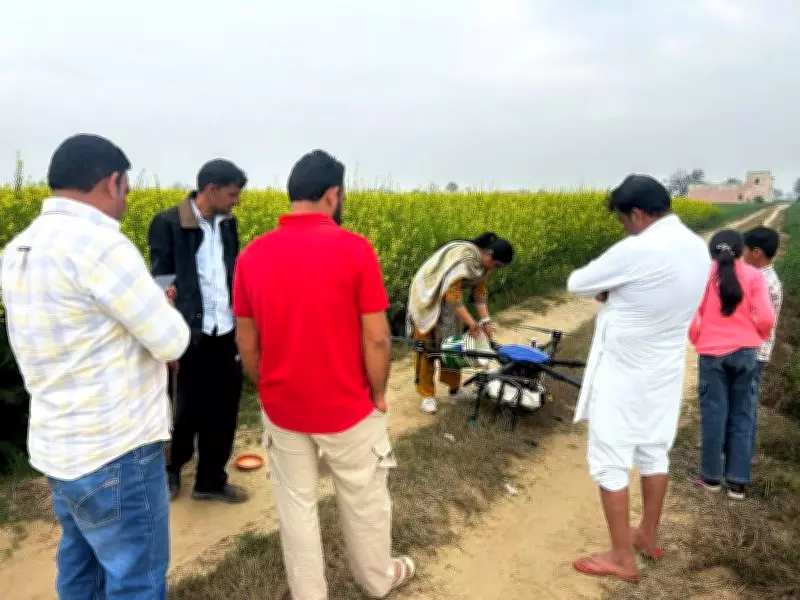
Drone Didi Initiative in Haryana Faces Setbacks on Sirsa Agricultural Lands
The Drone Didi scheme, a government-led program aimed at empowering women in agriculture through drone technology, is experiencing significant difficulties in gaining traction on farms in Sirsa district, Haryana. Launched to modernize farming practices and enhance crop management, the initiative has encountered multiple obstacles that are impeding its widespread implementation.
Key Challenges Hindering Adoption
Farmers and participants report several critical issues that are stalling the scheme's progress. High operational costs associated with drone procurement and maintenance pose a major barrier, making the technology inaccessible for many small-scale farmers. Additionally, insufficient training programs have left potential users unprepared to operate drones effectively, leading to underutilization of the equipment.
Infrastructure limitations, such as poor internet connectivity in rural areas, further complicate drone operations, while a lack of awareness about the scheme's benefits has resulted in low enrollment rates. These factors collectively contribute to the scheme's struggle to achieve its intended impact in Sirsa.

Impact on Agricultural Modernization
The slow uptake of the Drone Didi scheme threatens to delay advancements in Haryana's agricultural sector. Drones are designed to assist with tasks like crop monitoring, pesticide spraying, and yield assessment, which can improve efficiency and reduce labor costs. However, without proper implementation, farmers continue to rely on traditional methods, potentially affecting productivity and sustainability.
Local authorities acknowledge these challenges and are exploring solutions, such as subsidizing costs and expanding training initiatives, to revitalize the program. The success of the scheme is crucial for promoting gender inclusivity in farming and leveraging technology to address agricultural needs in the region.
Future Prospects and Recommendations
To overcome these hurdles, experts suggest a multi-faceted approach. Enhanced government support through financial incentives and better outreach could boost participation. Collaborations with private sector entities might provide technical assistance and innovation, while community-based workshops could raise awareness and build skills among farmers.
If these measures are implemented effectively, the Drone Didi scheme has the potential to transform farming practices in Sirsa and serve as a model for other districts. However, immediate action is needed to address the current struggles and ensure the initiative takes off as planned.