Union Budget 2026: 16th Finance Commission Proposes Major Boost for Rural Local Bodies
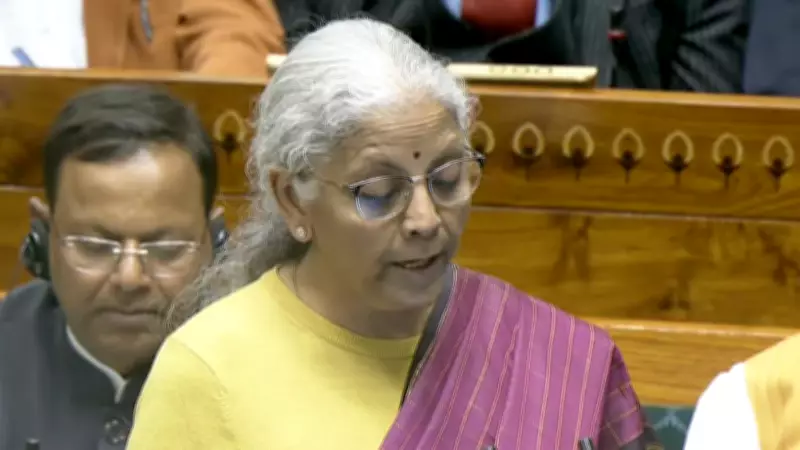
In a significant development for India's rural governance, the Sixteenth Finance Commission has tabled its report with substantial financial recommendations for local bodies across the country. Union Finance Minister Nirmala Sitharaman presented the comprehensive document in the Lok Sabha, outlining a transformative funding framework for the next five years.
Substantial Allocation for Local Governance
The commission has recommended a total grant of ₹7.91 lakh crore for local bodies spanning the period from 2026-27 to 2030-31. This massive allocation represents a strategic investment in grassroots democracy and decentralized governance structures throughout India.
Breaking down this substantial amount reveals a clear prioritization of rural development. The commission has earmarked ₹4.35 lakh crore specifically for rural local bodies, which includes gram panchayats, block panchayats, and district panchayats. Urban local bodies will receive ₹3.56 lakh crore under the commission's recommendations.

Historic Increase for Rural Infrastructure
The allocation for rural local bodies represents a remarkable near-doubling of funding compared to the previous commission's recommendations. The Fifteenth Finance Commission had suggested a grant of ₹2.37 lakh crore for rural bodies, of which ₹1.75 lakh crore had been released by the central government until July 2025.
This substantial increase reflects the government's enhanced focus on strengthening rural governance mechanisms and infrastructure development at the grassroots level. The enhanced funding is expected to significantly boost the capacity of rural local bodies to deliver essential services and implement development projects.
Detailed Breakdown of Rural Allocation
The ₹4.35 lakh crore recommended for rural local bodies has been carefully structured to ensure effective implementation:
- ₹3.48 lakh crore designated as basic grant
- ₹43,524 crore allocated as rural local body performance grant
- ₹43,524 crore earmarked for state performance grants
The distribution mechanism within rural local bodies prioritizes gram panchayats, which will receive 90 percent of the total rural grant. Block and district panchayats will each receive 5 percent of the allocation, ensuring a balanced approach to rural governance funding.
State-wise Distribution Methodology
The commission has established clear parameters for distributing the rural local body grant among states. The allocation will be determined based on two primary factors:
- The projected rural population for 2026
- The total geographical area of each state
This methodology ensures that states with larger rural populations and extensive geographical areas receive proportionate funding to address their specific developmental needs.
Year-wise Financial Roadmap
The commission has outlined a progressive year-wise allocation for rural local body grants, demonstrating a planned escalation of funding:
- 2026-27: ₹55,909 crore
- 2027-28: ₹71,300 crore
- 2028-29: ₹92,166 crore
- 2029-30: ₹1,02,303 crore
- 2030-31: ₹1,13,558 crore
This increasing allocation pattern reflects the commission's vision of gradually enhancing financial support to rural local bodies as they build capacity and demonstrate effective governance.
Implementation Framework and Accountability Measures
The commission report establishes clear guidelines for the disbursement and utilization of funds. Local body grants will continue to be released in minimum two equal instalments each year, maintaining consistency with existing practices while ensuring regular fund flow.

To prevent delays in fund transfer, the commission has instituted strict accountability measures. State governments are mandated to transfer grants-in-aid to their respective local bodies within 10 working days of receiving funds from the Union Government. Any delay beyond this stipulated period will require state governments to release the funds along with interest, calculated at the effective rate applicable to market borrowings or State Development Loans from the preceding financial year.
This robust implementation framework aims to ensure timely availability of funds at the grassroots level while maintaining financial discipline and accountability throughout the transfer chain.