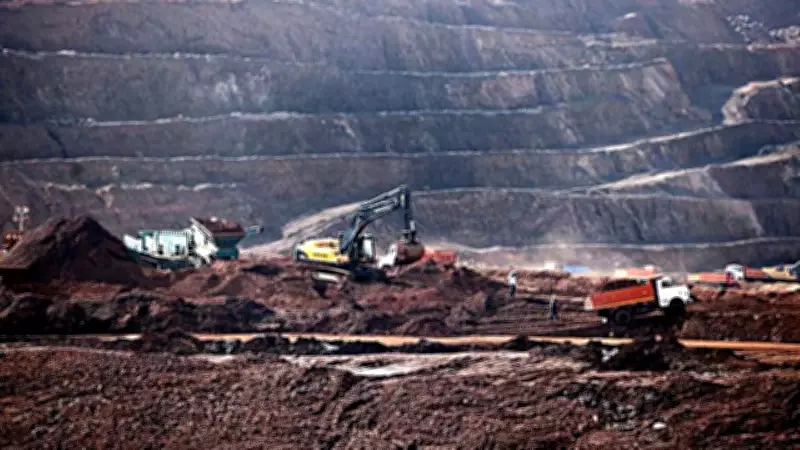
The Union Budget for the fiscal year 2026-27 has introduced a significant measure to bolster India's critical minerals sector by exempting basic customs duty on the import of capital goods required for processing these essential resources. This strategic move aims to enhance the country's domestic processing capacity, which is currently in its nascent stages, and reduce reliance on imports of refined minerals and components.
Addressing Key Bottlenecks in Critical Minerals Ecosystem
Processing has been identified as one of the primary bottlenecks in India's critical minerals ecosystem. The nation depends heavily on imports for refined minerals and components, making this exemption a crucial step toward self-reliance. By lowering the cost of importing necessary machinery and equipment, the government hopes to stimulate investments in domestic processing facilities.
Global Context and China's Dominance
Notably, China controls approximately 90% of global critical mineral processing and has imposed restrictions on several critical and heavy rare earth minerals amid ongoing trade tensions with the United States. Although some controls have been eased following discussions between US President Donald Trump and Chinese President Xi Jinping, the prolonged restrictions have prompted countries, including India, to diversify their supply chains and reduce dependency on a single source.

Expert Insights on Fiscal Incentives
Rajib Maitra, Partner at Deloitte India, commented on the proposed exemption, stating that it will enhance the viability of projects and encourage investments in domestic processing. "It provides the necessary fiscal incentives and regulatory clarity in reducing import dependence and supporting emerging sectors such as electric mobility, renewable energy, and advanced manufacturing," Maitra added.
Boosting Exploration and Prospecting Efforts
In addition to the customs duty exemption, the Budget emphasizes incentivizing the prospecting and exploration of critical minerals. It proposes including certain critical minerals in the list of minerals under Schedule XII of the Income Tax Act. This inclusion will make expenditures incurred on prospecting and exploration eligible for tax deductions, thereby reducing the financial burden on mining companies during the high-risk phase of exploring new mineral deposits.
India's Import Dependence and Strategic Initiatives
India has been actively working to reduce its import dependence on critical minerals, especially as the government's push for large-scale renewable energy expansion and electric vehicle (EV) adoption is expected to sharply increase demand for these resources. Currently, India is 100% import-dependent for key critical minerals such as:
- Cobalt
- Lithium
- Nickel
- Rare earth elements (REEs)
- Silicon
These minerals are considered crucial for batteries, solar panels, semiconductors, and advanced electronics.
National Critical Mineral Mission (NCMM)
In January 2025, the government launched the National Critical Mineral Mission (NCMM) with an envisaged outlay of Rs 34,300 crore over seven years. The mission aims to secure the entire critical minerals supply chain, from domestic exploration and mining to processing, recycling, and overseas acquisition. In addition to government funding, central public sector undertakings (PSUs) are expected to invest Rs 18,000 crore under this initiative.
The Union Budget's measures represent a comprehensive approach to strengthening India's critical minerals sector, aligning with broader goals of economic growth, technological advancement, and energy security.