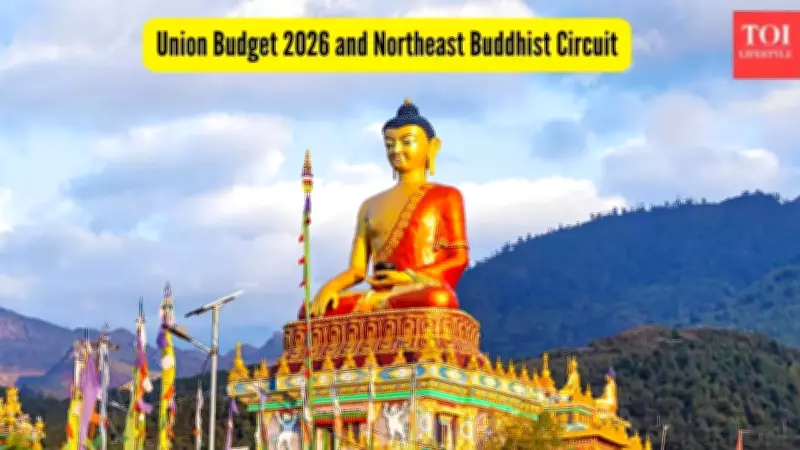
In a significant policy announcement, Finance Minister Nirmala Sitharaman has unveiled plans for a comprehensive Buddhist Circuit scheme targeting six Northeastern states during the presentation of the Union Budget 2026–27 in Parliament on February 1, 2026. This strategic initiative represents a major shift in India's approach to religious tourism, aiming to develop a well-planned network of Buddhist pilgrimage sites across Arunachal Pradesh, Sikkim, Assam, Mizoram, Tripura, and Manipur.
Boosting Cultural Tourism in the Northeast
The tourism sector emerged as a prominent highlight in the 2026 budget, recognized as a crucial driver for employment generation and economic growth. While the minister also announced investments in electric transport and seaplane manufacturing, the development of the Buddhist Circuit stands out as a particularly transformative feature with the potential to reshape travel patterns across South Asia's Buddhist pilgrimage network.
Despite their historical significance, Buddhist sites in the Northeast have remained largely under-explored compared to established destinations like Bodh Gaya and Sarnath, which attract hundreds of thousands of tourists annually. The new scheme aims to address this disparity through improved connectivity, infrastructure development, and enhanced digital facilities.

Industry Reactions to the Budget Announcements
Travel industry leaders have welcomed the budget's focus on experiential and cultural tourism. Karan Agarwal, Director of Cox & Kings, noted that the budget demonstrates a balanced approach to both inbound and outbound travel. "What stood out for me in this Budget is that it doesn't treat travel as a one-sided story," Agarwal commented. "The reduction of TCS on foreign tour packages to 2% addresses friction for outbound travelers, while the emphasis on cultural experiences through archaeological sites, Buddhist circuits, and local guide networks shows a shift toward how India is experienced, not just visitor numbers."
Siddhartha Gupta, CEO of Yatra Online Limited, emphasized the need for ecosystem development: "India's travel sector has established demand across segments. The focus must now be on building an efficient, affordable, and predictable ecosystem, and this budget takes steps in that direction."
Comprehensive Development Plans
Finance Minister Sitharaman explained that the Northeast region presents unique cultural intersections of Theravada, Mahayana, and Vajrayana Buddhist traditions. The Buddhist Circuit scheme is designed not only to preserve ancient temples and monasteries but also to establish interpretation centers, pilgrimage facilities, and improved transportation networks.
Hari Ganapathy, Co-Founder of Pickyourtrail, highlighted the experiential aspect: "The emphasis on experience-led growth through integrated medical and tourism hubs, immersive heritage destinations, and eco-tourism significantly strengthens India's appeal for international travelers seeking authentic experiences. These initiatives diversify India's tourism narrative beyond metros and distribute economic benefits more evenly."
Key Buddhist Attractions in the Northeast Circuit
The Buddhist Circuit will encompass numerous significant sites across the six states:
- Arunachal Pradesh: Tawang Monastery, one of India's largest Buddhist monasteries
- Sikkim: Rumtek Monastery and Enchey Monastery in Gangtok
- Assam: Hayagriva Madhava Temple in Hajo, revered by both Buddhists and Hindus
- Manipur: Historic Buddhist communities and temples
- Mizoram: Several Buddhist heritage sites showcasing regional diversity
- Tripura: Kalachand Temple and other heritage locations
Overcoming Regional Challenges
These Northeastern states have historically faced challenges including inadequate infrastructure and difficult weather conditions that have limited tourism development. However, the Buddhist Circuit scheme represents one of the most visionary travel announcements in the Union Budget 2026, signaling positive transformation for the region.

The integrated approach promises to create a more seamless journey experience through the Eastern Himalayas, connecting previously isolated sites and making them accessible to domestic and international pilgrims alike. This initiative aligns with broader efforts to position India as a premier destination for spiritual and cultural tourism while promoting regional economic development.