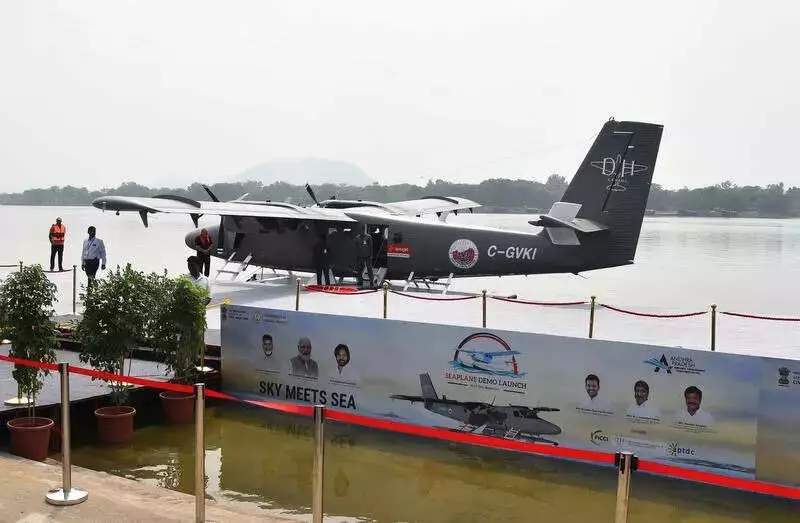
In a significant move to enhance regional air connectivity, the Union government has confirmed receiving a major proposal from Andhra Pradesh to develop water-based aviation infrastructure. The state has identified ten potential locations for establishing water aerodromes, aiming to facilitate future seaplane operations across its coastal and riverine regions.
Centre's Push for Water-Based Aviation Routes
Union Minister of State for Civil Aviation, Murlidhar Mohol, provided this information in response to a question raised in the Rajya Sabha. The query was posed by TDP member Bida Mastan Rao, who sought details on the expansion of seaplane connectivity in coastal areas. Minister Mohol stated that the Centre is actively promoting water-based aviation routes as a key component of the regional connectivity scheme (UDAN).
He clarified that the promotion of seaplane operations is not a new initiative. The government has been advocating for this mode of transport since the launch of UDAN 3.0. Several potential routes across various states and union territories have already been identified and put out for bidding. The primary objective is to improve last-mile connectivity to remote, hilly, or island regions where traditional airport construction is challenging or economically unviable.

Andhra Pradesh's Ambitious Proposal
Highlighting Andhra Pradesh's proactive role, Mohol informed the House that the state government has forwarded a list of ten potential locations for developing water aerodromes. The proposed sites represent a diverse mix of tourist destinations, reservoir sites, backwaters, and coastal belts.
The locations proposed by the Andhra Pradesh government are:
- Araku
- Gandikota
- Kakinada
- Konaseema
- Lambasingi
- Narsapur
- Prakasam Barrage
- Rushikonda
- Srisailam
- Tirupati
The state believes that initiating seaplane services from these points will significantly boost both regional connectivity and tourism. By linking popular tourist spots and remote areas directly via air, the plan aims to unlock new economic opportunities.
Guidelines and State Responsibilities
The Union Minister also outlined the established framework for such projects. The Civil Aviation Ministry has already released comprehensive guidelines for seaplane operations under the UDAN scheme. These guidelines clearly define the roles and responsibilities of all stakeholders involved, including the Centre, state governments, and operators.
However, Mohol emphasised a crucial point: while the Centre supports the sector's overall development, the feasibility assessment of specific water bodies rests entirely with the respective state or union territory governments. Before forwarding any proposal for final approval, state authorities must conduct thorough evaluations covering environmental impact, hydrological conditions, operational viability, and safety parameters.
With Andhra Pradesh proposing a substantial cluster of ten water aerodromes, the ministry now expects the state to conduct detailed feasibility studies and submit complete project plans. Only after this due diligence will operational clearances be considered.
If these proposals are successfully finalized and implemented, Andhra Pradesh could emerge as a frontrunner in India's developing seaplane ecosystem, setting a benchmark for other coastal and riverine states to follow. This initiative aligns with the broader national goal of enhancing connectivity through innovative and sustainable aviation solutions.