Union Minister Advocates Advanced Breeding Technologies to Revolutionize Dairy Sector
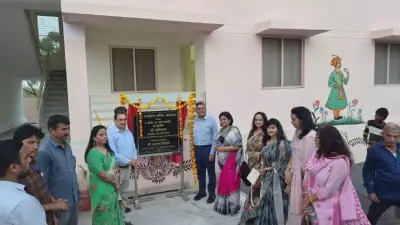
In a significant address at the 2nd National Veterinary, Dairy and Fisheries Symposium 2026, Union Minister of State for Fisheries, Animal Husbandry and Dairying, Satya Pal Singh Baghel, emphasized the transformative potential of advanced breeding technologies. Speaking at Nagpur Veterinary College under Maharashtra Animal and Fishery Sciences University (MAFSU), Baghel outlined how innovations like sex-sorted semen and IVF-based embryo transfer can dramatically boost milk production and enhance farmers' incomes across India.
Sex-Sorted Semen: A Game-Changer for Dairy Productivity
Baghel highlighted that the adoption of sex-sorted semen technology can ensure up to 90% birth of female calves, directly strengthening dairy productivity. "It's my dream to see 100% female calves being produced in India using sex-sorted semen and in-vitro fertilisation technique," the minister stated passionately. He explained that female calves of indigenous breeds such as Gir, Sahiwal, and Rathi grow into milk-producing cows, thereby increasing herd efficiency and reducing the economic burden associated with non-productive male cattle.
Key benefits of this technology include:

- Higher probability of female offspring from high-yielding breeds
- Substantial long-term gains for farmers
- Reduced dependency on bullocks in modern agriculture
The minister pointed out that even a marginal investment of Rs750 per semen straw can yield substantial long-term gains of Rs20,000 to 30,000 per high milk yielding cow for farmers. With the higher probability of female offspring from these breeds, farmers can significantly expand milk production capacity within a few years, leading to stable and enhanced income streams.
IVF-Based Embryo Transfer: Multiplying High-Yielding Cattle
Baghel also underlined the crucial role of IVF-based embryo transfer, which enables the multiplication of high-yielding indigenous and crossbred cattle. "By implanting embryos from genetically superior cows, farmers can rapidly upgrade their livestock quality, resulting in higher milk yield, improved disease resistance, and better overall productivity," he explained.
This technology allows for:
- Rapid genetic improvement of livestock
- Enhanced milk production capabilities
- Better adaptation to climate challenges
Integrating Technologies for Sustainable Rural Prosperity
The minister noted that integrating these advanced breeding technologies with proper veterinary care, nutrition, and scientific animal husbandry practices can help farmers move decisively toward the goal of doubling their income. He emphasized that livestock-based income provides crucial stability against uncertainties such as climate change, erratic rainfall, and crop losses.
Baghel stressed several critical points:
- Dairy and allied sectors remain critical pillars of the rural economy
- Livestock activities offer sustainable and regular income compared to seasonal agriculture
- Adoption of modern breeding techniques will contribute to rural prosperity and employment generation
- The government is actively promoting these technologies to ensure maximum birth of female calves
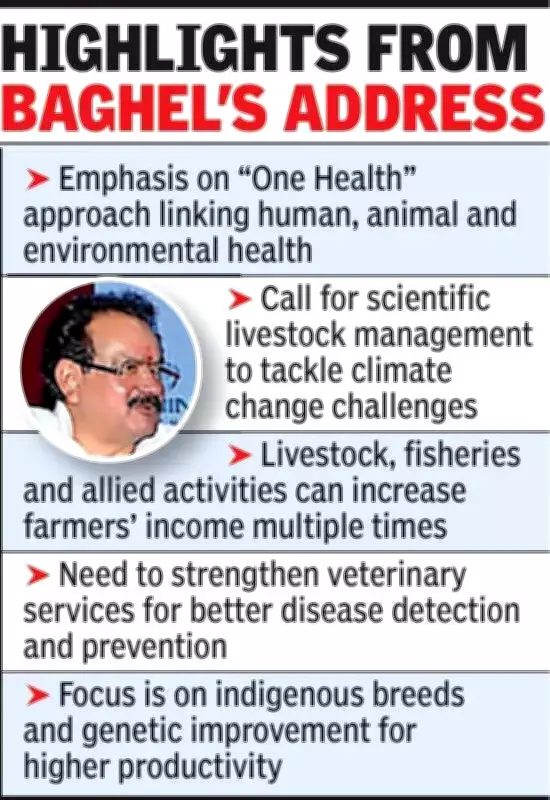
Key Highlights from the Minister's Address
The symposium, organized jointly by MAFSU and Agrivision, featured several important announcements and focus areas:

- Emphasis on the "One Health" approach linking human, animal and environmental health
- Call for scientific livestock management to tackle climate change challenges
- Recognition that livestock, fisheries and allied activities can increase farmers' income multiple times
- Need to strengthen veterinary services for better disease detection and prevention
- Focus on indigenous breeds and genetic improvement for higher productivity
- Dairy sector identified as a stable income source compared to crop-based earnings
- Expansion of infrastructure and awareness crucial for technology adoption
- Stress on responsibility toward animals, which cannot express their ailments
The event saw participation from distinguished guests including MAFSU Vice-Chancellor Niteen Patil, National Joint Organising Secretary of the ABVP Devdatt Joshi, President of the Indian Veterinary Council Umesh Chandra Sharma, Chief Executive Officer of the National Fisheries Development Board Dr. BK Behera, University's Director of Instructions and Dean Dr. Shirish Upadhye, National Convener of Agrivision Manish Fate, and Organising Convener Shivam Dubey.
Baghel concluded by emphasizing that A1 and A2 milk produced by these high-yielding cows sells at a premium, creating additional revenue streams for farmers. The integration of modern breeding technologies with traditional knowledge and scientific practices represents a promising path toward sustainable agricultural development and economic growth in rural India.