Budget 2026: Rs 67,300 Cr for Jal Jeevan Mission
The Indian government has allocated Rs 67,300 crore for the Jal Jeevan Mission in the Union Budget for the next fiscal year, aiming to provide tap water to every rural household.
Jammu and Kashmir Lt Governor Manoj Sinha announces approval for providing 200 units of free electricity to 2.23 lakh AAY families under PM Surya Ghar Muft Bijli Yojana, fulfilling a key National Conference electoral promise.
Chief Minister advocates for implementing intercropping in mission mode to significantly increase farmers' income manifold, emphasizing sustainable agricultural practices.
The 16th Finance Commission's termination of Revenue Deficit Grant could cost Punjab Rs 24,000 crore over five years, exacerbating the state's Rs 4 lakh crore debt burden amid election-year spending pressures.
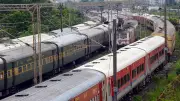
Railway Minister Ashwini Vaishnaw announces significant fleet expansion with more Vande Bharat Sleeper and Chair Car trains, plus Amrit Bharat and Namo Bharat services in 2026-27.
The 16th Finance Commission recommends including heatwaves and lightning as notified disasters, enabling states to fully utilize SDRF funds for relief efforts amid rising frequency and severity.
The 16th Finance Commission recommends integrating peri-urban areas into municipal bodies and modernizing drainage in mid-sized cities to boost orderly urban growth.
The government announced a series of measures in Budget 2026 to boost inland waterways and coastal shipping, aiming to double their cargo share by 2047 and reduce logistics costs.
The National Highways Authority of India eliminates the Know Your Vehicle process for FASTag applications on cars, jeeps, and vans starting February 2026, streamlining toll payments.
The Union Budget 2026 outlines ambitious urban development goals, but experts question the capacity to implement them effectively across India's cities.
The 16th Finance Commission reduces weight given to low fertility rates in tax devolution, signaling a shift from population control concerns to addressing ageing and labour shortages in states like southern India.
The Congress party has strongly criticized the government's proposed substitute for the MGNREGA scheme, labeling it a flawed policy while praising the original law as transformative for rural employment in India.
Union Budget 2026-27 introduces major Customs and excise reforms to simplify tariffs, support domestic manufacturing, and enhance export competitiveness amid global trade tensions.
Union Budget 2026-27 emphasizes targeted efforts to increase farmers' income through productivity enhancement, entrepreneurship, and cutting-edge AI technology. Finance Minister announces Bharat-VISTAAR, focus on high-value crops, fisheries, livestock, an
Finance Minister Nirmala Sitharaman's Union Budget 2026-27 balances growth with stability, offering procedural ease for taxpayers and clearer rules for investors while phasing out some benefits.
Railway Minister Ashwini Vaishnaw announces highest-ever Rs 2.93 lakh crore capex allocation for 2026-27, with safety receiving Rs 1.20 lakh crore. Focus on Kavach system, electrification, and new lines to transform Indian Railways.
India's Union Budget 2026-27 introduces a 21-year tax holiday for foreign cloud providers using Indian data centers, aiming to boost infrastructure investment and position India as a global AI and cloud services hub.
Union Budget 2026-27 introduces key changes: no income tax bracket revisions but higher F&O taxes, increased duty-free allowance, and focus on manufacturing and job creation amid global challenges.
Finance Minister announces Mahatma Gandhi Gram Swaraj scheme to boost khadi, handloom, and handicrafts, while opposition protests MGNREGA renaming. Budget 2026 includes textile sector initiatives.
Union Budget 2026-27 introduces Divyangjan Kaushal Yojana for livelihood training and Divyang Sahara Yojana for assistive devices, with Rs 300 crore allocated to empower persons with disabilities.
Union Budget 2026-27 proposes dedicated rare earth corridors in mineral-rich states and extends customs duty exemptions for renewable energy projects, aiming to boost India's semiconductor and green energy ambitions.
Union Budget 2026 introduces seven high-speed rail corridors and a City Economic Region initiative to accelerate urban growth, alongside a new dedicated freight corridor for sustainable cargo transport.
Union Budget 2026 introduces significant tax relief measures for fisheries and cooperatives, including customs duty exemption for fish caught in EEZ and high seas, aimed at boosting farmer income.
The Union Budget 2026-27 allocates substantial funds to social welfare sectors, with rural development receiving Rs 2.73 lakh crore, education Rs 1.39 lakh crore, and health Rs 1.04 lakh crore, emphasizing inclusive growth.
Union Budget 2026 proposes significant investments in electronics manufacturing, rare earth corridors in mineral-rich states, and semiconductor production to boost India's tech ecosystem.
The Union Budget 2024 has introduced significant changes to price thresholds for various goods, including medicines and sin goods like cigarettes. These adjustments aim to streamline taxation and impact consumer costs across India.
The Union Budget 2026 introduces a major restructuring of rural employment funding, allocating Rs 95,692 crore through new channels like VB-G and Ram-G to enhance efficiency and transparency in the Mahatma Gandhi National Rural Employment Guarantee Act (M
The 16th Finance Commission has recommended a ₹66,100 crore grant to accelerate urbanisation and revamp drainage systems in Indian cities, focusing on wastewater management and statutory urban status conversion.
DRDO Director General Binoy Kumar Das praised the Union Budget's focus on Atmanirbhar defence, semiconductor self-reliance, and next-gen military technologies, highlighting breakthroughs in GaN chips.
The Centre will continue transferring 41% of collected taxes to states as per the 16th Finance Commission. Southern states like Karnataka, Kerala, Andhra Pradesh, and Telangana will see increased shares, while Tamil Nadu's share dips slightly.