National Conference Advocates for Uniform Recruitment Rules for Town Planners
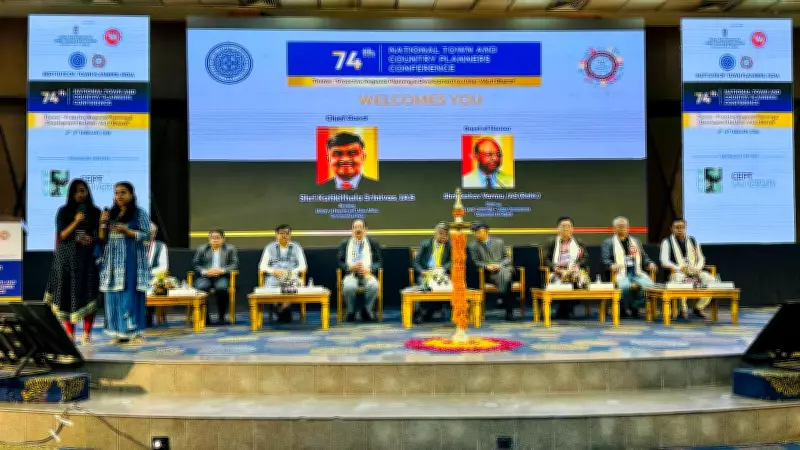
The ongoing 74th National Town and Country Planners Conference in Ahmedabad has issued a strong recommendation for the establishment of uniform recruitment rules for town planners across India. This call was emphasized by ITPI President Pradeep Kapoor, who stressed that posts for town planners should be filled exclusively by qualified professionals, highlighting the current disparity in rules followed by different states.
Shift Towards Regional and Technology-Enabled Planning
Participants at the three-day conference, organized by the Institute of Town Planners India in collaboration with the Gujarat Government's Urban Development and Housing Department, underscored the need for a fundamental shift in urban planning strategies. The focus is on adopting regional, transit-oriented, and technology-enabled approaches to tackle rapidly evolving urban and economic challenges. Metropolitan regions were identified as key drivers for transitioning local economies towards higher productivity growth, provided they are supported by appropriate institutional frameworks and long-term economic planning.
Mumbai Metropolitan Region as a Model
The Mumbai Metropolitan Region was cited as a prime example where a significant transformation in planning strategy, institutional behavior, and development philosophy is currently underway. This region is developing a city-region economic plan aligned with local, national, and international requirements, serving as a adaptable model for other metropolitan areas based on their unique resources and growth potential.

Gujarat's Initiatives to Ease Urban Pressure
The conference highlighted schemes undertaken by the Gujarat Government for areas such as Sanand, Kalol, Savli, Hirasar, and Bardoli. These initiatives are expected to significantly alleviate urban pressure on surrounding major cities in the near future, demonstrating the effectiveness of targeted regional planning.
Key Recommendations and Future Directions
Regional Planning for Viksit Bharat: Participants emphasized that regional planning should be a key instrument for achieving the vision of Viksit Bharat by 2047, promoting sustainable development and economic growth.
Megacity Regions in Spatial Planning: These were identified as crucial tools for defining settlement hierarchies, infrastructure networks, transportation systems, and service delivery, enhancing overall urban management.
Use of Existing Frameworks: Existing land-use frameworks, such as Rural Rapid Development Formulation planning and cluster development under the Rurban Mission, were recommended as valuable references for metropolitan regional planning.
Integration of Artificial Intelligence: There was a consensus on leveraging AI in city and regional planning. Delegates noted that effective AI-driven planning requires strengthening data volume, velocity, and variety at city and regional levels. A structured approach was suggested, involving data integration, modeling, scenario simulation, predictive analytics, and decision-support systems aligned with policy formulation.
Moving Beyond Static Plans: The need to transition from static master plans to a "living city" concept was highlighted, advocating for active and participatory planning within a city-region economic framework.
Review of Traditional Schemes: Traditional town planning schemes, including newer land pooling models, were recommended for review in terms of implementation timelines, landowner participation, use of modern technologies, compensation mechanisms, and overall governance effectiveness.
Inauguration and Closing Remarks
The conference was inaugurated by K Srinivas, Secretary of the Ministry of Housing and Urban Affairs, Government of India, who emphasized the urgent need for urban development plans that focus on economic development within the context of surrounding regions. Detailed recommendations from the conference will be formulated after the completion of an upcoming technical meeting, ensuring a comprehensive approach to future urban planning initiatives.