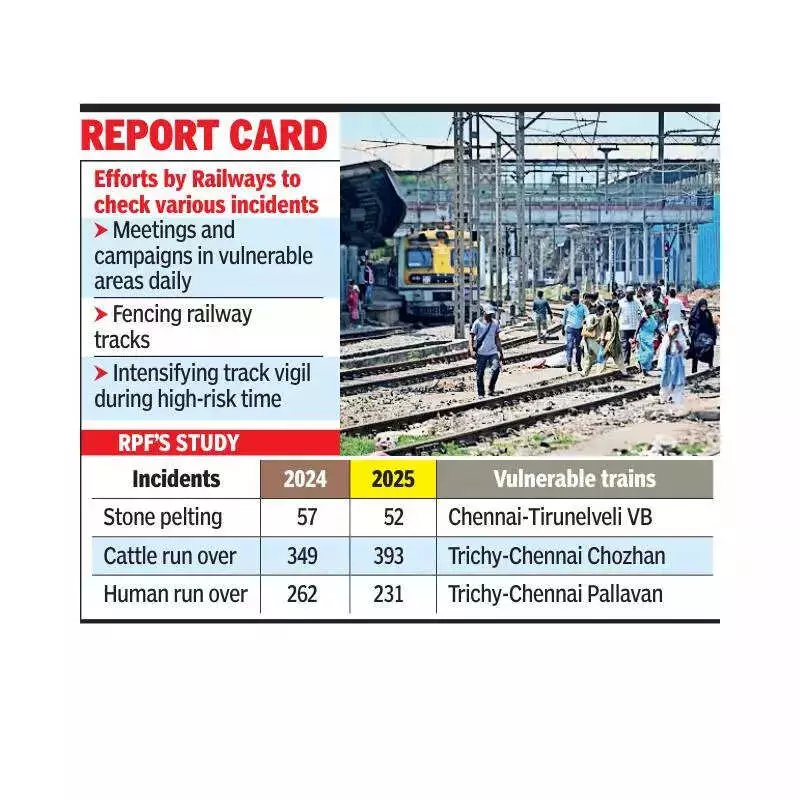
A recent safety study conducted by the Railway Protection Force (RPF) in the Trichy railway division has yielded a mixed bag of results. While incidents of stone pelting on trains and cases of people being run over have seen a significant decline, the number of cattle being hit by trains has alarmingly increased.
Key Findings: A Decline and a Surge
The study, comparing data from 2024 to 2025, found that stone pelting incidents and human casualties from being run over decreased by 9-12%. This positive trend, however, is contrasted by a sharp 13% increase in cases of cattle being run over on the tracks. Specifically, cattle-related incidents rose by 44 in 2025 compared to the previous year.
Patterns of Risk: Timings and Locations
The RPF analysis identified clear patterns behind these incidents. The period between 4 pm and 7 pm emerged as the most vulnerable time for stone pelting. These acts often involve schoolchildren and residents living near the tracks, with some cases also implicating inebriated individuals.

Critical stretches prone to stone pelting include:
- Valadi to Srirangam
- Trichy Railway Junction to Srirangam
- Kumbakonam to Aduthurai
For trespassing and fatal accidents involving humans, the high-risk windows are 6-10 am and 3-10 pm. The Srirangam-Ponmalai and Srirangam-Valadi sections are particularly problematic. Railway officials attribute these tragedies primarily to unauthorised and careless crossing of tracks.
Regarding the spike in cattle deaths, officials point to negligence by cattle owners who allow their animals to roam and graze on vacant land adjacent to railway lines.
Railway's Response: Fencing, Patrols, and Awareness
In response to these findings, the railways have ramped up multiple safety measures. Fencing work is underway in vulnerable stretches within Trichy city, including Palakkarai, to prevent unauthorized access.
Simultaneously, sensitization drives have been intensified in high-risk areas like the Thiruverumbur-Solagampatti and Trichy-Thanjavur sections. An RPF source stated that around 20 awareness programs and community engagement events are being conducted daily across the division, targeting areas near railway premises and educational institutions.
Track patrolling has also been strengthened in vulnerable zones during identified high-risk hours, aiming to deter both trespassers and potential stone-pelters. These combined efforts appear to be contributing to the reduction in human-related incidents, even as the challenge of stray cattle persists.