

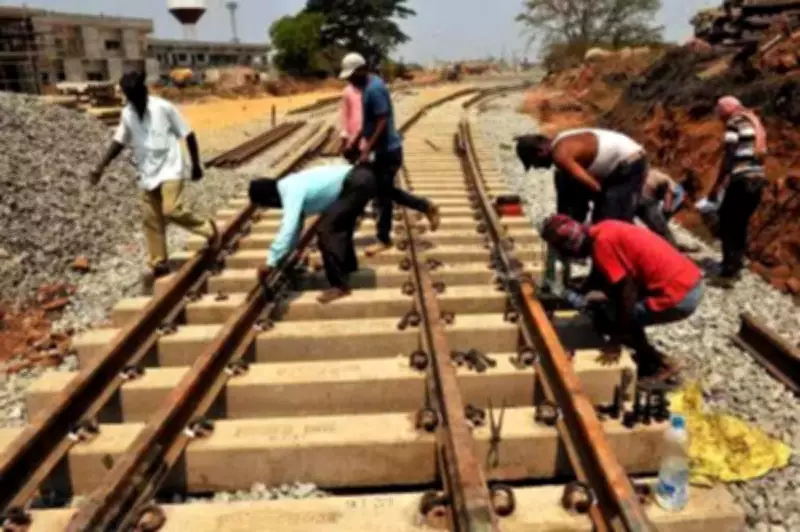
South Western Railway Accelerates Kavach Implementation Across Karnataka Network
In a significant move to enhance railway safety, the South Western Railway (SWR) has announced plans to bring 42% of its extensive 3,721 route kilometer network under the protection of Kavach – India's indigenous automatic train protection system – by March of next year. This ambitious initiative represents a major step forward in preventing accidents and ensuring passenger security across one of India's busiest railway zones.
Kavach: India's Homegrown Safety Solution
Developed by the Research Designs and Standards Organisation (RDSO) in 2020, the Kavach system is specifically engineered to meet rigorous international safety standards while addressing the unique challenges of India's railway infrastructure. The technology has become mandatory for operating trains at speeds exceeding 140 kilometers per hour, making it crucial for modernizing India's rail network.
The system operates through sophisticated real-time communication between trackside installations and locomotives, utilizing ultra high frequency (UHF) radio antennae and strategically placed radio frequency identification (RFID) tags along the tracks. This network continuously transmits critical data including train position, current speed, and detailed track profiles to central processing units.

Using this comprehensive information stream, the wayside system calculates what railway professionals call "movement authority" – the precise safe distance a train is permitted to travel under current conditions. This authorization is then transmitted directly to the onboard Kavach unit installed in the locomotive.
How Kavach Prevents Railway Accidents
The onboard Kavach system performs multiple crucial safety functions simultaneously. It continuously monitors train speed, displays essential operational information to the locomotive pilot, and generates specific braking curves tailored to different operating conditions and emergency scenarios.
When the system detects potential danger – whether a train approaching a stop signal, exceeding permitted speeds, or entering a conflicting route – Kavach automatically engages the braking system. This prevents what railway operators term "signal passing at danger" (SPAD) incidents and potential collisions that could result from human error or equipment failure.
In particularly critical situations where two trains are detected moving toward each other on the same track, the system issues an automatic stop-on-sight command to both locomotives simultaneously. Currently, Kavach technology has been implemented on approximately 2,200 route kilometers across India's national railway network, with SWR's expansion representing a significant acceleration of this safety initiative.
Karnataka's Railway Safety Transformation
As of March 1, 2026, implementation work is actively progressing across multiple sections of Karnataka's railway infrastructure. The first phase of this ambitious project will connect a total of 1,568 route kilometers to the Kavach safety network, covering major transportation hubs including Bengaluru, Mysuru, Hubballi, Arsikere, and Ballari.
The tender process for 778 route kilometers of tracks within the Bengaluru and Mysuru divisions was successfully awarded in May of last year, while the remaining 790 route kilometers connecting Hubballi and Mysuru divisions completed the tender process in June 2025. According to SWR officials, both these critical stretches will become fully Kavach-equipped by March 31, 2027.
Second Phase Expansion Plans
During the project's second phase, SWR plans to cover an additional 456 route kilometers exclusively within the Bengaluru division. This expansion will include several strategically important sections:

- Shantigrama–Chikkabanavara corridor
- Yelahanka–Chikkaballapura–Bangarapet line
- Baiyyappanahalli–Vimanpura section (serving the HAL airport area)
- Yeswanthpur–Yelahanka connection
- Yeswantpur bypass line
- Baiyyappanahalli–Banaswadi segment
The tender for this second phase expansion has yet to be issued by SWR authorities, but the package is expected to extend beyond Karnataka's borders to include neighboring regions in other states. Additional sections totaling 806 route kilometers in Mysuru division and 862 route kilometers in Hubballi division are also under consideration for future implementation.
Confidence in Meeting Deadlines
SWR's Chief Public Relations Officer Manjunath Kanamadi expressed strong confidence in meeting the project's ambitious timelines. "We are confident that we can achieve the tentative deadlines", Kanamadi stated in an interview. "For the second phase, tenders could be rolled out very soon this year itself, as this is a priority for the railways."
This commitment underscores the railway administration's determination to rapidly deploy this critical safety technology across one of India's most heavily trafficked railway networks, potentially setting a benchmark for other railway zones across the country.





