

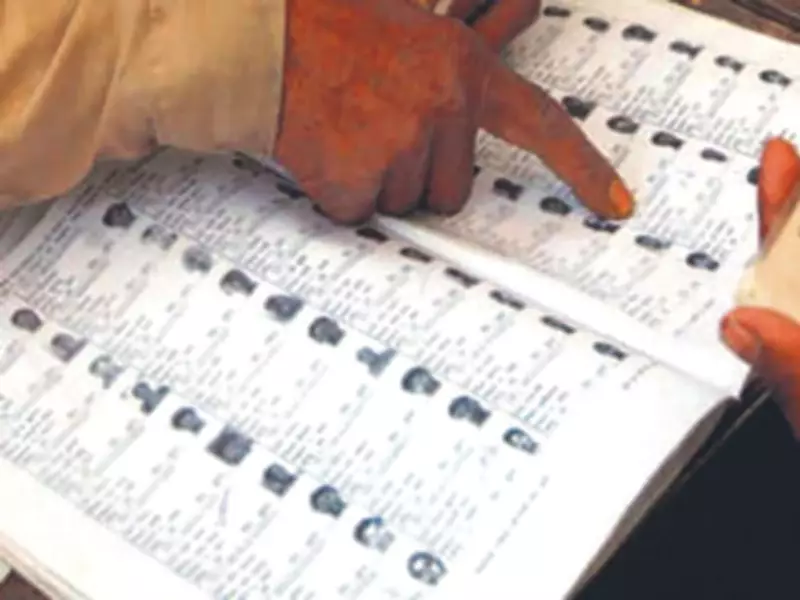
The Special Intensive Revision (SIR) of electoral rolls has been incorporated into the NCERT's Class IX Social Science textbook, titled 'Understanding Society: India and Beyond'. The textbook describes SIR as an exercise to ensure that no eligible citizen is left out of the voter list and no ineligible person is included. It also lauds the Election Commission of India (ECI) for conducting impartial polls despite challenges such as fake news, misinformation, and intimidation.
SIR completes one year; nearly 6 crore names deleted
The SIR, which has completed one year, has led to the deletion of nearly 6 crore names from the electoral rolls. The pilot SIR commenced in Bihar on June 24 last year ahead of the state polls, resulting in a pruned voter list with nearly 65 lakh names dropped. This move sparked acrimony between Opposition parties and the ECI, with claims that the commission was working at the BJP's behest to disenfranchise citizens lacking documents.
Textbook details on SIR
The textbook states: 'The ECI also conducts SIR, which involves updating, verifying and correcting the electoral rolls. Through SIR, it ensures that no eligible citizen is left out and no ineligible person is included in the electoral roll.' It further notes that SIR ensures the addition of all voters, especially young voters who have just turned 18 and may be left out due to lack of awareness. The exercise also deletes names based on death, change of residence, duplicate enrolment, or being permanently untraceable. The ECI provides time to raise claims or objections against the revised electoral roll and settles them before publishing the final roll.

Comparison with old textbook
The old Class IX textbook had a section on voter lists, mentioning that a complete revision takes place every five years to keep the list up to date. The revised textbook, aligned with the new National Curriculum Framework, highlights the scale of India's electoral process and the ECI's role. It states: 'India's electoral exercise is unparalleled and distinct from those in other parts of the world with over 96.8 crore eligible voters spread across diverse regions and terrains.'
Challenges to free and fair elections
A dedicated section titled 'Challenges to free and fair elections' notes: 'In India, conducting elections for 96.8 crore voters with thousands of polling stations and hundreds of political parties spread across diverse regions and socio-economic realities is a challenging task.' Despite these challenges, the ECI tries to ensure that elections are carried out impartially at multiple levels.






