Second Mountain Tunnel Breakthrough Achieved in Palghar for Mumbai-Ahmedabad Bullet Train
The Mumbai–Ahmedabad High-Speed Rail (MAHSR) project has achieved its second mountain tunnel breakthrough in Palghar district within a month, marking the third tunnel breakthrough for the ambitious Bullet Train corridor so far. This significant milestone underscores the accelerating pace of construction across Maharashtra, bringing India closer to its first high-speed rail network.
Details of the Mountain Tunnel-6 Breakthrough
The breakthrough of Mountain Tunnel-6 (MT-6) occurred around 11:30 am on Tuesday, with Union Railway Minister Ashwini Vaishnaw and Hemant Savara, the Member of Parliament for Palghar, joining the event virtually. This tunnel is a crucial component of the corridor, measuring 454 metres in length and 14.4 metres in width, designed to accommodate both up and down high-speed rail tracks.
This achievement follows the breakthrough of Mountain Tunnel-5 near Saphale on January 2, 2026, and the first tunnel breakthrough for the project, which was accomplished in September 2025 at Ghansoli in Navi Mumbai. The consecutive breakthroughs highlight the project's momentum and the dedicated efforts of the construction teams.

Minister Vaishnaw's Remarks on Progress
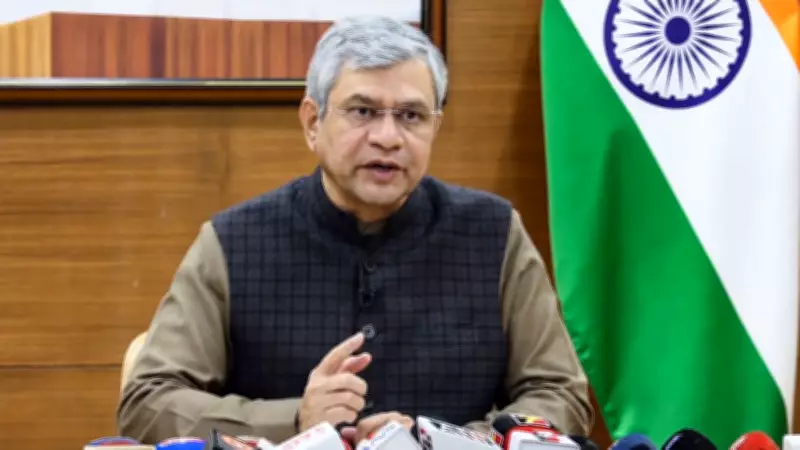
Addressing the event, Union Railway Minister Ashwini Vaishnaw emphasized that the recent pace of work reflects steady progress across the Maharashtra section of the corridor. "Achieving two mountain tunnel breakthroughs within a month shows the strong momentum of construction. Multiple challenging works, including tunnels, bridges, and stations, are progressing simultaneously," he stated.
The minister also highlighted developments at the Mumbai terminal, noting that the Bullet Train station at Bandra Kurla Complex (BKC) is being designed with double-deck platforms. This innovative design aims to optimize space in one of Mumbai's most densely built business districts, ensuring efficient operations and passenger convenience.
Construction Techniques and Safety Measures
MT-6 was excavated simultaneously from both ends using the New Austrian Tunnelling Method (NATM), a drill-and-controlled blast technique employed in complex geological conditions. Officials reported that the tunnel excavation was completed within 12 months, demonstrating the efficiency of this method.
NATM allows for real-time modification of tunnel supports using shotcrete, rock bolts, and lattice girders, and does not require heavy tunnel boring machinery. This makes it particularly suitable for the varied rock strata in Palghar district, ensuring stability and safety during construction.
Project authorities emphasized that worker safety during excavation was ensured through:
- Continuous geotechnical monitoring
- Real-time instrumentation
- Fire safety measures
- Proper ventilation
- Regulated access inside the tunnel
Overall Progress of the MAHSR Project
Construction work in Maharashtra is progressing on multiple fronts, with several key developments:
- The project's longest river bridge across the Vaitarna River has reached the pier construction stage.
- Foundation works are underway on other major rivers, such as Ulhas and Jagani.
- Construction is ongoing at all four planned stations in the state.
- Major national and state highway crossings are being addressed using long-span steel bridges.
Excavation continues on the 21-km underground tunnel between Bandra Kurla Complex and Shilphata, which is one of the most technically challenging sections of the corridor. In Palghar district, seven mountain tunnels are currently under construction, with progress as of January 27, 2026:
- MT-5 has reached 57% completion.
- MT-6 stands at 47% completion.
- Other tunnels range from preparatory stages to over 40% completion.
The 508-km MAHSR corridor spans 352 km in Gujarat and Dadra and Nagar Haveli, and 156 km in Maharashtra. Officials reported that approximately 334 km of viaducts, 17 river bridges, and 12 major crossings have been completed, with track laying and electrification gaining pace in the Gujarat section.

This latest breakthrough in Palghar not only marks a technical achievement but also signals the project's commitment to timely completion, potentially transforming India's transportation landscape with high-speed rail connectivity between Mumbai and Ahmedabad.