Economic Survey's Call for RTI Act Re-examination Ignites Transparency Debate
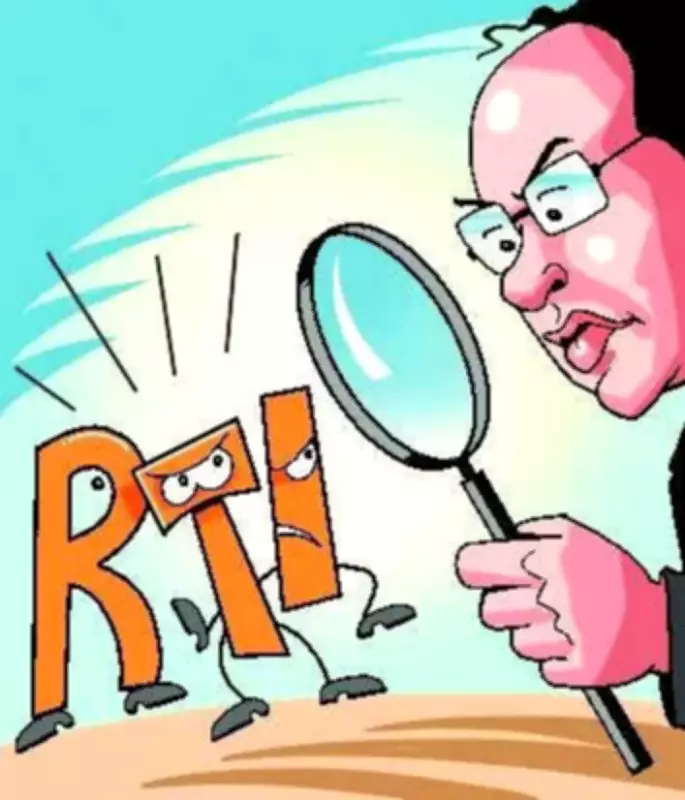
The Economic Survey 2025-26's recommendation for a "re-examination" of the Right to Information (RTI) Act has triggered significant controversy among transparency advocates and opposition figures. The proposal includes potential modifications such as introducing a ministerial veto power and creating exemptions for internal deliberations, draft documents, and confidential reports.
Strong Opposition from Transparency Advocates
Pune-based RTI activist Vijay Kumbhar expressed strong reservations about the proposal, describing it as a "direct assault on the core of the RTI Act." In an interview with TOI, Kumbhar emphasized that the RTI Act, 2005, represents more than just legislation—it serves as a crucial democratic safeguard that empowers citizens to scrutinize governmental power effectively.
Kumbhar highlighted the importance of maintaining access to file notings and internal debates, arguing that these documents form an essential chain of accountability. "Shielding such information would only promote opacity and corruption," he cautioned, pointing out that transparency in these areas is fundamental to maintaining governmental integrity.

Historical Context and Previous Attempts
The activist recalled a similar effort in 2006, less than a year after the RTI Act's implementation, when the central government attempted to exclude file notings from disclosure requirements. "That proposal faced widespread opposition from citizens, journalists, RTI activists, and civil society organizations," Kumbhar noted. Following social activist Anna Hazare's hunger strike, the government ultimately withdrew the proposal.
Kumbhar expressed concern that what was rejected nearly two decades ago is now being reintroduced in a more subtle yet potentially more dangerous form. He dismissed the Economic Survey's international comparisons with transparency practices in Sweden, the United States, and the United Kingdom as irrelevant to India's specific democratic context.
Economic Survey's Rationale and Counterarguments
The Economic Survey presented its case by arguing that the RTI Act was "never intended as a tool for idle curiosity, nor as a mechanism to micro-manage the government from the outside." The document warned that excessive transparency might discourage candor among officials, potentially leading to more cautious language and fewer innovative ideas, thereby weakening governance effectiveness.
However, transparency advocates strongly contested this perspective. Jayaram Venkatesan, convenor of Tamil Nadu-based anti-corruption movement Aappor Iyakkam, argued that transparency should be viewed as a facilitator rather than an obstacle to governance. "In a functioning democracy, citizens must have the right to know about the government's deliberative processes," he told TOI, emphasizing that this access allows citizens to assess whether policies genuinely serve public interests.
Venkatesan further challenged the notion that transparency hinders economic growth, stating that "transparency fosters sustainable, pro-people growth by eliminating corruption and neutralizing vested interests."
Legal Perspectives and Existing Safeguards
New Delhi-based RTI activist Anjali Bharadwaj pointed out the irony in the Economic Survey's approach. "It acknowledges the RTI as one of the most empowering laws, yet lists alleged problems without providing any evidence to justify its re-examination," she observed. Bharadwaj emphasized that the current law already contains robust exemptions under Sections 8 and 9, which public authorities frequently invoke to deny information requests.
Bharadwaj advocated for strengthening proactive disclosure mechanisms rather than amending the existing law. "Multiple studies demonstrate that the Act functions effectively," she noted, describing the RTI Act as one of the world's most progressive information-access laws.

Institutional and Political Reactions
Former Chief Information Commissioner Shailesh Gandhi questioned the need for amendments, stating there is "no evidence that RTI constrained governance." He expressed concern that combining the RTI Act with amendments through the Digital Personal Data Protection Act could significantly weaken transparency provisions. "Citizens are the best vigilance monitors through RTI," Gandhi asserted, suggesting that the proposal signals a shift away from viewing citizens as the nation's rightful rulers.
Congress president Mallikarjun Kharge criticized the proposal through social media, alleging that the current government has systematically weakened the RTI framework through various measures. These include amendments affecting information commissioners, the Digital Personal Data Protection Act, and prolonged vacancies in the Central Information Commission. "After killing MGNREGA, is it RTI's turn?" Kharge questioned, highlighting broader concerns about democratic institutions.
The Broader Implications
The debate surrounding the Economic Survey's proposal extends beyond technical legal adjustments to touch upon fundamental questions about democratic governance and citizen empowerment. Transparency advocates argue that:
- The RTI Act represents a cornerstone of democratic accountability
- Existing exemptions already provide sufficient protection for sensitive information
- International comparisons must consider India's unique democratic context
- Strengthening proactive disclosure would be more beneficial than restricting access
As the discussion continues, the fundamental question remains whether greater transparency facilitates or hinders effective governance—a debate that strikes at the heart of India's democratic principles and institutional frameworks.