Ranchi Residents Confronted by Surprise Electricity Bills Despite Smart Meter Installation
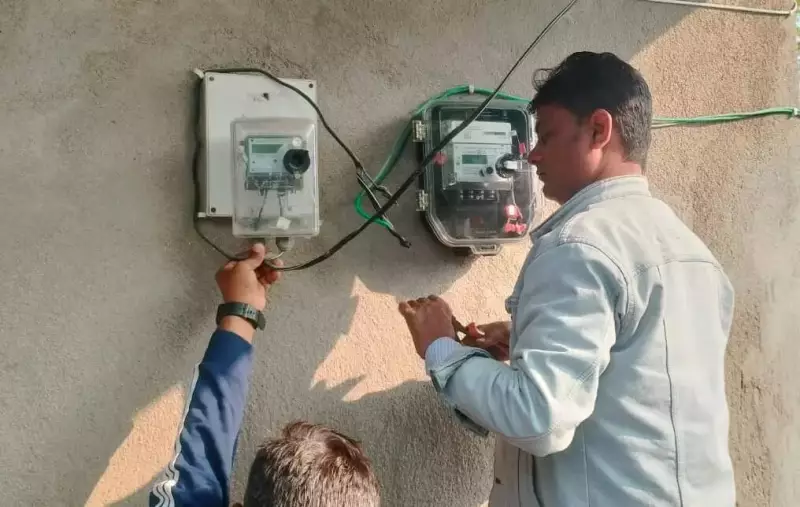
In a development that has sparked widespread confusion and distress across the city, residents of Ranchi are receiving long-pending electricity bills dating back to 2022—despite having installed prepaid smart meters in their homes. The unexpected bills, which include arrears along with accumulated interest and penalties from previous years, have triggered significant concern among consumers, who are now lining up daily at electricity offices seeking clarification and relief from the financial burden.
System Transition Exposes Billing Discrepancies
According to officials from Jharkhand Bijli Vitaran Nigam Limited (JBVNL), the transition to prepaid smart meters and a subsequent change in the vending and data management system have unfortunately exposed discrepancies in the billing records of certain consumers. D N Sahu, the superintendent engineer of JBVNL's Ranchi division, explained the situation, stating, "In a few isolated cases, legacy postpaid dues could not be properly reflected or adjusted within the new digital system, resulting in the inadvertent issuance of these old bills."
Sahu further emphasized that the department is actively reviewing these problematic cases and has issued clear instructions to field offices to prioritize the resolution of genuine consumer grievances. "JBVNL is committed to addressing these issues promptly and also regularly organizes grievance redressal camps specifically designed to tackle consumer concerns related to billing and services," he added, attempting to reassure the affected residents.

Consumer-Friendly Reform Turns into Source of Hardship
The prepaid smart metering scheme, which was originally introduced as a consumer-friendly reform aimed at eliminating traditional billing disputes and providing greater transparency, is now being described by many Ranchi residents as a fresh source of financial and administrative hardship. Consumers have alleged that they are being pressured to clear pending dues ranging from Rs 2,000 to Rs 10,000, with these amounts dating back to the period before the smart meters were even installed in their premises.
Ankit Kumar, a resident of Kokar, expressed his frustration, saying, "The entire purpose of the smart meter was to put an end to billing disputes and ensure accurate charges. Yet, here we are, being asked to clear old bills all over again. Our household consumption has never exceeded 200 units, and we were regularly receiving the benefit of free electricity under government schemes. Despite this, our power supply was abruptly disconnected, adding to our daily struggles."
Echoing similar sentiments, Anil Kumar from Lali locality questioned the digital transition, asking, "If everything is supposed to be digital and automated now, why are consumers being punished for errors that originated within the system itself? This defeats the very purpose of technological advancement in utility services."
Rapid Rollout Meets Operational Challenges
The rollout of smart meters in Ranchi was significantly accelerated during the 2023–24 period, with an ambitious target of covering approximately 3.5 lakh consumers across the city. Officials claim that nearly 80 percent of urban areas have already been equipped with these advanced meters. However, the ongoing billing issues have led to unexpectedly heavy crowds at subdivision offices, where consumers report further complications.
Many affected residents have alleged that despite the system being promoted as fully online and digital, they are being asked to produce old paper bills and physical payment receipts to verify their claims—a requirement that seems contradictory to the digital ethos of the smart meter initiative.

Hema Rani, a resident of Pandra, highlighted the practical difficulties faced by the community, stating, "People are being forced to leave their daily work and stand in long queues for hours, only to be told that the system is still being updated or that their documents are insufficient. We demand immediate correction of these erroneous billing records, restoration of disconnected power supplies without further delay, and a clear, transparent explanation from the authorities to restore public confidence in the smart metering system."
The situation underscores the challenges that can arise during large-scale technological transitions in public utility services, where system integration issues and legacy data discrepancies can inadvertently create new problems for consumers, even as reforms aim to modernize and simplify processes.