Rajnath Singh Calls for 'Survival of the Fastest' Mindset in India's Tech Sector
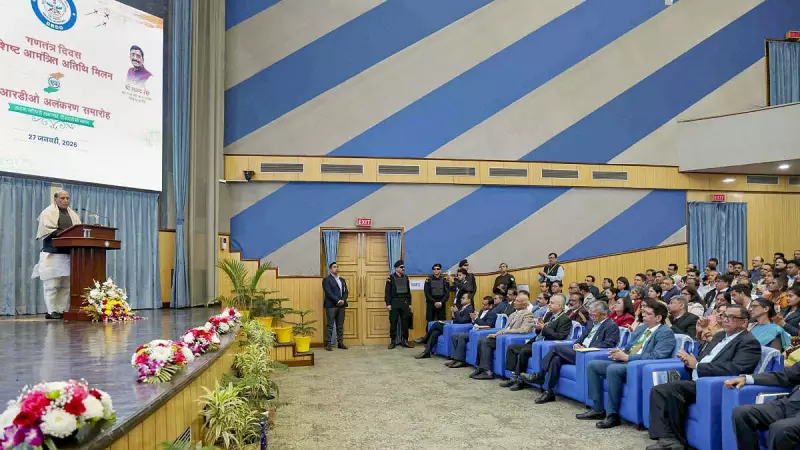
In a significant address highlighting the critical role of technology in national progress, Defence Minister Rajnath Singh has urged India to adopt a forward-thinking approach by embracing the concept of 'survival of the fastest' in the technological domain. Speaking at a recent event, Singh emphasized that merely being the fittest is no longer sufficient in today's rapidly evolving global landscape. Instead, he stressed the need for agility, speed, and innovation to ensure India remains competitive and at the forefront of technological advancements.
Moving Beyond Traditional Paradigms
Singh pointed out that the traditional notion of 'survival of the fittest', often associated with natural selection, must be reimagined in the context of modern technology. He argued that in an era dominated by digital transformation and rapid technological shifts, the ability to adapt quickly and innovate at pace is paramount. This shift in mindset, according to the Defence Minister, is essential for India to not only keep up with global trends but also to lead in key sectors such as defence, artificial intelligence, and cybersecurity.
Implications for India's Strategic Goals
The call for a 'survival of the fastest' approach aligns with India's broader strategic objectives, including the Atmanirbhar Bharat (self-reliant India) initiative and efforts to boost domestic manufacturing and innovation. Singh highlighted that this philosophy should permeate various aspects of technology development, from research and development to implementation and scaling. By fostering a culture that prioritizes speed and efficiency, India can enhance its technological capabilities, reduce dependencies on foreign technologies, and strengthen its position on the world stage.

Challenges and Opportunities Ahead
While advocating for this accelerated approach, Singh also acknowledged the challenges involved, such as the need for robust infrastructure, skilled workforce, and supportive policies. However, he expressed confidence that with concerted efforts from the government, private sector, and academia, India can overcome these hurdles. The emphasis on speed, he noted, should not compromise quality or ethical standards but rather complement them to achieve sustainable and inclusive growth.
In conclusion, Rajnath Singh's remarks underscore a pivotal moment for India's tech ecosystem. By internalizing the 'survival of the fastest' mantra, the nation can drive innovation, enhance competitiveness, and secure a prosperous future in an increasingly technology-driven world.