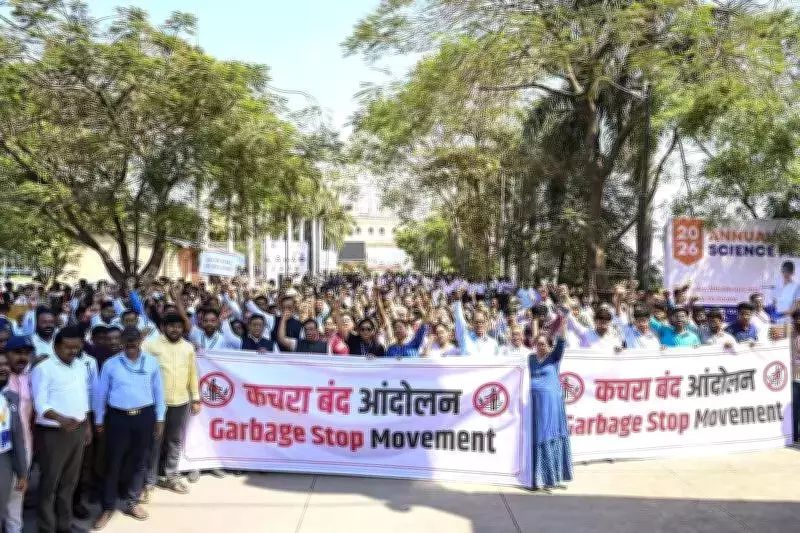
Pune Waste Crisis: MIT-ADT Students Block Trucks, Halting Collection for 1.5 Lakh Residents
Waste collection for approximately 1.5 lakh residents in Loni Kalbhor and Kadamwakvasti, Pune, has ground to a complete halt since Friday. This disruption occurred after students from MIT-ADT University blocked garbage trucks from entering the campus premises, where the vehicles were en route to a dumping ground located in the Mula-Mutha riverbed.
Root Cause: Toxic Fire and Longstanding Dispute
The long-simmering dispute escalated dramatically after a massive fire broke out at the illegal dump site on February 26. The blaze blanketed the university campus in toxic fumes for three consecutive days, prompting health and environmental concerns. In early March, students staged a protest and issued a seven-day ultimatum to local gram panchayats, demanding an alternative site for waste disposal. When the deadline expired on Friday, students resumed their blockade, leading to the current standstill.
Official Responses and Land Ownership Issues
Yashwant Mane, sub-divisional officer of Haveli, explained that the dispute centers on a land parcel near the Mula-Mutha river, which gram panchayats have used for dumping waste for over 30 years. "I have instructed the land records department to conduct a survey to verify the exact measurements and ownership of the site," Mane stated. "Our primary concern is ensuring that garbage does not enter the river, which poses significant environmental risks." While local officials claim the site is government land, Mane noted he is awaiting official documentation to confirm if it belongs to the forest department.

Regarding alternative solutions, Mane added that a proposal sent to the district collector's office was returned with queries and is currently pending with the gram panchayat for clarification, delaying progress.
Frustration and Warnings from Local Administrators
Nagesh Kalbhor, administrator and former sarpanch of Loni Kalbhor, expressed deep frustration over the lack of support from higher authorities. "We have written multiple letters to the zilla parishad, the collector, and PMRDA, but no land has been allotted for a solid waste management plant," he said. Kalbhor noted that while grazing land was identified as an alternative, the proposal stalled, and nearby areas have since become residential, complicating matters further.
He issued a stark warning: "If we don't pick up waste, it will lead to a severe health crisis and public agitation, affecting thousands of residents."
Efforts to Resolve the Deadlock
Efforts to break the impasse are actively underway. Appasaheb Gujar, deputy chief executive officer of the Zilla Parishad, has called a meeting on Monday to discuss sewage and solid waste disposal, aiming to find a swift resolution.
Gram panchayat Officer Srikant Wawhal provided a glimmer of hope, stating that a gram sabha on Saturday approved the use of a government plot away from residential zones. "We plan to tie up with a private company for daily waste disposal. MIT-ADT has pledged CSR funds to cover these costs for the first six months," Wawhal said. He expressed optimism that Monday's meeting would grant the necessary approvals to begin work immediately.
University's Stance and Support Initiatives
Mangesh Karad, executive president of MIT-ADT University, emphasised that dumping waste into the river has severely endangered public health and the environment. Karad confirmed that the university has offered up to ₹25 lakh to both gram panchayats to help set up waste processing plants, demonstrating a commitment to sustainable solutions.
"Kadamwakvasti has found a solution, and we are supporting them. However, Loni Kalbhor remains adamant in their approach," Karad noted. Addressing the university's own waste management, he added, "We have an existing sewage treatment plant. While we previously processed solid waste on-campus, we are now formalising an agreement with a facility in Hadapsar to handle all university waste starting next week, ensuring we lead by example."

This crisis highlights the urgent need for coordinated action between local authorities, residents, and educational institutions to address waste management challenges in Pune, preventing further health and environmental hazards.