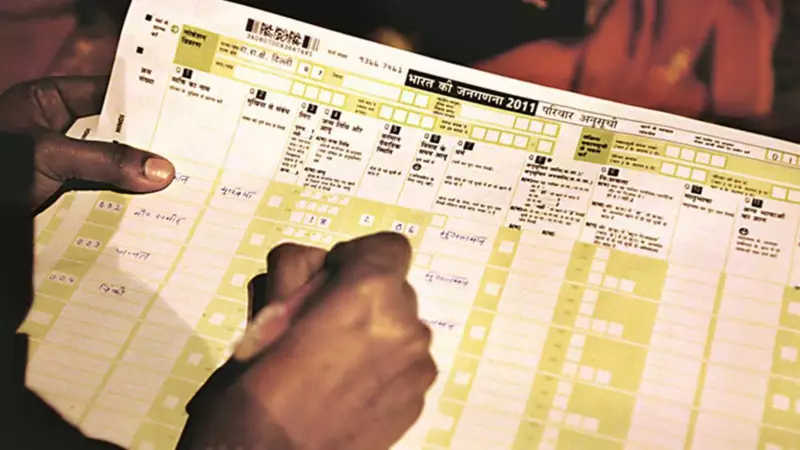
The Odisha government is undertaking a massive logistical exercise, mobilising a small army of over one lakh enumerators and more than fifteen thousand supervisors, to ensure the smooth and accurate conduct of the first phase of the Census scheduled for April and May this year. This preparatory phase includes three months of rigorous training for the personnel involved.
A Two-Phase Operation with Meticulous Planning
The Census operation in the state will be conducted in two distinct phases. The first phase, known as the Houselisting Operation (HLO), will run for a month between April and May. During this period, enumerators will visit every dwelling to assign a unique number to each household and gather detailed information about residential structures, available facilities, and assets.
Nikhil Pavan Kalyan, the Director of Census Operations for Odisha, clarified the timeline. "While the first phase could be held anytime between April and September, the state government has decided to conduct it between April and May," he said after a meeting of the state-level Census Cooperation Committee. This schedule strategically coincides with the summer vacations, enabling the large-scale deployment of school teachers for the exercise.

The second and crucial phase, the Population Enumeration (PE), is set to commence on February 1, 2027. This stage will involve collecting comprehensive demographic, socio-economic, and cultural details of every individual residing in the state.
Human Resource Mobilisation and Security Measures
To manage the colossal task, the state is leveraging its educational workforce. Sources indicate that primary school teachers are likely to form the backbone of the enumerator force. Each enumerator will be responsible for collecting data from approximately 200 households, which translates to covering around 700 to 800 people.
For effective supervision, a structured hierarchy has been established. Every group of six enumerators will be guided by one supervisor. The overall operation at the district level will be overseen by tehsildars and other senior district officials.
In a significant modernisation step, the Census will offer a self-enumeration facility. Residents will have the option to submit their information directly through the official Census website using a secure, OTP-based mobile authentication process. Director Kalyan emphasised the security protocols, stating, "There has been adequate provision for data security, and each mobile number can be used only once to submit data." The exercise will be conducted in both Odia and English to ensure wide accessibility.
Administrative Readiness for Accurate Data
Ahead of the actual enumeration, the state administration has already taken a critical step to prevent discrepancies. The administrative boundaries of newly created civic bodies have been firmly fixed. This pre-emptive measure is designed to eliminate jurisdictional confusion and ensure the accuracy and reliability of the collected data, forming a solid foundation for the entire Census process.
With the machinery set in motion, Odisha's elaborate preparations highlight the scale and importance of the decadal Census, which remains the single largest source of authentic data guiding policy and planning for the future.