

Western Command and NDMA Conclave Highlights 'Golden 24 Hours' in Disaster Response
In a significant push to bolster India's disaster preparedness, the Western Command Headquarters, in collaboration with the National Disaster Management Authority (NDMA), organized the Western Command Disaster Management Conclave on 'Disaster Risk Resilience' at Chandimandir, Panchkula. The event brought together senior military officials, NDMA policymakers, state disaster management representatives, and technical experts to forge a more robust national safety framework.
Emphasis on Proactive Resilience and Mock Exercises
NDMA member Lt Gen Syed Ata Hasnain (Retd) delivered the opening address, stressing the need to shift from reactive response to proactive resilience. He emphasized that frequent mock exercises are crucial for strengthening coordination, testing emergency plans, and enhancing preparedness among agencies involved in disaster management.
"Such exercises focus on strengthening response coordination, testing emergency plans, and better preparedness for various disasters among agencies that are involved to tackle them," Lt Gen Hasnain said. He also highlighted the importance of resource mapping, noting that civil and other agencies must know what equipment and resources are available to deploy them immediately when disasters strike.

Critical First 24 Hours and Technological Integration
Lt Gen K S Brar (retd), a veteran of several Humanitarian Assistance and Disaster Relief operations, underscored that the first 24 hours are the most critical in disaster response. "...If you have to save lives, do any kind of mitigation, you have to react very fast," he said, pointing out that synergy and preparedness are key.
He also discussed the role of technology, mentioning AI models for digital simulations, such as predicting water flow from upstream releases. This aligns with presentations from experts like Dr Kala Venkat Udhay from IIT Mandi, who showcased advancements in remote sensing and landslide early warning systems.
Army's Role as 'Preferred Responder' and Civil-Military Synergy
Lt Gen Manoj Kumar Katiyar, General Officer Commanding-in-Chief, Western Command, reiterated the Indian Army's role as the "preferred responder" in extreme crises. NDMA member Rajendra Singh praised the Army's Western Command for its exemplary response during last year's devastating Punjab floods, which claimed about 60 lives and caused extensive damage.
"When lives, livelihood and critical infrastructure were under serious stress, the Indian Army sprang into action with remarkable speed, professionalism and compassion," Singh said, highlighting how Army columns were among the first responders, rescuing citizens and providing relief.
Action Points and Future Initiatives
The conclave identified concrete action points for 2026, including developing joint training calendars and a unified command structure to improve inter-agency coordination. A mega mock drill has been planned for Punjab in the coming weeks. Lt Gen Ajay Chandpuria, General Officer Commanding 11 Corps, noted that much of northern India faces diverse hazards like seismic events, floods, and landslides, requiring careful planning and deployment.
NDMA Secretary Manish Bharadwaj focused on military-civil fusion, while technical sessions covered innovations and lessons from recent disasters. Mohammad Afzal, Joint Secretary at the Ministry of Power, spoke about reducing vulnerabilities in hydroelectric river basins, and Commandant Santosh Kumar of the 7th Battalion NDRF shared insights from the 2025 floods.
Panel Discussions and Exhibition Highlights
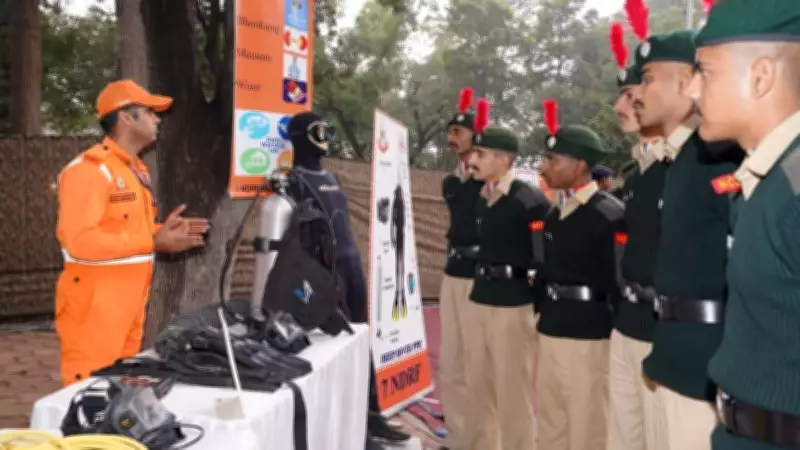
A panel discussion featuring officials from Himachal Pradesh, Jammu & Kashmir, and NDRF examined gaps in state-level frameworks and the potential of artificial intelligence in disaster management. Meanwhile, an interactive exhibition showcased indigenous capabilities, including:

- AI-integrated early warning systems
- Satellite-linked communication modules resilient to network failures
- High-altitude rescue equipment
- CBRN protection suits
- Advanced medical trauma kits
- Community outreach programs to empower local populations as first responders
The conclave concluded with a strong emphasis on regular mock drills, enhanced civil-military coordination, and leveraging technology to build a more resilient India in the face of increasing disaster risks.





