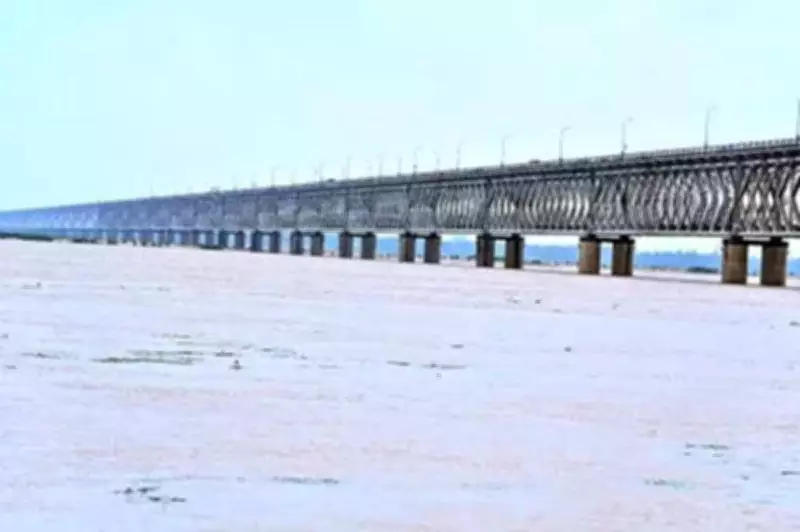
Nashik's Historic Nandurmadhmeshwar Weir Gets Major Flood Prevention Upgrade
The Water Resources Department (WRD) in Nashik has initiated a crucial infrastructure project to safeguard the region from devastating floods. Construction has begun on adding 10 new gates to the century-old Nandurmadhmeshwar weir on the Godavari river. This strategic enhancement is designed to significantly improve water management and prevent catastrophic flooding during periods of intense monsoon rainfall.
Learning from the 2018 Flood Disaster
The decision to expand the weir's capacity stems directly from the traumatic flooding events of 2018. During that year's heavy monsoon, the Godavari river overflowed, inundating several villages located in the backwaters of the Nandurmadhmeshwar weir. The situation escalated to a critical emergency, necessitating air rescue operations to evacuate people trapped by the rising floodwaters.
"The 2018 floods were a wake-up call," explained a senior WRD official. "Following that disaster, the Central Water and Power Research Station (CWPRS) conducted a comprehensive survey of the area. Their expert recommendation was to construct additional gates alongside the existing eight to facilitate the release of larger volumes of water from the weir during peak flow periods."

A Legacy Structure with Modern Upgrades
The Nandurmadhmeshwar weir is a piece of living history, originally constructed by the British in 1910. Initially built without any gates, its primary function was to capture water released from upstream sources and divert it through an extensive canal network to the arid regions of Nashik, Ahilanagar, and Chhatrapati Sambhajinagar districts. This irrigation and drinking water supply system remains operational and vital to the region's agriculture and communities today.
The new construction project, valued at approximately Rs 170 crore, represents a major modernization of this historic infrastructure. "Work on the ten additional gates is now underway and is projected to take about a year to complete," the official stated. "Our target is to have the enhanced system fully operational by the 2027 monsoon season. This timeline is particularly significant as it coincides with the Simhastha Kumbh Mela, a major religious congregation scheduled to be held in Nashik and Trimbakeshwar."
Ensuring Future Safety and Water Security
The primary objective of this engineering intervention is to create a robust defense against future flooding. By increasing the weir's discharge capacity, authorities aim to manage water levels more effectively during heavy rainfall, thereby protecting vulnerable villages and agricultural land from submersion.
"The addition of these gates is a proactive measure to ensure there is no repeat of the 2018 crisis," the WRD official emphasized. "It will enhance our control over the river's flow, safeguarding both lives and livelihoods in the Godavari basin. This upgrade not only addresses flood mitigation but also reinforces the weir's continued role in regional water distribution and security."