Nagpur's fire and emergency services, which serve as the city's primary defense against fires, building collapses, and various disaster emergencies, are currently operating under severe strain due to a critical shortage of personnel. This alarming situation poses a direct threat to public safety across Nagpur, a bustling metropolis with a population exceeding two million residents.
Critical Staffing Shortages Cripple Emergency Response
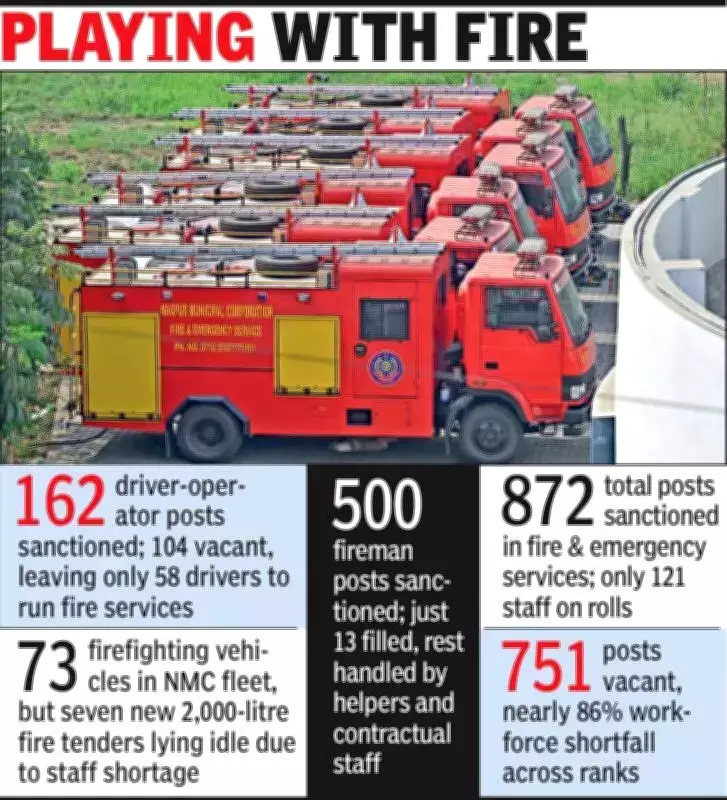
Official statistics reveal a deeply concerning picture of the department's operational capacity. The fire services are functioning with just 58 driver-operators against a sanctioned strength of 162 positions, creating a staggering deficit of 104 vacancies in this crucial role. This shortage means there are insufficient trained personnel to operate the fleet of 73 firefighting vehicles, which includes essential equipment such as fire tenders, water tankers, platforms, and rescue vans.
New Equipment Renders Useless Without Personnel
The manpower crisis has reached such proportions that seven recently acquired 2,000-litre fire tenders remain completely idle and non-operational. These modern vehicles, procured to enhance the city's firefighting capabilities, cannot be deployed simply because there are no trained drivers available to operate them. This represents a glaring inefficiency in emergency preparedness for a major urban center like Nagpur.

Beyond Drivers: Fireman Positions Severely Underfilled
The crisis extends far beyond just driver shortages. Out of 500 sanctioned fireman positions, only 13 are currently filled, forcing the department to rely on makeshift staffing arrangements. The department has been compelled to employ miscellaneous helpers and contractual workers, many of whom possess little to no formal firefighting training. This skeleton crew is expected to manage 13 fire stations, operate sophisticated equipment across multiple shifts, and maintain 24/7 emergency response capabilities.
Overall Workforce Deficit Reaches Alarming Levels
The Nagpur Fire Services Department, with an authorized strength of 872 personnel, is currently functioning with merely 121 staff members. This leaves an astonishing 751 posts vacant, representing nearly 86% of the entire workforce remaining unfilled. The staffing gap spans multiple critical roles including drivers, firemen, leading firemen, and station officers, severely impairing the operational capacity of the entire fire brigade.
Bureaucratic Delays Exacerbate Recruitment Crisis
The recruitment bottleneck stems from prolonged administrative delays within the urban development department (UDD). Civic authorities submitted comprehensive proposals to fill hundreds of vacant positions, including both drivers and frontline firemen, more than a year ago. However, necessary approvals have yet to materialize. In one notable instance, the municipal commissioner reminded the UDD in January about pending approval for recruiting 350 personnel, but the proposal remains unsigned and unimplemented.
Experts Warn of Dire Consequences
Safety experts and department insiders emphasize that these bureaucratic delays represent more than just governance failures—they constitute a genuine threat to life and property throughout Nagpur. With the city experiencing booming construction activity, increasing numbers of high-rise buildings, dense residential neighborhoods, and expanding industrial zones, maintaining a well-staffed firefighting force has become absolutely essential. Yet, with seven fire tenders lying idle due to driver shortages and only a handful of trained firemen available per shift, the city's entire firefighting apparatus remains dangerously overstretched.
Operational Challenges and Public Safety Concerns
Firefighters on the ground report that they typically require six to eight personnel per fire tender under ideal operational conditions. However, current manpower gaps frequently leave them with only three or four personnel available for emergency calls. Staffing becomes even thinner during nights and weekends, significantly compromising response times and frontline effectiveness during emergencies.

Growing Public Demand for Immediate Action
Concerned residents and safety advocates are increasingly demanding swift intervention from both the urban development department and state leadership. They warn that a single major fire incident in any of Nagpur's high-risk zones could expose the painfully obvious reality: sophisticated firefighting equipment means nothing without adequately trained personnel to operate it effectively. The current situation leaves Nagpur's two million residents vulnerable during emergencies that require immediate, professional response from well-staffed fire services.