

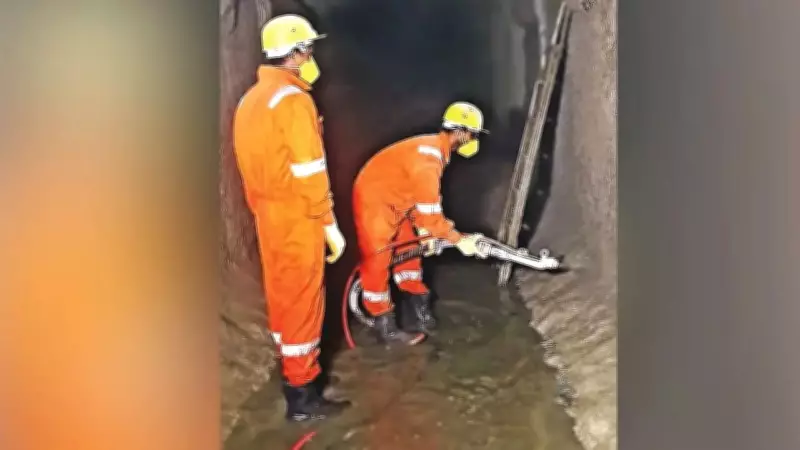
Mumbai's Historic Drainage System Receives Major Technological Upgrade
The Brihanmumbai Municipal Corporation (BMC) has embarked on a groundbreaking initiative to rehabilitate Mumbai's century-old underground stormwater arch drains using advanced geopolymer lining trenchless technology. This marks the first large-scale deployment of such technology in India, representing a significant advancement in urban infrastructure maintenance.
Addressing Structural Concerns in Aging Drain Network
Mumbai currently maintains a 495-kilometer network of underground stormwater arch drains throughout the island city, many of which date back to the British colonial era. Recent comprehensive CCTV surveys conducted by the Storm Water Drains (SWD) department revealed multiple structural defects in the aging infrastructure, including cracks, brick displacement, mortar loss, and even partial collapses in certain sections.
Officials identified 56 drain components totaling 23.5 kilometers as being in damaged condition. Among these, 27 critical stretches spanning 14.3 kilometers were categorized as requiring immediate rehabilitation to prevent potential structural failures.

Innovative Trenchless Technology Solution
After consulting with technical experts from IIT Bombay and VJTI, the SWD department's technical advisory committee determined that geopolymer lining using trenchless technology offered the most effective solution. This innovative approach allows for internal strengthening of the drains without requiring extensive excavation work.
"The technology enables us to reinforce the structural integrity of these historic drains while minimizing disruption to the city," explained a senior civic official. "It's faster to implement than traditional methods and will significantly improve flow velocity, ensuring more efficient rainwater disposal during intense monsoon downpours."
Project Scope and Environmental Benefits
The ongoing project covers the 27 critical stretches identified as most vulnerable, with the BMC committing to five years of maintenance following completion. Civic engineers estimate this intervention will extend the lifespan of these British-era drains by at least 50 years while enhancing their discharge capacity.
The geopolymer lining method represents an environmentally friendly approach that has been successfully implemented in countries like the United States. The technology creates a durable, corrosion-resistant lining that strengthens existing structures without the environmental impact of traditional excavation methods.
Climate Resilience in Changing Monsoon Patterns
This infrastructure upgrade comes at a critical time as Mumbai faces increasingly erratic and intense monsoon patterns. In recent years, the city has experienced instances of nearly 1,000 millimeters of rainfall over just a few days, frequently resulting in severe waterlogging in low-lying areas.
The enhanced drainage capacity provided by the geopolymer lining is expected to significantly improve Mumbai's resilience against such extreme weather events, reducing flood risks and minimizing disruption to daily life during the monsoon season.
Monitoring and Future Expansion
Civic engineers are currently monitoring progress at key outfalls and stretches as the project advances in the city area. Once this initial phase is completed, the BMC plans to assess further phases to cover additional vulnerable sections of Mumbai's extensive drainage network.
The successful implementation of this first-of-its-kind project in India could establish a model for other cities facing similar challenges with aging urban infrastructure, demonstrating how modern technology can preserve historical structures while meeting contemporary urban needs.






