

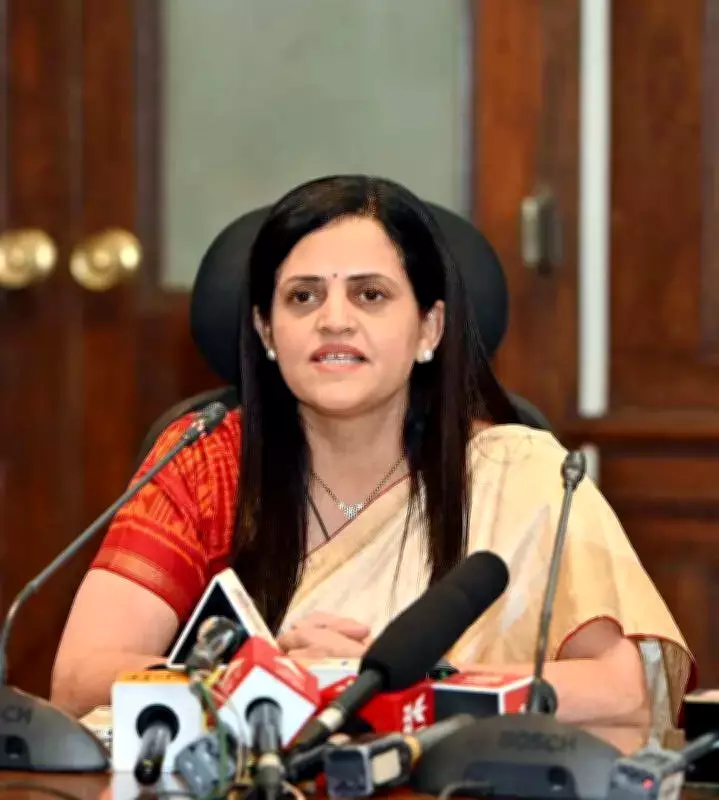
Mumbai BMC Revives Monthly Review Meetings Under New Commissioner
In a significant administrative move, Ashwini Bhide, the newly appointed Municipal Commissioner of Mumbai, has reinstated the Brihanmumbai Municipal Corporation's (BMC) monthly review meetings. This practice, which had largely lapsed following the pandemic, was revived over a week after Bhide assumed her role. Officials have been notified that Saturday sessions will now be held regularly to assess innovative initiatives and monitor the progress of earlier decisions.
First Meeting Emphasizes Back-to-Basics Approach
The inaugural monthly review meeting took place on April 11, where Commissioner Bhide underscored the necessity of strengthening core civic services. She directed officials to adopt a "back to basics" strategy, prioritizing citizen-centric delivery, enhanced coordination, and timely completion of infrastructure projects. Bhide stated, "While the BMC's primary role is to provide civic services, the administration must now move beyond basics and raise the standard of service delivery."
With extensive road works ongoing across the city, Bhide instructed the administration to develop model operational norms, inspired by railway systems, to ensure long-term durability, efficient traffic management, and streamlined maintenance. These norms should account for traffic projections over the next decade, along with repairs and overall usability.

Monsoon Preparedness and Pothole Reduction Efforts
Commissioner Bhide mandated that all road repair works exceeding 70% completion be finalized before June 1, ahead of the monsoon season. She emphasized, "All ongoing works must be completed within stipulated timelines and made safe for traffic movement." Notably, she highlighted a substantial decline in potholes over the past three years, accompanied by reduced related expenditures.
Expenditure data reveals a consistent downward trend: in 2023–24, pothole repair costs stood at Rs 202 crore, dropping to Rs 156 crore in 2024–25—a 23% reduction. For 2025–26, expenses further decreased to Rs 89 crore, marking a 43% decline from the previous year. The current year's pothole repair tender is anticipated to be approximately Rs 44 crore.
Enhanced Public Engagement and Infrastructure Planning
Bhide stressed the importance of continuous engagement with corporators and public representatives, urging officials to regularly share updates on critical works such as drain desilting, sanitation, and road projects. Reviewing monsoon preparedness, she directed departments to formulate long-term solutions for chronic waterlogging spots. While immediate measures like pumps and dewatering systems are in place, plans for permanent mitigation must be prepared in advance for execution before the next monsoon. She also cautioned against leaving manholes open, insisting all be secured with protective grills prior to the rains.
On desilting operations, Bhide advocated for daily updates to be shared not only with elected officials but also with citizens via social media platforms, fostering greater public awareness and feedback.
Addressing Modern Urban Needs and Reserved Lands
The meeting also examined reserved land parcels under development plans, acknowledging evolving urban demands. Bhide pointed out the rise of new sectors such as online food delivery and gig work, which require dedicated infrastructure like delivery points. She advised that development planning should extend beyond traditional needs to include structural support for these emerging sectors. Officials have been tasked with assessing the current status of reserved plots and utilizing technologies like GIS for mapping and planning. A comprehensive policy for such reserved lands is set to be developed.






