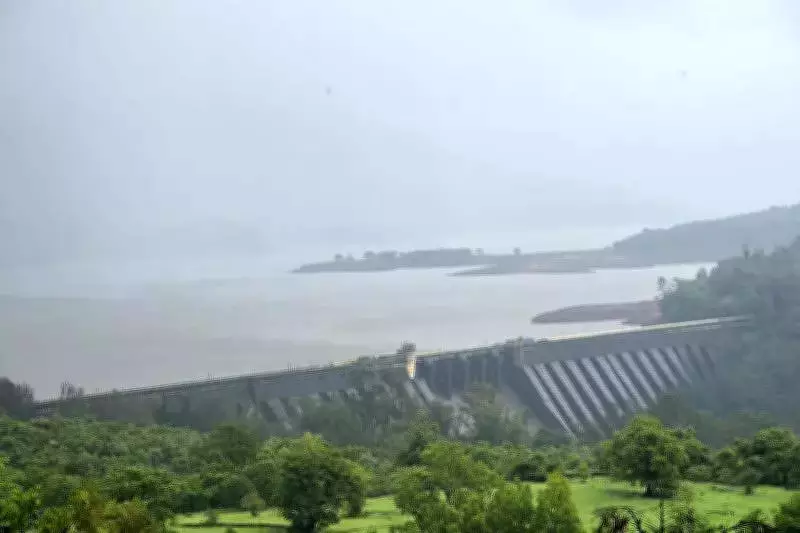
The state of Maharashtra is entering the summer season with a robust water reserve in its reservoirs. According to the latest data, the average live stock of water in nearly 3,000 dams across the state stands at 998 TMC at present. This figure represents nearly 70% of the total capacity of these reservoirs and is about 8% more than the water stock recorded during the same period last year.
Sufficient Water for Summer Needs
Irrigation department officials have confirmed that the current live stock of usable water in the dams is adequate to meet water demands during the summer months, which officially commence from March 1. In the previous year, these dams—which include large, medium, and small structures spread across six divisions in Maharashtra—had approximately 62% of usable water stock. The increase to 70% this year provides a more comfortable buffer as temperatures rise.
Regional Variations in Water Storage
There are notable regional disparities in water storage levels. Dams located in the Amravati, Nashik, and Chhatrapati Sambhajinagar divisions boast average live water stocks that exceed the state average of 70%. Conversely, reservoirs in the Pune, Konkan, and Nagpur divisions are currently holding live water stocks below this state average.
The collective capacity of Maharashtra's 3,000 and odd dams totals 1,700 TMC, with 1,431 TMC designated as drawable live storage. The current usable water volume of 998 TMC indicates that the state is utilizing a significant portion of this available capacity.
Planning for Summer Water Management
A senior official from the water resources department, who requested anonymity, disclosed that a state Canal Advisory Committee meeting will soon be convened under the leadership of Water Resources Minister Radhakrishna Vikhe Patil. The primary agenda of this meeting will be to strategize water usage throughout the summer period.
"Rainfall predictions are meticulously considered alongside anticipated summer temperatures when planning water allocation," the official explained. "This is because a certain portion of water from the dams is inevitably lost to evaporation. In years where the monsoon is delayed, the irrigation department adopts a more conservative approach to releasing water from the reservoirs."
Agricultural Water Demands and Releases
The official further elaborated on current agricultural needs. "Rabi crops generally require less water. Nonetheless, there have been consistent demands from farmers for irrigation water. Recently, we completed one to two rotations of water release, each lasting about 15 days, to address these irrigation requirements," the official stated.
For instance, one such rotation of water release was just finalized from the Ujani dam specifically to irrigate crops like gram and wheat. "The demand for water is intensifying as the sugarcane harvest concludes. Farmers are now seeking to water their fields to cultivate a new crop from the shoots left behind," the official added.
On-the-Ground Perspectives from Farmers
Sudhir Patil, a grape cultivator from Yelavi village in Sangli district, shared his experience. "Water levels in our wells are noticeably declining. The canals are currently dry. For grapes to achieve the desired sweetness, they require nutrient-rich dam water," Patil said. "We have received assurances from irrigation department officials that water has been released from the dams, but it takes considerable time to travel through the canal network and reach our farms."
Monsoon Forecast and El Nino Concerns
The previous monsoon season was in excess, resulting in most dams being filled to their maximum capacity. However, weather forecasters are now indicating the possibility of an El Nino phenomenon this year, which could potentially delay or weaken the upcoming monsoon.
While the India Meteorological Department (IMD) typically releases its El Nino predictions in April, American and Australian weather agencies have already suggested a likelihood of El Nino effects based on their preliminary studies.
Historical Impact of El Nino on Monsoon
During an El Nino year, the usual pattern of moist winds flowing towards India is disrupted. This atmospheric change often leads to a reduction in rainfall volume across India between June and September. Historically, strong El Nino events have been associated with significant drops in rainfall, delayed monsoon arrivals, and prolonged dry spells in key agricultural states.
Since 1950, there have been 16 identified El Nino years. Out of these, the Indian monsoon was notably impacted in seven instances, underscoring the potential risk this climatic pattern poses to water security and agriculture.