Kolkata's Bus Network in Deepening Crisis: Overcrowding and Digital Gaps Threaten City's Transport Backbone
The bus network of Kolkata, often described as the backbone of the city's urban transport system, is confronting a severe and deepening crisis. This essential service is grappling with significant challenges including severe overcrowding, both qualitative and quantitative decline, poor schedule management, and limited adoption of digital tools. Despite these mounting issues, it continues to serve as the most affordable mode of daily travel for lakhs of commuters across the metropolis.
Survey Reveals Commuter Frustrations and Priorities
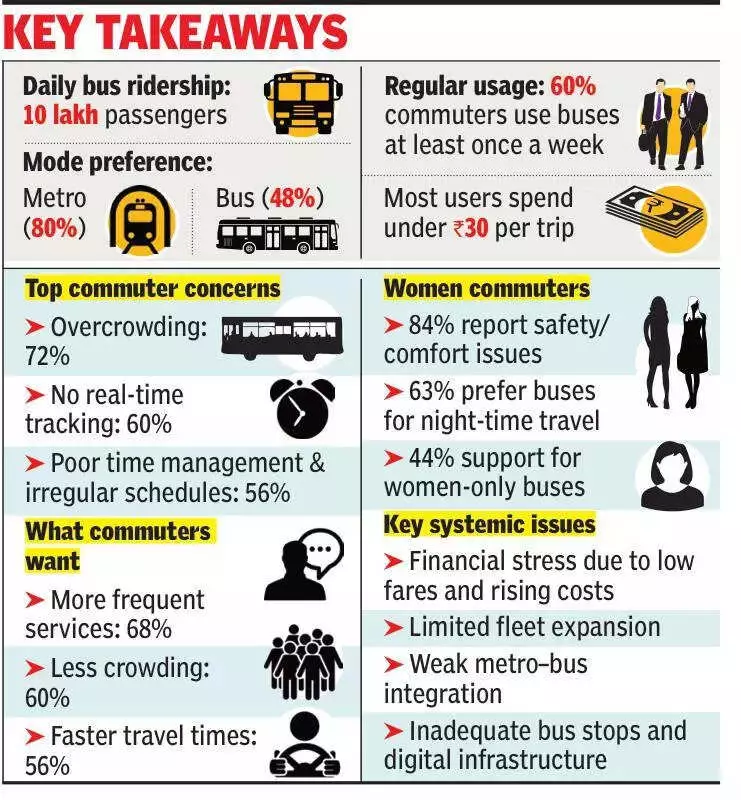
A recent commuter survey conducted by the Sustainable Mobility Network, a multi-stakeholder platform, has shed light on the pressing concerns of daily bus users. The findings are stark: nearly 72% of bus users identified an inadequate number of buses and severe overcrowding as their biggest grievance. Furthermore, 60% of respondents pointed to the absence of real-time bus tracking and weak schedule management as major pain points, highlighting persistent reliability issues within the city's most extensive surface transport system.
Commuters have been clear about their priorities for improvement. The survey indicates that more frequent services topped the list of demands, cited by 68% of respondents. This was closely followed by less crowding (60%) and faster travel times (56%). Additionally, irregular stopping, poor time management, and unpredictable schedules were flagged as routine problems by 56% of those surveyed.

Affordability and Essential Role Amidst Challenges
Despite these significant operational challenges, Kolkata's buses remain economically accessible to a vast majority of the population. The survey found that most commuters spend less than Rs 30 per trip, underscoring the critical role of buses as a lifeline for daily travel, especially for lower- and middle-income groups. This affordability factor is crucial in a city where daily ridership is estimated at around 10 lakh passengers.
Introduced in the late 19th century, Kolkata's bus network serves multiple vital functions. It caters to medium-distance trips, provides crucial first- and last-mile connectivity to metro and suburban rail systems, and serves large urban areas beyond the reach of fixed-rail infrastructure. Currently, buses are the second most preferred mode of public transport after the metro. While around 80% of commuters prefer the metro, about 48% rely on buses, and nearly 60% use them at least once a week, signaling that buses remain integral to everyday mobility in Kolkata.
Safety Concerns and Gender-Specific Issues
Safety and comfort continue to be significant concerns, particularly for women commuters. The survey revealed that about 76% of women reported occasional safety or comfort issues, while 8% said they faced such problems frequently. Interestingly, support for women-only buses remains divided, with only 44% in favour and many others expressing neutrality on the matter. Despite these concerns, buses continue to be a preferred option for night-time travel among women, with 63% citing them as the most reliable choice after dark.
Structural Challenges and Stakeholder Insights
Insights from stakeholder interviews conducted as part of the study point to deeper structural challenges plaguing the bus network. Transport operators and planners have flagged financial stress caused by stagnant fares, rising operating costs, and the absence of predictable public funding. Fleet expansion remains severely limited due to high capital costs and infrastructure gaps. Stakeholders have suggested that transitioning to CNG and Euro VI buses may be more viable in the short term than large-scale electric bus deployment.
Regulatory complexity and procedural delays were also cited as significant deterrents to private investment in the sector. Meanwhile, route rationalisation and metro–bus integration have weakened over time, despite the availability of digital datasets that could support better planning. Additional factors affecting the overall travel experience include poor bus stop infrastructure, limited digital systems, and weak commuter feedback mechanisms.

Expert Perspectives and Call for Reform
Addressing a mobility symposium organised by Switch-On Foundation, former urban development secretary and HIDCO chairman Debasish Sen emphasized that public transport should not be judged solely by commercial returns. "It is pointless to always look for profit or commercial viability in public transport. If it happens, it is good. But public transport needs to be good, efficient, and above all intelligent, as more and more people are living outside the city and travelling long distances for livelihood," Sen stated. He added, "A world city's standard is defined by the standard of subsidised public transport, not by cars and personalised transport."
The latest survey findings mirror an earlier study conducted in March 2025 by SwitchON Foundation and the Kolkata Bus-o-pedia Foundation among 269 respondents. That study found buses were primarily used for medium-distance travel, with around 40% commuting 10–20 km daily by bus. While 55% expressed satisfaction with services in their locality, over 40% reported waiting 10–20 minutes for a bus. More than 60% said they spent less than Rs 30 to reach central business districts, reaffirming the affordability of bus travel.
Urgent Need for Systemic Reforms
As Kolkata continues to expand outward and commuting distances increase, experts warn that without urgent and comprehensive reforms, the city's bus system risks falling further behind, even as demand continues to grow. Stakeholders have emphasized the need to embed gender inclusion, public health considerations, and data-driven planning into future transport decisions. The required reforms range from fleet augmentation and better scheduling to stronger integration with the metro system.
The challenges facing Kolkata's bus network are multifaceted, involving operational inefficiencies, financial constraints, infrastructure limitations, and technological gaps. However, given its crucial role in providing affordable mobility to lakhs of daily commuters, addressing these issues through coordinated policy interventions, strategic investments, and innovative solutions has become imperative for the city's sustainable urban development.