

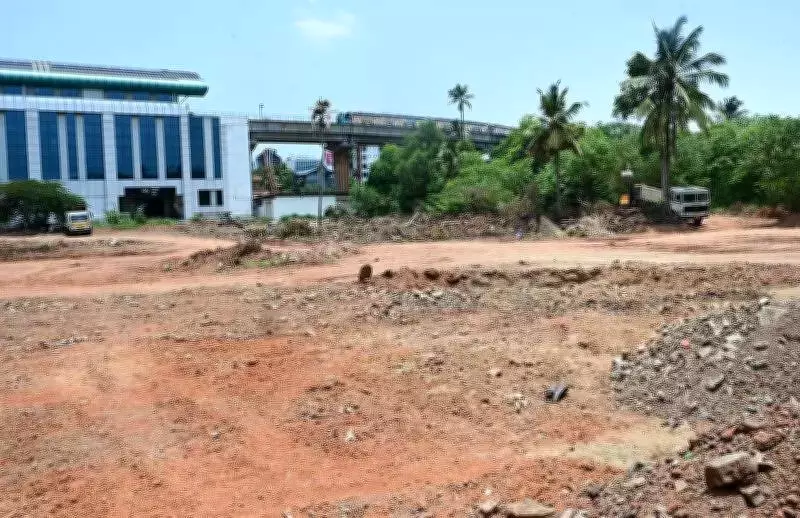
Kochi's Vyttila Mobility Hub Phase II Revival Efforts Begin After 15-Year Delay
The long-delayed second phase of the Vyttila Mobility Hub project in Kochi may finally see movement after more than 15 years in limbo. The Vyttila Mobility Hub Society (VMHS), the agency tasked with developing the hub, has initiated efforts to revive the expansion, which stalled due to funding constraints and procedural hurdles.
Plans to Restart After Model Code of Conduct Lifts
VMHS managing director K Gopalakrishnan stated that the society plans to begin the process once the Model Code of Conduct (MCC) is lifted. "We intend to restart the second phase and will approach the new government for a fresh detailed project report (DPR)," he told TOI. The proposed Phase II aims to transform the hub into a fully integrated, world-class transit terminal, linking the Kochi Metro, water transport, and long-distance bus services.
Project Details and Previous Setbacks
The plan includes nearly 100 bus bays, a multi-level car parking facility (MLCP), and large commercial and hospitality spaces. Despite two DPRs being prepared earlier, authorities failed to implement them. The first DPR, prepared by VMHS in 2014, estimated the project cost at Rs 433.34 crore but was shelved due to lack of funds.

A revised DPR by Kochi Metro Rail Ltd (KMRL) in 2019 estimated the cost at Rs 590 crore and proposed a hub-and-spoke model combining transport and commercial facilities while preserving green cover. However, the finance department declined direct funding and pushed for a public-private partnership model, which failed to attract investors.
A subsequent plan to secure funding from the French Development Agency (AFD) also fell through after objections were raised by NITI Aayog. Consequently, the 25-acre site has remained underutilized even as traffic congestion in the city worsens.
New Approaches and Urban Changes
Officials now indicate that a fresh proposal could adopt a transit-oriented development (TOD) model. By unlocking the commercial potential of the land through malls, office spaces, and hotels, the society hopes the project could become financially viable and more appealing to the government.
"Kochi's urban landscape has changed significantly. The completion of Metro Phase I and the rollout of the Water Metro have altered commuter patterns, making earlier feasibility studies outdated," said an official. A proposal to transfer land within the hub to KSRTC in exchange for 2.9 acres at Karikkamuri has also been dropped, with the land now considered vital for Phase II expansion.
Integration with Local Area Plan
Meanwhile, there are calls to align the project with the local area plan (LAP) being prepared by the Kochi corporation. Vyttila councillor V P Chandran emphasized that the hub expansion should be implemented jointly with the corporation.
"The LAP proposes development across 105 hectares within a 500-metre radius of the Vyttila Metro station, covering the entire hub area. The space can also be used to ease traffic congestion at Vyttila Junction," said Chandran. Integrating Phase II with the LAP could help bridge the chronic funding gap that has stalled the terminal's expansion for over a decade by leveraging the Corporation's dedicated funds.






