Karnataka Information Commission Raises Alarm Over Massive RTI Backlog
The Karnataka Information Commission (KIC) has voiced profound concern regarding the escalating backlog of Right to Information (RTI) applications across the state. In a stern warning issued during a media interaction in Dharwad, the commission sharply criticized government officials for persistent delays in furnishing information and emphasized that stringent penal action will be taken against erring officers.
Staggering Pendency Figures Revealed
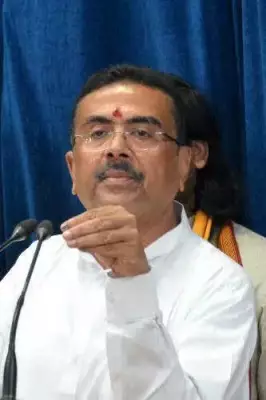
State Information Commissioner Rudranna Hartikoti disclosed alarming statistics after a training programme on RTI application disposal held in Dharwad on Saturday. He revealed that more than 54,000 RTI applications have been pending across Karnataka for an extended period, with an additional 10,000 applications filed in 2025 alone. This mounting backlog represents a significant challenge to transparency and accountability in governance.
Penalties and Consequences for Non-Compliance
Commissioner Hartikoti issued a clear caution to public information officers (PIOs) who evade or delay providing information. "Officials who fail to fulfill their duties will face substantial penalties," he stated emphatically. The commission has already imposed fines amounting to Rs 10.3 crore on 10,649 officials for failure to provide information. Hartikoti further warned that failure to pay such fines could result in the withholding of retirement benefits, a measure designed to ensure compliance and accountability.

Regional Disparities in RTI Pendency
The distribution of undisposed RTI applications reveals concerning regional patterns. After Bengaluru, Kolar district records the highest number of pending applications, while Dharwad district ranks seventh in this unfortunate metric. Hartikoti specifically noted that RTI pendency is particularly acute in the Kittur Karnataka and Kalyana Karnataka regions, prompting the commission to intensify its outreach efforts across North Karnataka.
Department-Wise Breakdown of Backlog
Providing detailed department-wise data, Commissioner Hartikoti highlighted where the bottlenecks are most severe:
- Rural Development and Panchayat Raj Department: 11,014 pending applications
- Revenue Department: 5,517 pending applications
- Urban Development Department: 4,221 pending applications
- Education Department: 1,544 pending applications
- Social Welfare Department: 1,055 pending applications
- Public Works Department: 1,024 pending applications
Commission's Proactive Measures and Achievements
Despite the daunting backlog, the KIC has made substantial progress in addressing the issue. Over the past year, the commission has successfully disposed of 32,992 RTI applications and expresses confidence in clearing the remaining backlog soon. The commission has undertaken an extensive outreach program, having toured 22 districts to hold meetings with officials. "These interactions aim to address apprehensions and boost confidence among officials handling RTI applications," Hartikoti explained.
Fundamental Right to Information Emphasized
State Information Commissioner Rajshekar S reinforced the constitutional significance of the RTI Act, describing it as a fundamental right that has substantially enhanced transparency in governance since its implementation. He stressed the statutory requirement that officials must provide information within 30 days of receiving an RTI application. Commissioner Rajshekar emphasized that officials cannot provide vague replies or arbitrarily reject applications without proper justification.
Transparency as Prevention Against Allegations
Commissioner Hartikoti articulated a crucial principle regarding transparency in governance. "Every citizen possesses the inherent right to seek information about government projects, and officials are duty-bound to provide it," he asserted. He further noted that allegations of blackmail or corruption typically diminish when information is shared transparently and promptly. This approach fosters trust between citizens and government institutions.

Systemic Recommendations for Improvement
The commission has proposed concrete measures to streamline the RTI application process. Government authorities have been advised to review RTI applications during Karnataka Development Programme (KDP) meetings to ensure timely disposal. This institutional approach aims to integrate RTI compliance into regular administrative processes rather than treating it as an ancillary function.
Local Impact in Dharwad District
The commission's focus on Dharwad reflects the district's specific challenges with RTI compliance. Hartikoti revealed that in Dharwad district alone, 95 officials have already faced penalties for failing to provide information as required under the RTI Act. This local data underscores the commission's commitment to enforcing accountability at both state and district levels.
The Karnataka Information Commission's firm stance represents a significant effort to uphold the right to information as a cornerstone of democratic governance. By combining strict penalties with awareness programs and systemic recommendations, the commission aims to transform how government officials respond to citizens' legitimate requests for transparency and accountability.