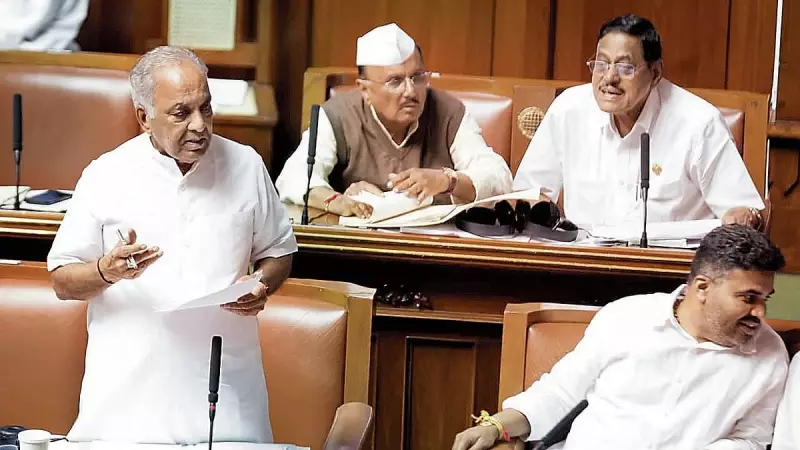
In a significant move aimed at streamlining water resource management, Karnataka's Minister for Minor Irrigation, N S Boseraju, has issued a directive for the comprehensive classification of all water bodies across the state. This decision comes in response to widespread confusion regarding the legal status and ownership of these vital resources.
Addressing a State-Wide Data Gap
Minister Boseraju gave these instructions during a high-level meeting with department officials held recently. He pointed out a critical administrative gap: there is significant ambiguity over the status and ownership of approximately 41,849 water bodies spread throughout Karnataka. This lack of clear data has historically hampered effective planning, conservation efforts, and dispute resolution.
The minister emphasized that without proper classification and documentation, it is challenging for the government to implement development projects, ensure equitable water distribution, and protect these assets from encroachment. The directive mandates officials to conduct a thorough survey and create a definitive record for each water body.

What the Classification Process Will Involve
The classification exercise is expected to be a detailed administrative process. Officials will be tasked with categorizing each of the 41,849 water bodies based on several key parameters. This includes determining their primary use—whether for irrigation, drinking water, or industrial purposes—and establishing clear legal ownership, be it under the state government, local panchayats, or private entities.
Furthermore, the survey will assess the current physical condition of lakes, ponds, and tanks, noting issues like siltation, pollution, and encroachment. Creating this centralized database is seen as the first foundational step toward a more scientific and sustainable water management policy for Karnataka.
Implications for Governance and Conservation
The successful execution of this directive is poised to have far-reaching consequences. A clear registry will empower authorities to better plan rejuvenation projects under schemes like the 'Jal Shakti Abhiyan' and allocate funds more efficiently. It will also provide legal clarity, helping to resolve long-standing disputes between different stakeholders and government departments.
For citizens and farmers, a transparent system means more accountable management of the water they depend on for agriculture and daily life. Minister Boseraju's push for classification, announced on 08 January 2026, is thus not just an administrative exercise but a crucial policy intervention for the state's ecological and economic future.