

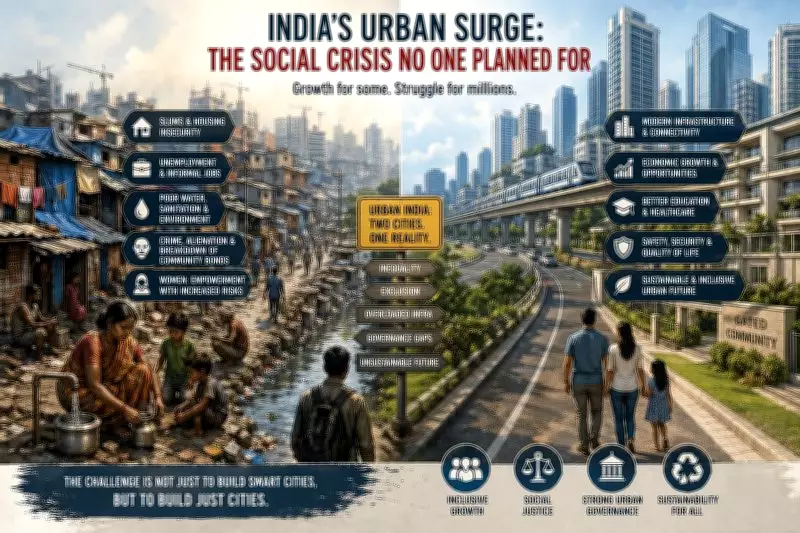
India is urbanising at a speed that its infrastructure, governance and social institutions were never built to absorb. Every single day, thousands of people arrive in Indian cities carrying their hopes, and every day, those cities quietly hand them back a set of problems they never bargained for.
The Unprecedented Scale of Urban Migration
The country is witnessing an unprecedented surge in urban migration. According to recent estimates, by 2030, over 600 million Indians will live in cities, placing immense strain on housing, transport, water supply, sanitation, and public services. This rapid influx is not just a demographic shift but a profound social transformation that is quietly fracturing the social fabric of the nation.
Infrastructure and Governance Gaps
India's cities were designed for much smaller populations. The result is overcrowded slums, choked roads, polluted air, and overburdened hospitals and schools. Governance mechanisms, often archaic and underfunded, struggle to keep pace. The lack of affordable housing forces migrants into informal settlements, where access to basic amenities like clean water and electricity is a daily battle.

Social Fractures Emerging
Beyond infrastructure, the social costs are mounting. Rural migrants often face discrimination, cultural alienation, and loss of traditional support systems. Urban villages and informal economies create pockets of inequality, while crime and social unrest can simmer beneath the surface. The breakdown of community ties and rise of anonymity in cities contribute to mental health issues and a sense of isolation.
What Every UPSC Aspirant Must Know
For UPSC aspirants, understanding this urban crisis is crucial. It touches upon multiple subjects: governance, public policy, sociology, and economics. Key areas to focus on include:
- Smart Cities Mission and its implementation challenges.
- Pradhan Mantri Awas Yojana and affordable housing schemes.
- Urban local bodies and their financial autonomy.
- Informal sector and migrant labor rights.
- Environmental sustainability in urban planning.
The crisis also highlights the need for integrated planning, where social welfare is not an afterthought but a core component of urban development. Policies must address not just physical infrastructure but also social infrastructure—community centers, public spaces, and mental health services.
The Way Forward
To avert a deeper social crisis, India needs a multi-pronged approach. This includes strengthening urban governance, increasing investment in public transport and affordable housing, and creating inclusive policies that integrate migrants into the urban fabric. Participatory planning involving local communities can help rebuild social cohesion.
As India races to become an urban powerhouse, it must remember that cities are not just engines of economic growth but homes for millions. The social crisis no one planned for demands urgent attention from policymakers, planners, and every citizen who dreams of a better urban future.






